

How chronic inflammation rewires macrophages
Researchers have uncovered how chronic inflammation disrupts the immune system’s ability to heal the body, offering new insight into diseases associated with inflammation such as cancer, diabetes, heart disease and neurological disorders. The study shows that long-lasting inflammation fundamentally alters macrophages, immune cells that both drive inflammation and repair damaged tissue.
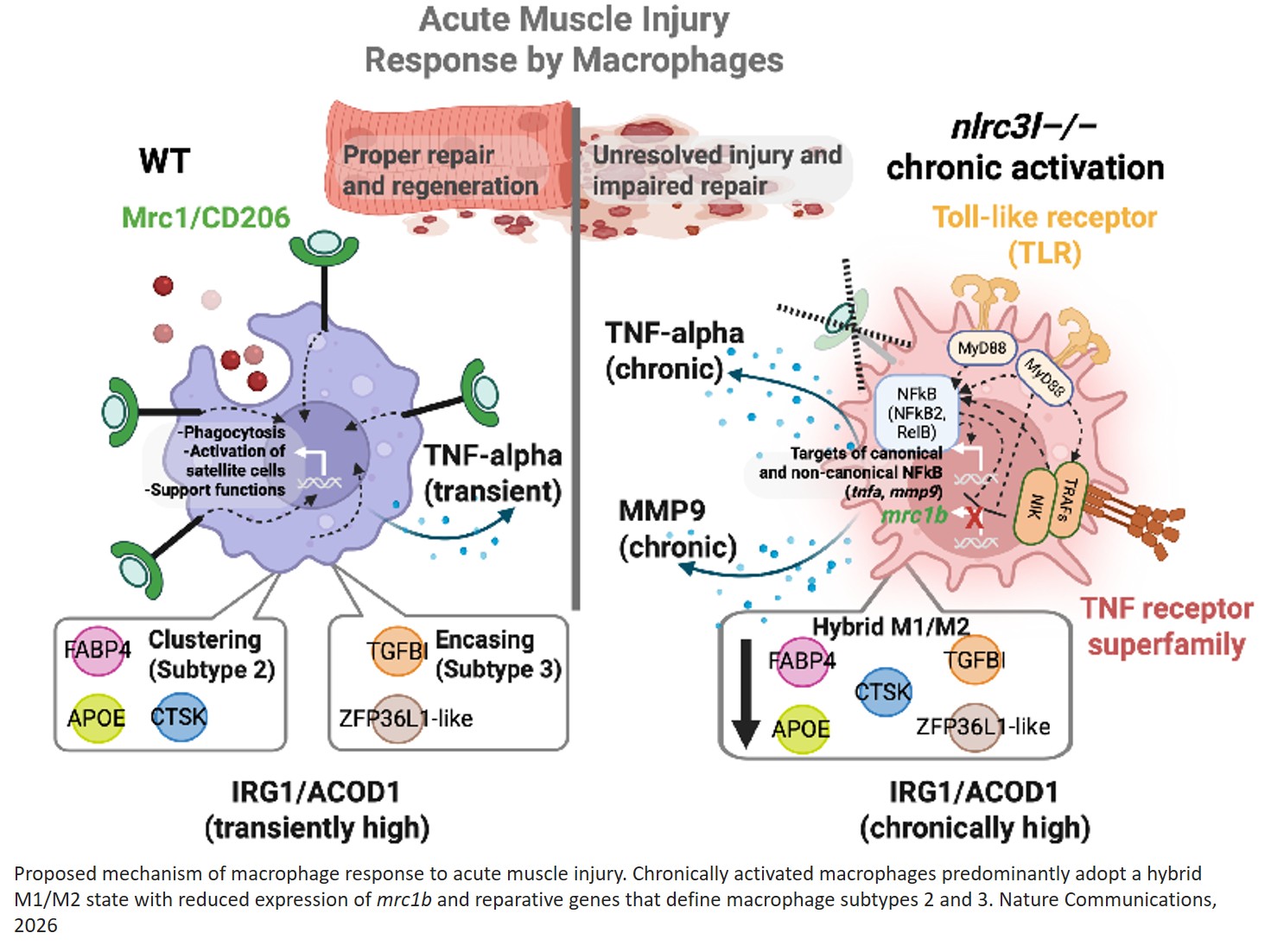
Using zebrafish, the research team was able to observe macrophages in real time as inflammation persisted. They found that chronic inflammation triggered by either a genetic mutation or persistent infection causes macrophages to lose their ability to adapt, trapping them in dysfunctional hybrid states. These cells continue to promote inflammation but fail to effectively clear damaged cells or support tissue repair, even though they still carry some of the genetic instructions needed for healing.
At the molecular level, the researchers identified a key mechanism behind this breakdown: chronically inflamed macrophages suppress a critical repair-associated gene known as mrc1b, the same gene as the human Mrc1 that encodes for the mannose receptor CD206. The team also discovered that a group of macrophages involved in tissue repair accumulates an enzyme called cathepsin K, which helps break down proteins inside and outside cells, but this does not occur in chronically inflamed macrophages. This makes cathepsin K a new marker for identifying repair-promoting macrophages. Together, these findings explain how chronic inflammation alters macrophages and thereby prevents proper healing after skeletal muscle injury.
The study also introduces a new genetic tracking tool that allows scientists to watch macrophages enter inflammatory states in real time inside a living organism. When macrophages become inflamed, they visibly brighten by increasing expression of a fluorescent protein, enabling researchers to track immune cell activation over long periods. This live-imaging approach revealed unexpected immune cell states and dynamics that could not be captured with traditional methods.
“Tracking immune cells as they respond to injury in real time was like watching an action-packed sports game unfold,” said the author. “Where some macrophages are both causing inflammation and starting repair at the same time – rewriting what we thought were separate roles.”
“By understanding how chronic inflammation rewires macrophages molecularly and behaviorally, we not only can better understand disease but also move toward engineering immune cells with more customizable, desirable functions,” the author added.