

New drug candidate reverses metabolic liver disease and fibrosis
Researchers are leading preclinical studies into a novel drug candidate developed by Espervita Therapeutics that has the potential to prevent and reverse liver fibrosis — a dangerous, disease-induced build-up of scar tissue in the liver that often leads to cancer.
The findings point to a potential new treatment for the millions of people living with liver disease, addressing a critical gap where no approved drugs currently exist in Canada. The promising results were published in in the journal Cell Metabolism.
Liver fibrosis is a late-stage symptom of a disease called metabolic dysfunction-associated steatohepatitis (MASH), which most often presents in people living with obesity or other metabolic conditions, like type 2 diabetes.
In addition to cancer, liver fibrosis can contribute to heart attack and stroke and can ultimately require liver transplantation. But despite the severity of these outcomes, researchers say that treatment options for MASH and other liver diseases remain limited.
“Currently, we have no drugs approved in Canada to treat MASH,” explains the lead author of the research. “Right now, patients are typically prescribed a Mediterranean diet and some lifestyle and exercise recommendations, but no specific medical interventions have been approved in Canada. And while two therapies have recently received approved in the US and EU, these agents have only been shown to reduce fibrosis in only about one-third of patients.”
The author says that while the current treatment paradigm can, in some cases, slow the progression of liver disease, it generally does not reverse fibrosis-related damage that has already occurred. But, according to the early preclinical data, a new drug candidate characterized in his lab as part of a research collaboration with Espervita Therapeutics does.
In the study, the research team — in collaboration with researchers from the United States, France, and Australia — demonstrated in disease models the powerful curative and restorative effects of a novel small-molecule therapy.
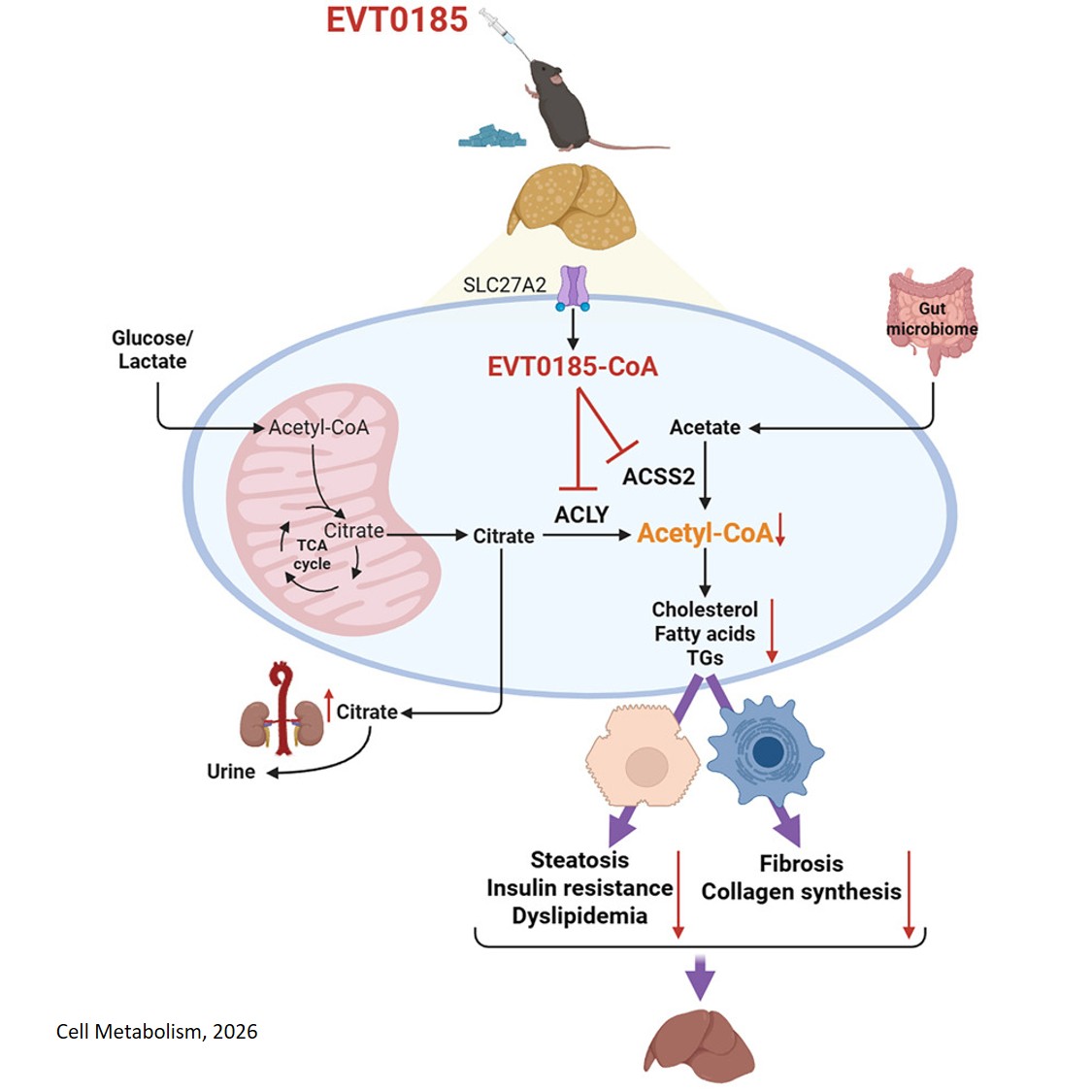
The drug candidate — developed by Espervita Therapeutics, is being evaluated through a research partnership, where scientists have shown that it can help control blood sugar levels, reduce cholesterol, and destroy fat build-up that causes liver fibrosis.
The compound, EVT0185, was first described as a potential treatment for liver cancer, after its promising anti-tumor activity was detailed in a paper published in the prestigious journal Nature. And while it still holds great promise as a cancer therapeutic, this recent discovery shows that it also holds promise as a potential treatment option for MASH.
“There’s a huge unmet need for agents that reduce liver fibrosis and also have a positive effect on blood glucose and cholesterol,” says the lead author. “This drug candidate addresses a major therapeutic gap and has the potential to fundamentally change how we treat severe liver disease and, in turn, prevent liver cancer and other complications, including diabetes and heart disease.”
The new small molecule, which simultaneously targets two enzymes critical for controlling fat synthesis and fat burning called ATP citrate lyase (ACLY) and acetyl-CoA synthetase (ACSS2), triggers what the author describes as a “carbon release valve” in the body, which stops harmful matter from accumulating in the liver and bloodstream and instead diverts it out of the body via urine.
The authors show that EVT0185 directly suppresses hepatic stellate cell (HSC) activation in vivo and in vitro, revealing inhibition of acetate metabolism via ACSS2 and cholesterol synthesis as key drivers of the phenotype. EVT0185 also inhibits de novo lipogenesis in human liver slices and blocks TGFβ1-induced activation of primary human HSCs.
The author says the new multi-use compound is on track to be in clinical trials by 2027, pending a final slate of preclinical and toxicology work.
https://www.cell.com/cell-metabolism/fulltext/S1550-4131(25)00529-7