

Sleep strengthens memory but epilepsy disrupts it
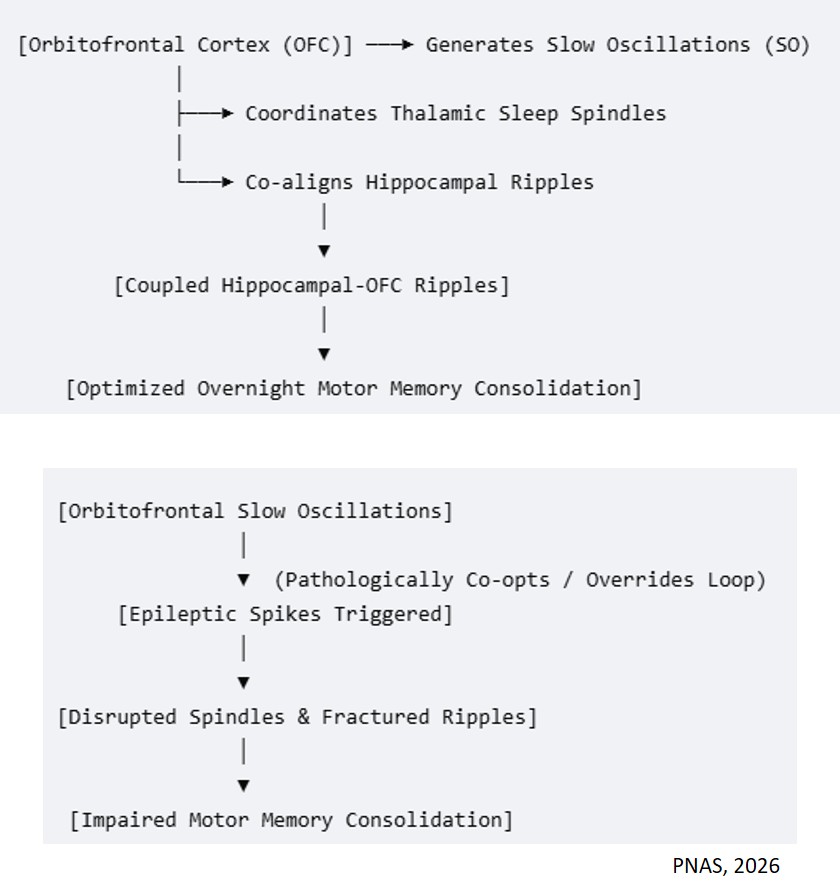
The new research provides the first direct evidence of key memory-related brain regions interacting during sleep to support memory formation. The findings also demonstrate how epileptic spikes can disrupt this brain activity, which could inform future approaches to detect, monitor and treat the cognitive effects associated with the condition.
“We haven’t understood why patients with epilepsy have problems with memory,” said a co-author. “This helps to close that gap.”
In the study, researchers recorded brain activity in the three brain regions in patients with epilepsy. They analyzed how rhythmic patterns of electrical activity, known as neural oscillations, sleep spindles and hippocampal ripples, coordinated across these areas during sleep. By comparing these patterns with measures of memory performance, they determined that stronger coordination was linked to better memory. When epileptic spikes occurred, the activity was interrupted and memory performance declined.
“Each brain recording contains an extraordinary amount of information, and we use tools from mathematics and statistics to turn that complexity into clear patterns with clinical relevance,” said the study co-author. “These discoveries are possible only because of our interdisciplinary team, no single discipline could have revealed the whole story.”
https://www.pnas.org/doi/10.1073/pnas.2517454123