

A foundation model for sleep identifies health risks
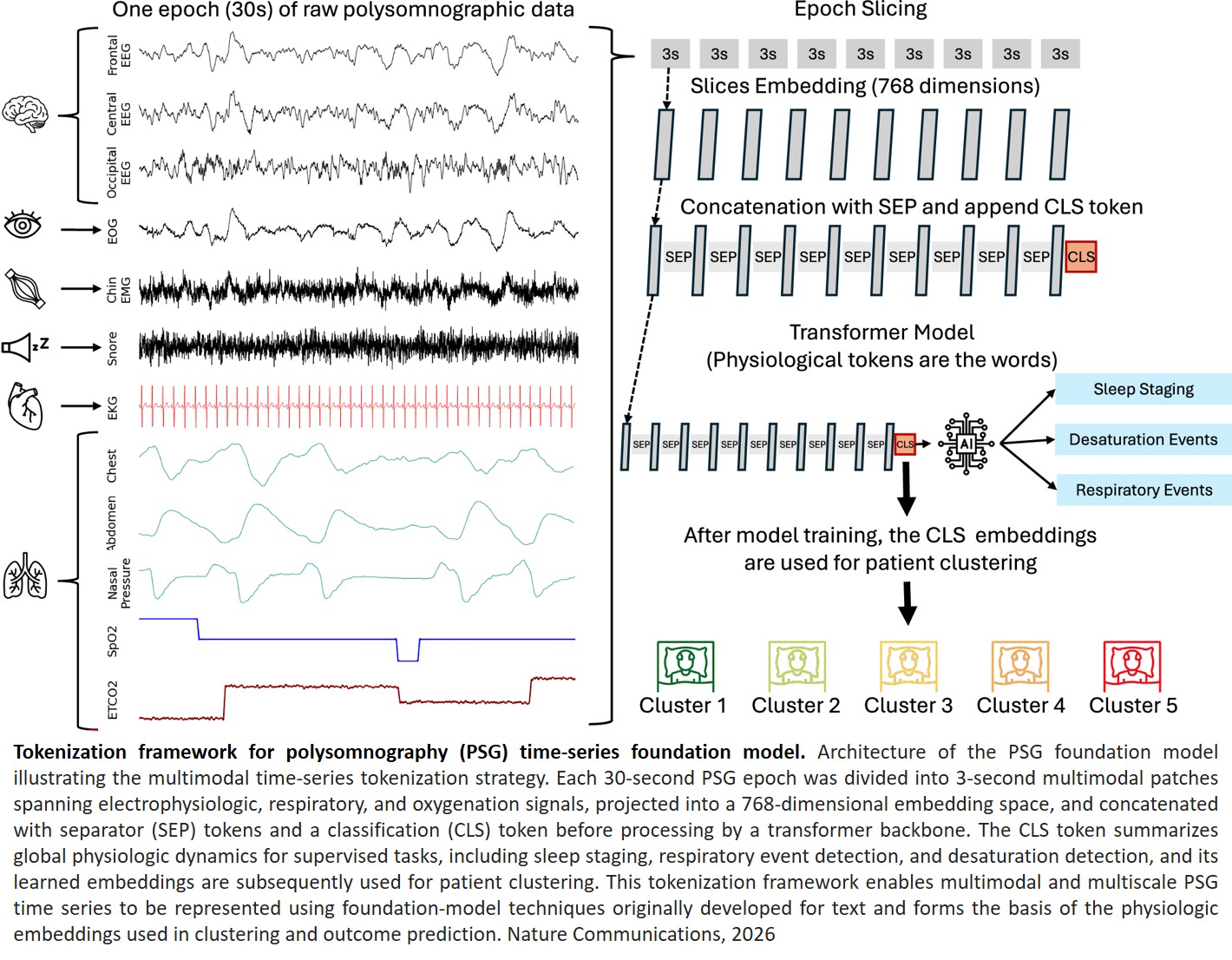
A novel AI model can use information collected during routine sleep studies to identify patients’ long-term health risks, according to a new study published in Nature Communications. Developed by a multidisciplinary research team, the model uncovered hidden sleep patterns linked to risks including heart disease, cognitive decline and death.
The findings also suggest that routine medical tests may contain substantially more physiologic information than current clinical practice extracts from them. In this case, AI identified meaningful signals in standard overnight sleep study data that are not captured by conventional summary measures alone.
The research revealed clinically meaningful patient subtypes with sharply different long-term health risks. Patients in the highest-risk group had twice the mortality risk over the next five years compared to those in the lowest-risk group, a distinction that was not captured by the standard clinical measure used to assess sleep apnea severity, the apnea-hypopnea index.
Each year, an estimated 1 to 4 million polysomnograms, or in-lab sleep studies, are performed in the United States, typically to evaluate sleep apnea. While these studies collect rich data on each patient’s brains, lungs, muscles and heart, clinicians historically have focused on a small subset of that information to grade sleep apnea severity.
“For decades we have distilled an overnight sleep study into a handful of summary measures,” said the study’s senior clinical author. “AI gives us the opportunity to move beyond those summaries and learn from the full richness of sleep physiology.”
Using data from the Cleveland Clinic Sleep Signals, Testing, and Reports Linked to Patient Traits (STARLIT) registry, the researchers grouped patients into five risk categories. The model also predicted outcomes well for men and women, while the apnea hypopnea index has historically performed better in men. The findings were independently confirmed in a nationwide patient cohort.
“Modern AI lets us recover much more of the information contained in a night’s worth of sleep physiology, revealing clinically meaningful patient groups with very different long-term health risks,” said the corresponding author. “These findings demonstrate that routine medical tests can contain substantially more physiologic information than current clinical practice extracts from them.”
The model could also help researchers better understand how sleep impacts health outcomes. By looking beyond traditional measures, the approach uses AI to detect latent physiologic features invisible to the human eye and extract prognostic biomarkers that help stratify risk for cardiovascular and neurologic disease, and survival, opening the door to earlier and more personalized care.