

How fumarate exacerbates renal inflammation and fibrosis
Abnormal accumulation of metabolites leading to inflammation has been implicated in the pathogenesis of renal fibrosis but mechanism is not well understood.
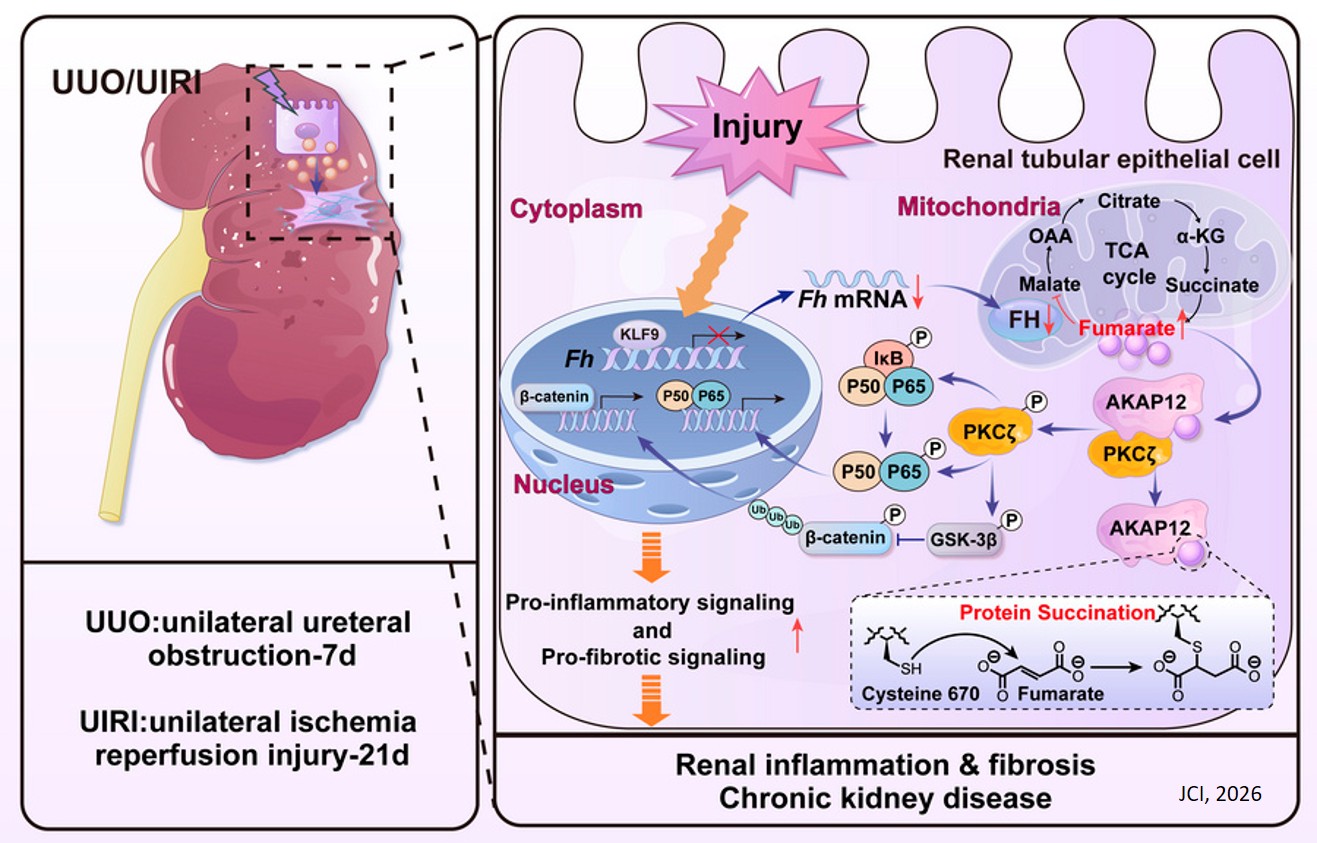
The researchers in this study show that loss of fumarate hydratase (FH) function enhanced inflammation and exacerbated tubulointerstitial damage in the kidney. FH deficiency aggravated fibrosis in both the liver and lungs. Thus, they showed a negative correlation between FH)expression and the degree of renal fibrosis.
Mechanistically, the researchers demonstrate that FH depletion in renal tubular cells causes fumarate accumulation and fumarate succinated A-kinase 40 anchoring protein 12 at cysteine 670, thereby diminishing its capacity to inhibit the activity of protein kinase Cζ (PKCζ). This process exacerbated renal inflammation and fibrosis by activating the downstream PKCζ/NF-κB and PKCζ/β-catenin pathways.
The authors also demonstrate that the adenovirus-mediated FH overexpression mitigated renal inflammation and fibrosis.