

The gut microbiome–placenta axis
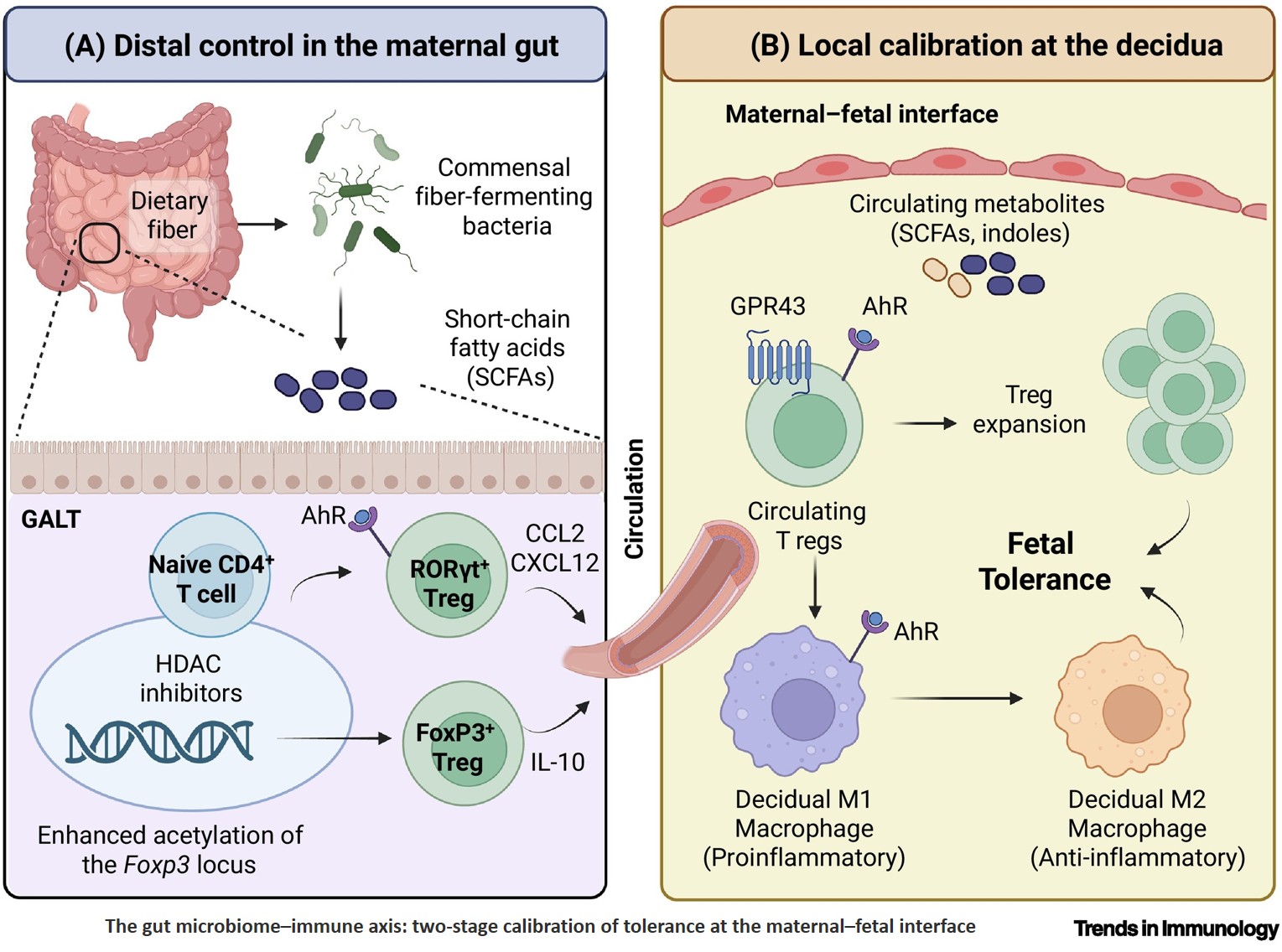
The field has shifted from the controversial search for a placental microbiome to a ‘chemical highway’ model, where the placenta acts as a sensor for maternal microbial metabolites rather than as a site for colonization.
Maternal gut-derived signals, specifically short-chain fatty acids and tryptophan derivatives, serve as essential remote architects that orchestrate placental vascularization, immune tolerance, and nutrient transport.
Emerging evidence suggests that altered maternal intestinal metabolic signaling may contribute to pregnancy pathologies such as fetal growth restriction.
Therapeutic strategies are evolving from general probiotic use toward precision targeting of specific metabolic pathways (e.g., aryl hydrocarbon receptor and G protein-coupled receptor (GPR)43 signaling) to rescue placental function.
https://www.cell.com/trends/immunology/fulltext/S1471-4906(26)00071-2