

Improving incretin-mediated body weight loss via energy expenditure
Current weight-loss therapeutics (i.e., incretin agonists) effectively reduce food intake and lower body weight but do not increase energy expenditure.
Increasing energy expenditure alongside the anorectic effects of current therapeutics will improve efficacy and sustainability (i.e., avoiding weight regain after treatment) of weight loss in patients.
Glucagon receptor agonism improves weight loss by engaging multiple energy expenditure mechanisms, but the exact mechanisms are still unclear.
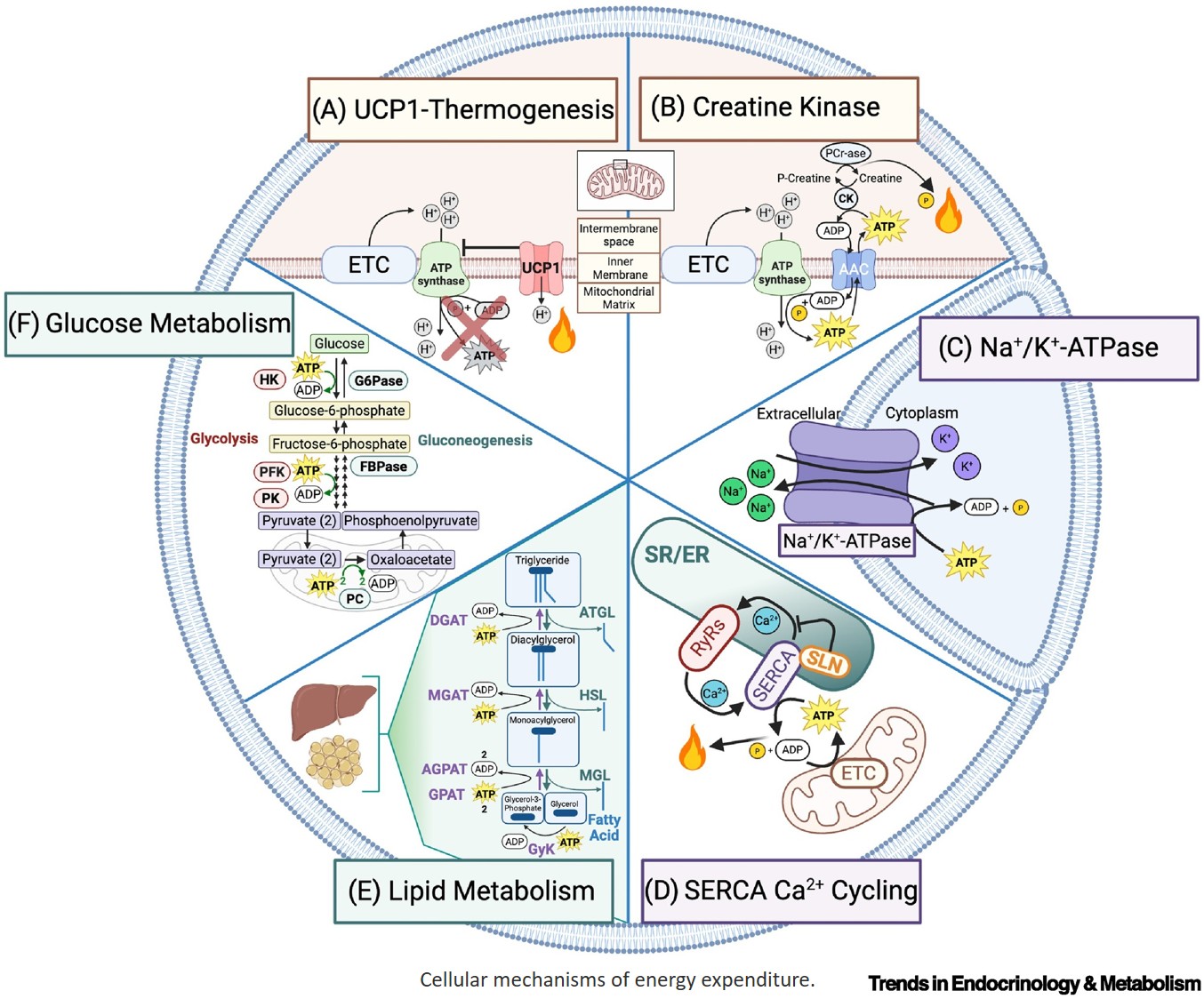
Energy expenditure can be increased via UCP1-dependent thermogenesis, UCP1-independent thermogenesis, and futile cycles such as glucose, creatine, lipids, Ca2+, and Na+ /K+ .
Rather than targeting the right complement to food intake suppression, coordinated activation of multiple energy expenditure pathways may be beneficial for treatment, such as targeting central nervous system mechanisms.
https://www.cell.com/trends/endocrinology-metabolism/fulltext/S1043-2760(25)00282-6
https://sciencemission.com/incretin-mediated-body-weight-loss-v