


Why microglial TDP-43 loss of function leads to neurological diseases
While microglia are considered the primary defense of the central nervous system, they are also involved in various neurodegenerative diseases. In their latest study, the research team demonstrated how dysfunctional microglia can disrupt brain function and lead to motor deficits. The study was published in the journal of Nature Neuroscience.
Microglia are small cells belonging to the glial cell family that reside in the central nervous system (the brain, spinal cord, and retina). They are the principal immune cells of the brain, often referred to as its “guardians.” In addition to destroying pathogenic foreign agents and fighting infections, they are also responsible for clearing dead cells and other cellular debris.
The neuroscientists focused their attention on the protein TDP-43. This protein is known to play a role in several neurodegenerative diseases, including amyotrophic lateral sclerosis (ALS) and certain forms of dementia. In these disorders, TDP-43, which is normally located in the cell nucleus, becomes mislocalized to the cytoplasm, where it forms abnormal aggregates. The progressive loss of the protein from the nucleus, where it normally performs its essential functions, combined with the toxicity of the cytoplasmic aggregates, results in a loss of function and disrupts normal cellular activity. While this phenomenon has been extensively studied in neurons, its impact on microglia remains poorly understood.
“In our study, we sought to better understand what happens when TDP-43 is no longer functional in microglia, using the mouse as an experimental model,” explains the senior author. “To achieve this, we genetically deleted the gene encoding this protein specifically in microglial cells. We observed that mice lacking TDP-43 in their microglia from early life stages developed motor impairments in adulthood.”
Using a range of imaging techniques, the researchers revealed that TDP-43 dysfunction affects the brain at several levels.
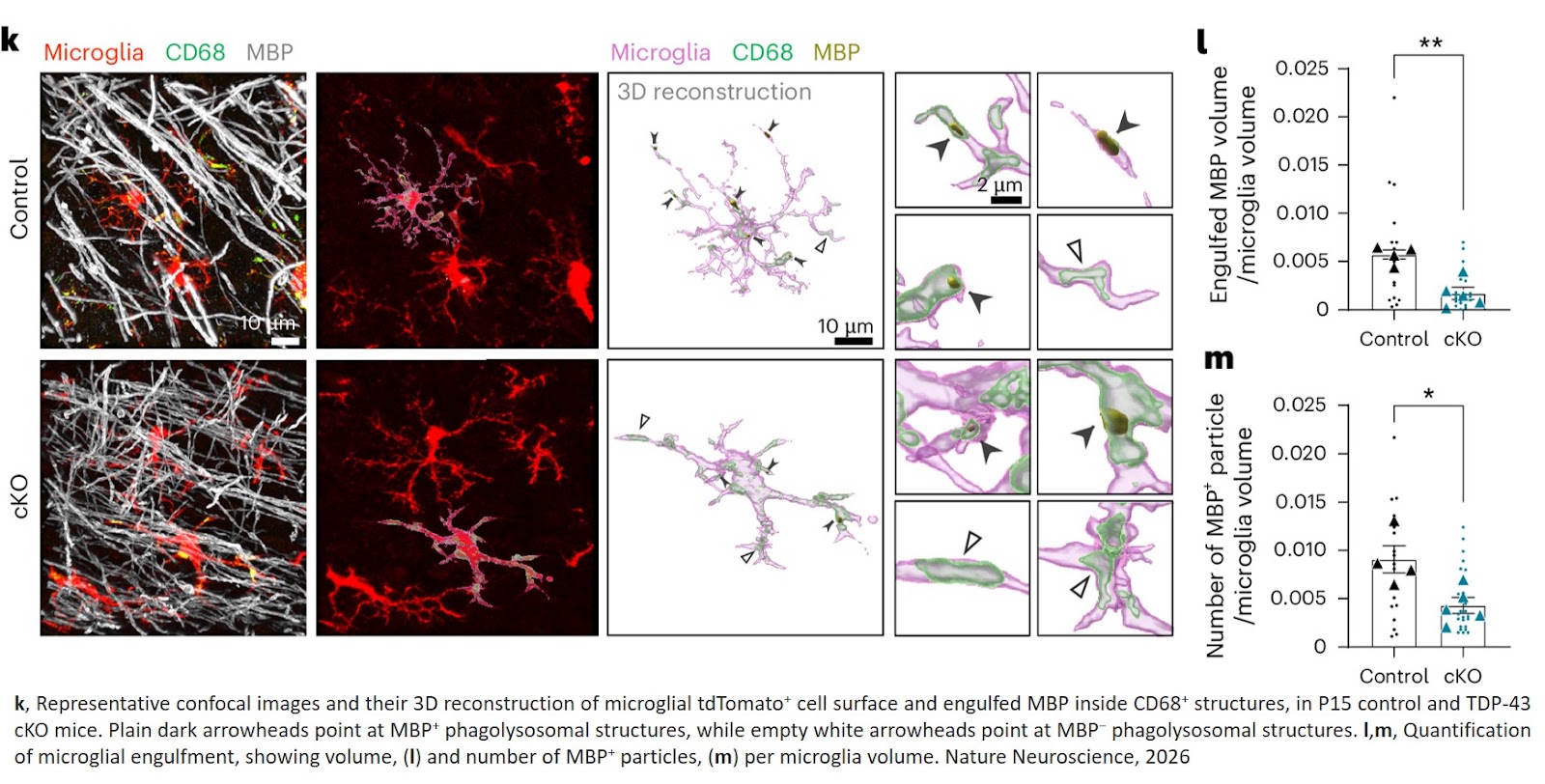
“We detected structural alterations in specific brain regions at early stages of development, as well as abnormalities in myelin, the protective sheath surrounding nerve fibers. We also identified molecular changes suggesting dysfunction in oligodendrocytes, the cells responsible for myelin production,” explains the first author of the study.
Furthermore, the study showed that microglia lacking TDP-43 lose their ability to efficiently resolve myelin abnormalities, which are naturally generated during the myelination process that occurs throughout brain development. This impairment is associated with dysfunction of a major cellular pathway known as the TREM2–DAP12 axis, which is essential for normal microglial function.
“Our findings reveal a previously unrecognized role for TDP-43 in regulating microglial function and demonstrate how its disruption could contribute to the development of neurological diseases”, concludes the senior author.