


Reducing pathological pain!
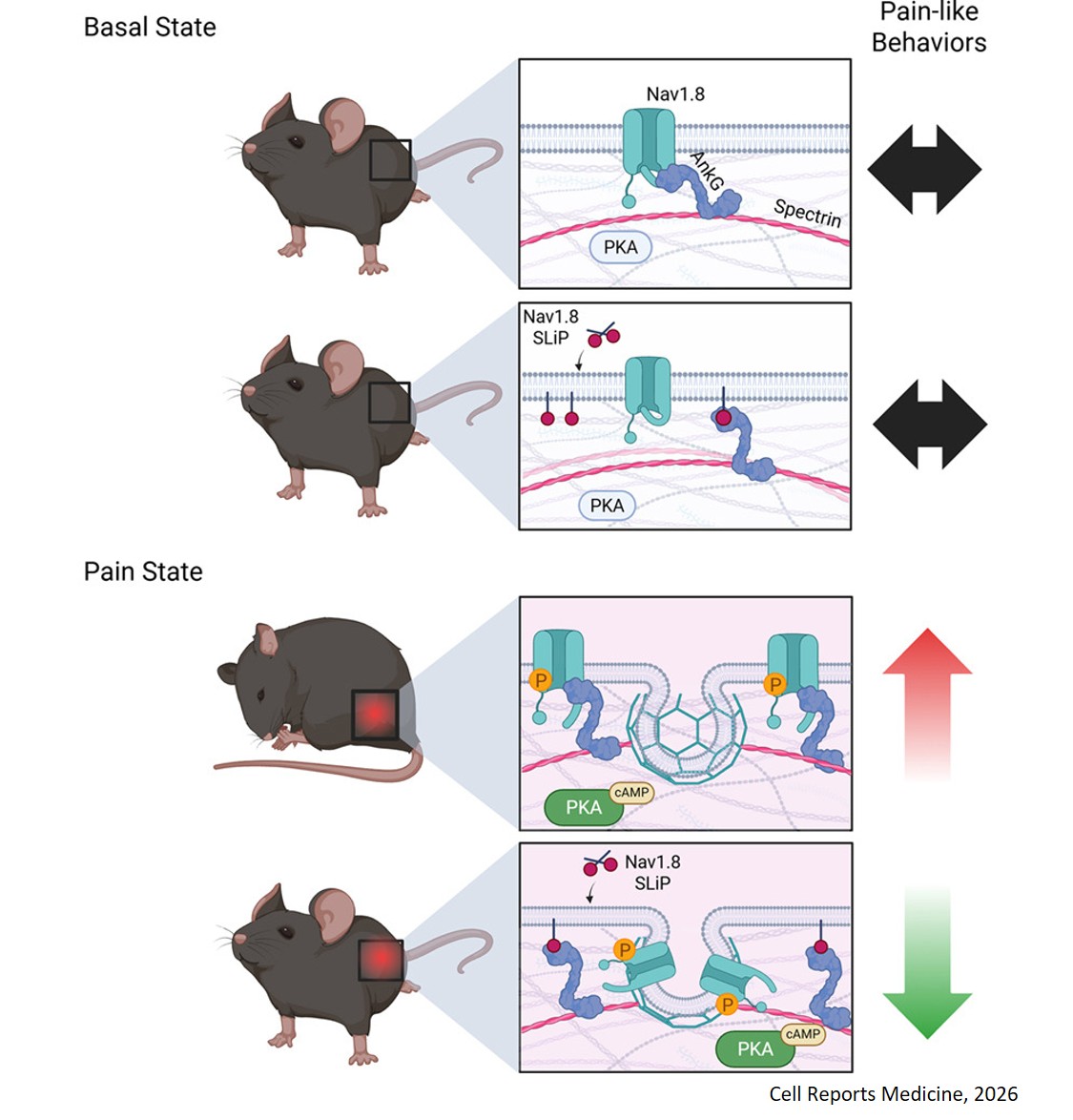
Understanding and treating chronic neuropathic pain has remained challenging due to its complex nature. New research describes a novel approach for reducing pain by disrupting interactions within pain-sensing nerve cells called nociceptors. The mechanisms of this new approach have been licensed to a local biotech company and are being used to inform the development of new therapeutics.
Voltage-gated sodium channels (NaV ) play important roles in the electrical signaling of cells. The NaV 1.8 channel has been shown to play a role in triggering such electrical signals within nociceptor dorsal root ganglion neurons, which the brain then perceives as pain. Preclinical strategies to inhibit NaV have been successful in reducing neuropathic pain but have yet to produce similar results in clinical settings.
New results published in Cell Reports Medicine help explain why. Previous drug development strategies for targeting NaV 1.8 focused on reducing the channel’s ability to open properly. Researchers have now discovered that NaV 1.8 activity in neurons relies on an interaction with a scaffolding protein called ankyrin-G (Ank3) to maintain the heightened electrical activity in pain-triggering neurons during pathological pain.
They found that disrupting that interaction with a short lipidated peptide (SLiP) reduces the levels of NaV 1.8 in the cell membrane, quieting hyperexcitable pain-triggering neurons, and reducing pain-like behaviors in mouse models, while sparing acute protective pain.
"Exploring neuropathic pain has led to a discovery that not only redefines our understanding of the mechanisms of clinical pain," said the author. "It also provides evidence that short lipidated peptides, or ‘SLiPs,’ have immense potential to treat pain and other diseases.”
https://www.cell.com/cell-reports-medicine/fulltext/S2666-3791(26)00507-0