

Molecular pathway driving aortic disease in Marfan syndrome
Marfan syndrome is caused by mutations in the FBN1 gene, which encodes fibrillin‑1, a key protein that maintains connective tissue integrity. One of the most serious complications of the disease is the progressive weakening and dilation of the aorta, which can lead to rupture or dissection. Despite its clinical impact, no pharmacological therapies are currently available to effectively halt disease progression, and preventive surgery remains the primary treatment.
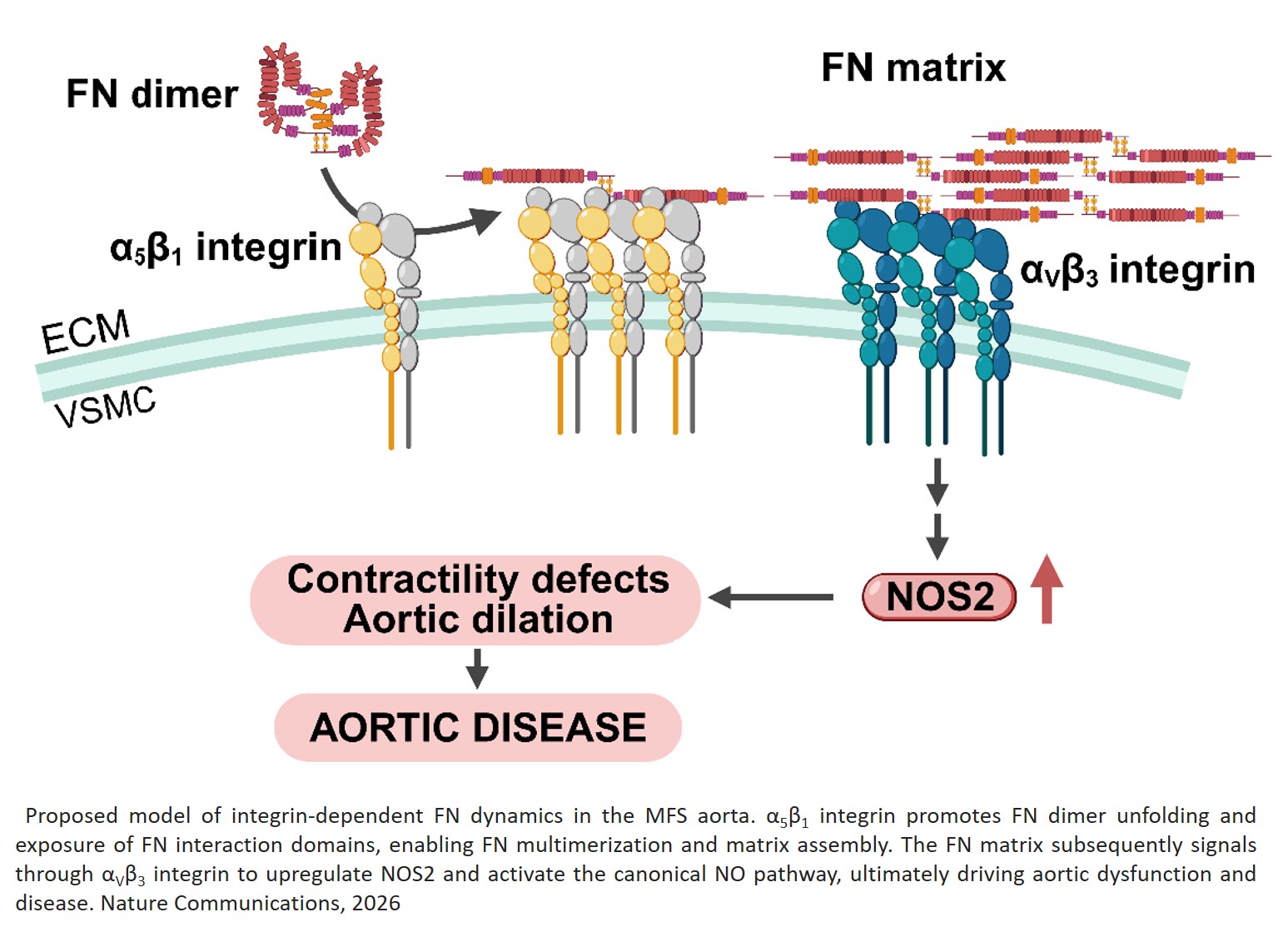
In the new study, researchers investigated how changes in the extracellular matrix contribute to aortic pathology. They found that accumulation of the matrix protein fibronectin in the aortic wall activates a signaling cascade that disrupts vascular function.
“We provide a mechanistic explanation of how structural changes in the extracellular matrix can drive functional deterioration of the aortic wall,” says the senior author of the study.
The research shows that fibronectin activates the integrin receptor αVβ3, triggering a signaling pathway that leads to increased nitric oxide signaling and impaired contractility of vascular smooth muscle cells. This mechanism was observed both in mouse models of Marfan syndrome and in aortic tissue samples from patients, supporting its relevance to human disease.
Importantly, the researchers demonstrate that targeting this pathway in experimental models improves vascular function and reduces disease progression. Interventions aimed at fibronectin assembly or its interaction with αVβ3, as well as inhibition of downstream signaling components, were able to reverse key features of aortic disease in mice.
“These findings highlight extracellular matrix–driven signaling as a promising therapeutic avenue in Marfan syndrome,” says a co‑senior author.
The study also involved collaboration with clinical groups and included analysis of human aortic samples from patients with different FBN1 mutations, strengthening the translational relevance of the findings.
“Our results show that this mechanism is conserved between experimental models and patients, supporting its potential clinical significance,” adds the first author of the study.
The authors suggest that targeting this signaling cascade could form the basis for future pharmacological strategies aimed at slowing or preventing aortic disease progression in Marfan syndrome.