

Modulating energy regulator to support tumorigenesis
The researchers have succeeded in tracing two classic hallmarks of cancer – the evasion of apoptosis (a form of programmed cell death) and the dysregulation of energy metabolism – back to a common molecular mechanism.
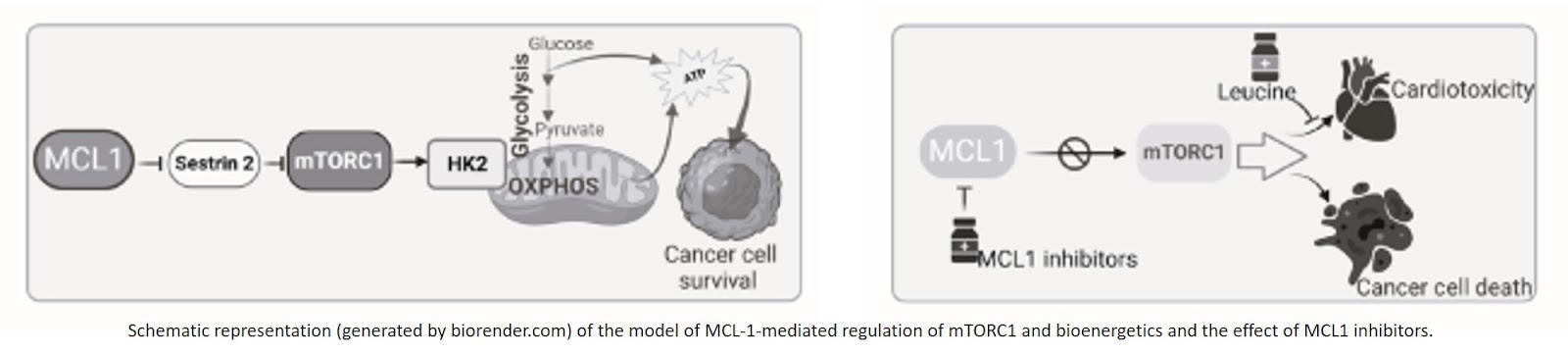
The study focuses on the protein MCL1, which is strongly overexpressed in many tumor types and has previously been considered primarily an anti-apoptotic factor of the Bcl-2 protein family. The researchers now show that MCL1 directly influences the central metabolic regulator mTOR and thus controls the bioenergetics of cancer cells. This is the first time that MCL1 has been described as an active regulator of central signaling and metabolic pathways.
“Our findings show that MCL1 is much more than just a survival factor for tumor cells,” says the author. “The protein actively intervenes in key metabolic and growth signaling pathways, thereby linking two fundamental cancer mechanisms.”
Mechanistically, the team identified a direct functional link between MCL1 and the mTORC1 complex in various cancer models. MCL1 impacts metabolism via modulating the expression of hexokinase 2 (HK2) in an mTORC1-dependent manner, which ultimately contributes to the tumor-promoting effects of MCL1. This newly discovered signaling pathway fundamentally expands the current understanding of the role of MCL1 and opens up new therapeutic perspectives.
In addition to genetic analyses, the study also investigated the effect of MCL1 inhibitors, which are currently undergoing clinical development as promising new cancer therapeutics. The study showed that these agents also inhibit mTOR signaling. This finding is of high clinical relevance, as mTOR inhibitors are already routinely used in cancer therapy.
Another particularly significant finding is the resolution of a previously unsolved problem: several clinical trials with MCL1 inhibitors had to be discontinued due to severe cardiotoxic side effects due to mTORC1 inhibition in the heart.
The researchers identified an underlying molecular mechanism for the first time and, based on this, developed a dietary approach that can significantly reduce cardiac toxicity. The authors show that dietary leucine supplementation rescues mTORC1 signaling in the hearts of humanized Mcl-1 mice and greatly ameliorates the cardiotoxicity of MCL1 inhibitors.