

Next-gen patient-derived cancer models
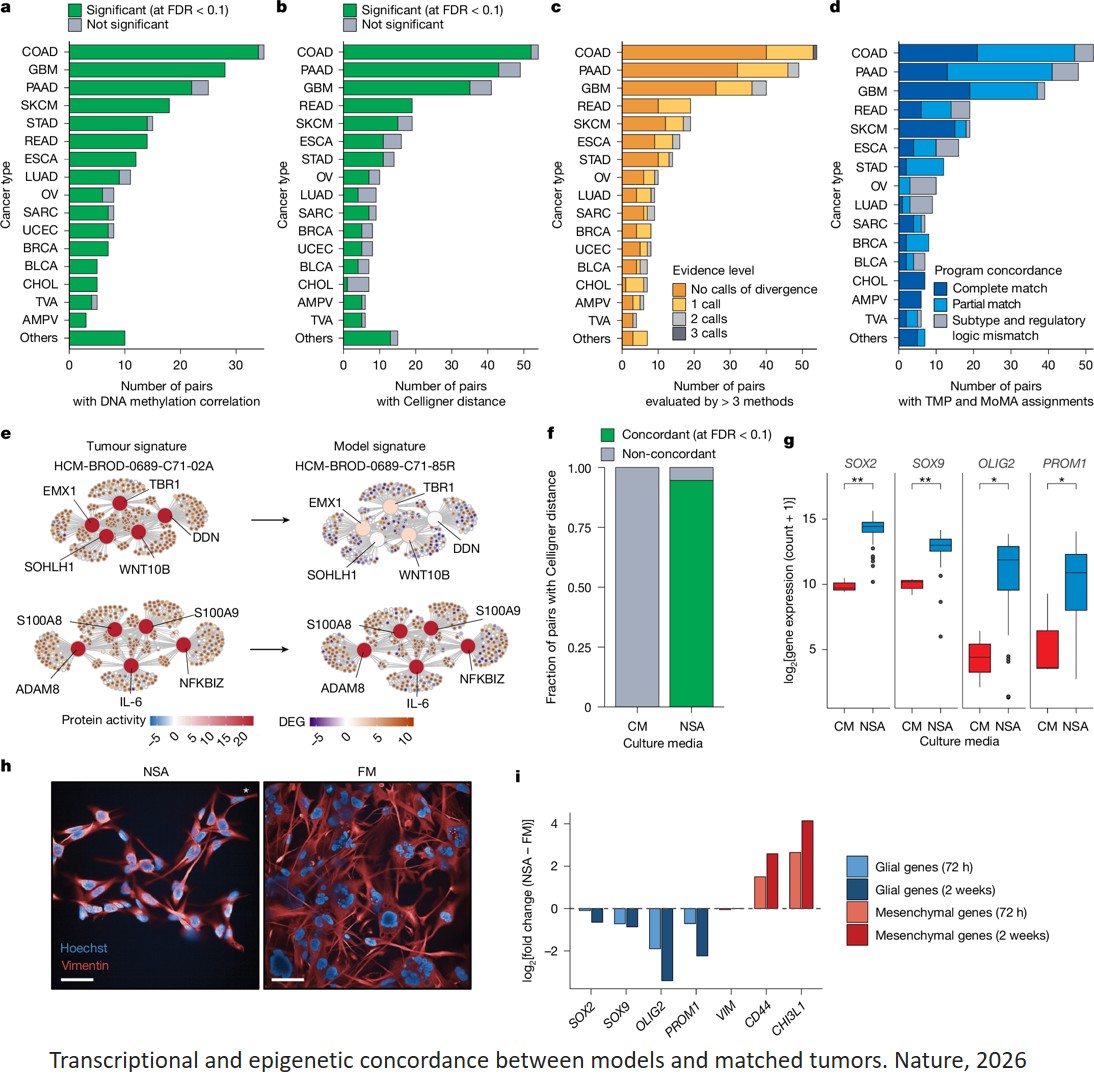
A collaborative team developed 665 next-generation patient-derived cancer models across 27 common and rare forms of cancer and made the models plus relevant clinical and molecular data available as a resource to researchers around the globe to accelerate cancer advances. This is the first time that such a large collection of patient-derived models has been made public all at once and assured to be reliable, faithful to the original sample, and annotated with clinical data, such as outcomes and treatment history, and molecular data, such as genomic sequencing information.
Study details were published in Nature.
“This effort doubles the number of in vitro models available for people to use and includes some very rare cancer types for which there were just one or two prior models available in the entire scientific community,” says co-senior author. “This is likely to be everyone on the team’s most important contribution to cancer biology in their career because the resulting resource enables new research at such a large scale and for many years into the future.”
The initiative, called the Human Cancer Models Initiative (HCMI), aims to create 1000 patient-derived next-generation cancer models.
Through the HCMI, approximately 2800 patients consented to contribute tissue and data related to their cancer biology and treatment. These samples were used to generate next-generation models, which went through a rigorous validation process to ensure each was a faithful replica of the original sample. Models that passed validation were then sequenced and analyzed to capture molecular data in a uniform way. The final product is the HCMI resource, distributed through the American Type Culture Collection, which makes the models and associated data available for research.
In the past, models of cancer have not always remained reliable over time. Over the last decade, however, investigators have developed next-generation methods that use cell cultures, plating, and growth methods that are customized for each specific type of cancer being modeled.
“Since the sequencing of the human genome and the analysis of cancer genomes over the last 20 years, we have had many ideas about cancer targets, but we need experimental systems in the lab to validate those targets and launch drug discovery projects,” says one of the senior authors of the study.
These new methods have enabled the creation of models that do not “drift” over time. That is, the biology of the tumor remains stable and responds to stimuli in ways that are representative of the patient’s tumor. Researchers can reliably use the models for years.
“Many of our investigators at Dana-Farber have deep experience making next-generation patient-derived models using methods that are specific to the cancer types they study and treat,” says the author. “These models meet strict criteria to be faithful to the original biology, while prior generations of models sometimes went through big biological changes over time that were not natural.”
The models in the collection are a mix of 3D organoids, 3D spheroids, and 2D patient-derived cell lines and represent both adult and pediatric cancers. Cancer types include but are not limited to colorectal, pancreatic, lung, and brain cancer. More than 20 percent of the models represent rare cancer types.
The collection includes 168 models from patients who had already received treatment, with treatments including a range of therapies including immunotherapy, targeted therapy, chemotherapy, radiotherapy and more. It also includes 318 models of samples that had not yet been treated when the sample was initially collected.
“This is a coherent and unified set of models, and each model is associated with really rich molecular data,” says the author. “The amount of data layered on is more than any single institution could have done on its own, and the collection has already enabled us to expand other resources used for cancer research.”
For instance, in parallel and related research from this same team, the resulting models were used to expand a resource called the Cancer Dependency Map, managed by the Broad Institute. The DepMap uses CRISPR technology to discover new cancer vulnerabilities that can be targeted by therapeutics. The inclusion of data from these next generation models enables the expansion of the DepMap to cover new genetic and molecular subtypes. It also enabled the study of models with gene expression and cell states that were not reliably present in earlier patient-derived models studied in DepMap.
“These new models and resources together represent a sea change advance in the tools available to the world, so we have what we need to fight cancer,” says the author. “They will be essential for generating the deep data needed for AI to help us unlock new treatments and break down barriers to rapidly help patients.”
https://www.nature.com/articles/s41586-026-10806-y
https://sciencemission.com/next-generation-patient-derived-models