

AI platform to understand functional perturbations from condensate morphology
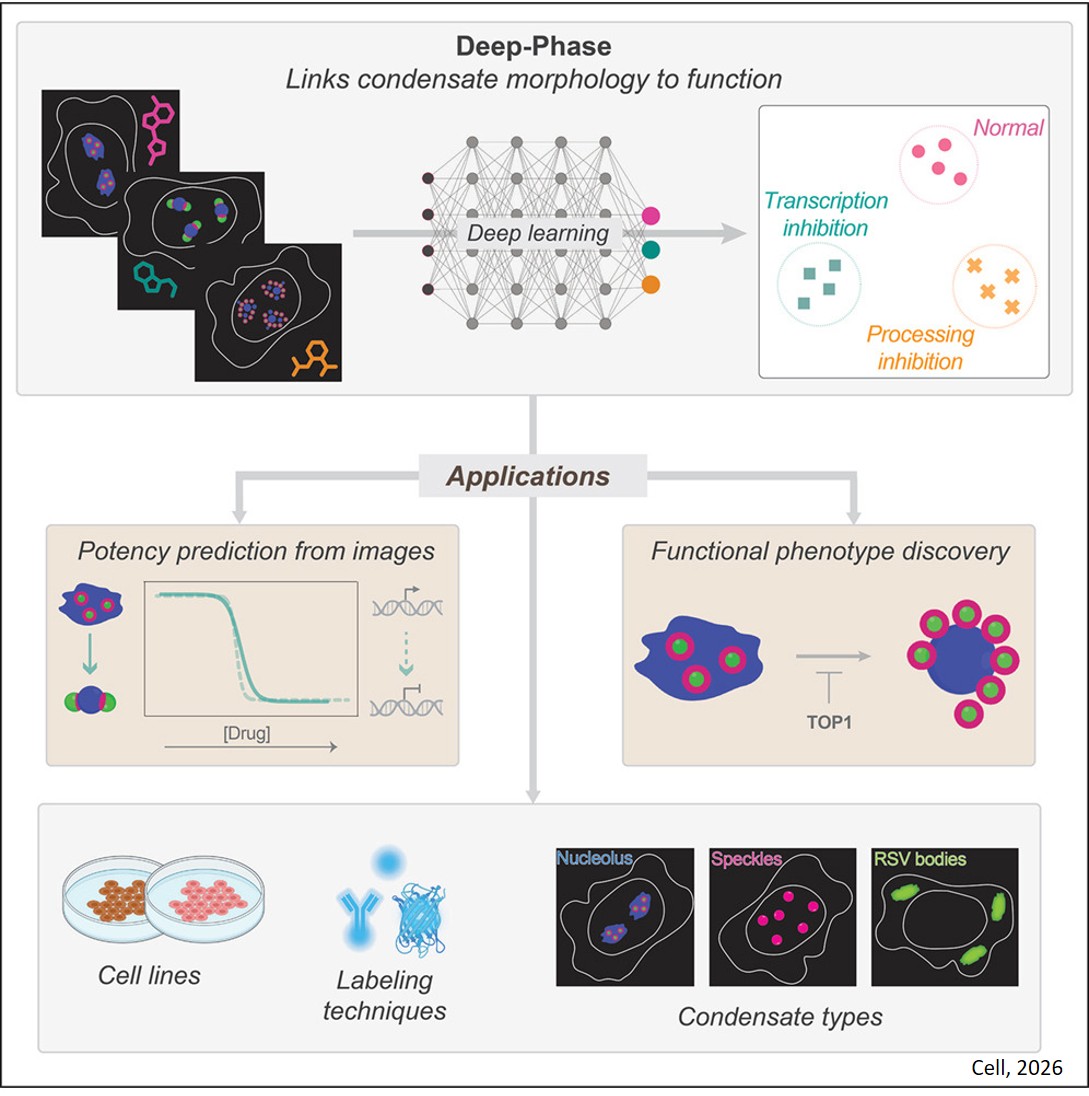
The researchers introduces "Deep-Phase," a neural-network-based framework that decodes drug-induced changes in cellular condensate morphology to predict underlying biochemical disruptions at a single-cell level. This artificial intelligence platform bypasses traditional handcrafted metrics to link the mesoscale organization of liquid-liquid separation directly to specific gene-regulation and therapeutic drug potencies.
The system replaces rigid, predefined imaging filters with flexible computer vision to analyze how internal cellular structures morph when stressed by diseases or treatments.
The model precisely quantified how structural changes in the nucleolus align with the specific potency of drugs designed to inhibit ribosomal RNA (rRNA) transcription and processing.
Beyond the nucleolus, Deep-Phase successfully profiled independent structural groups, including nuclear speckles and viral cytoplasmic condensates (such as those formed during Respiratory Syncytial Virus [RSV] infections).