

Neurobiology of prolonged grief disorder
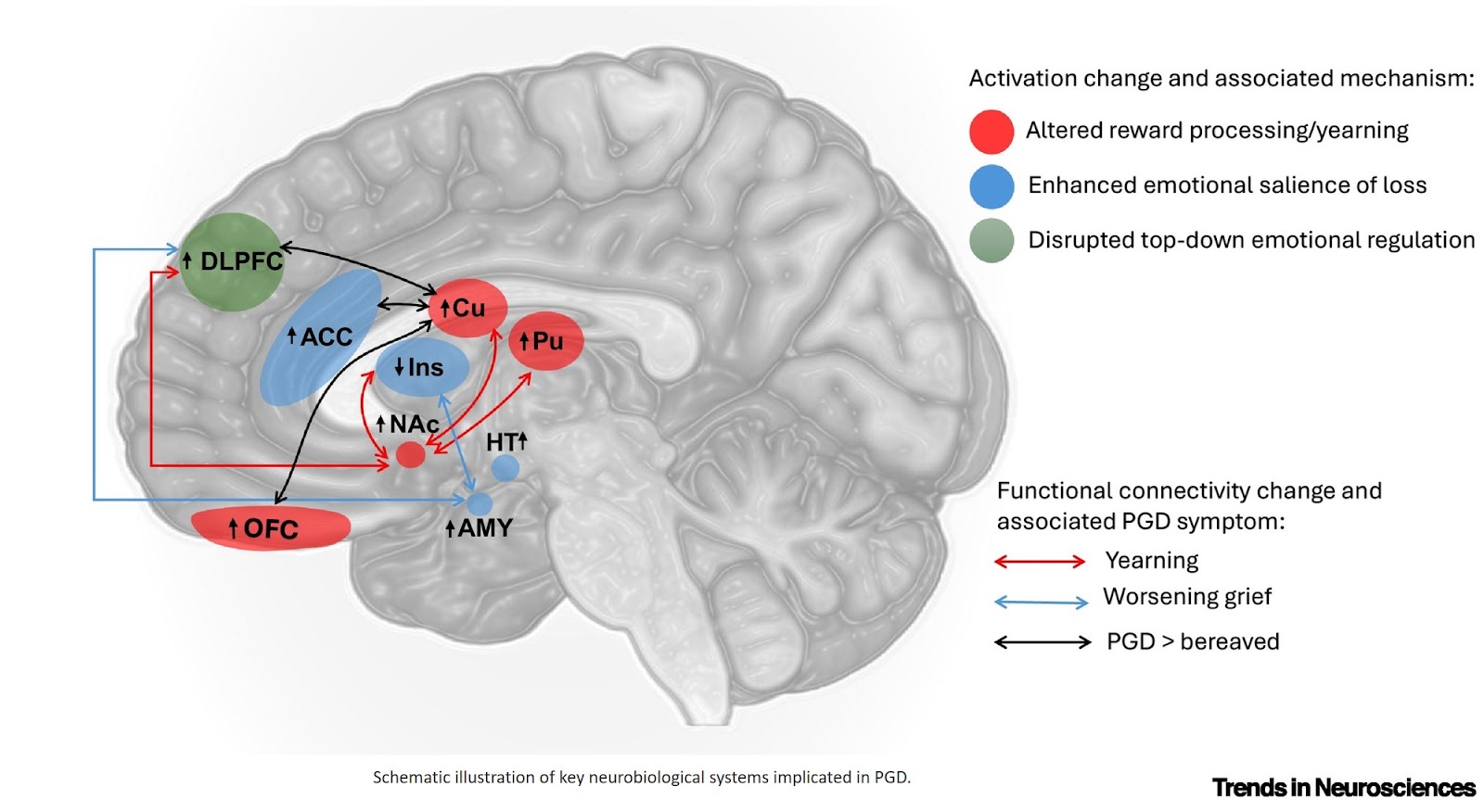
Prolonged grief disorder is a psychiatric disorder characterized by persistent longing for the deceased and associated emotional pain. Prolonged grief disorder involves disturbed reward processing and appetitive approach tendencies.
People with prolonged grief disorder have aberrant functioning in neural circuitry, including the amygdala, orbitofrontal cortex, posterior cingulate cortex, rostral anterior cingulate cortex, basal ganglia, and insula.
The regions implicated in prolonged grief disorder overlap with other psychiatric conditions such as anxiety and depression, but prolonged grief disorder is distinguished by neural functions involving reward processing, which aligns with prolonged grief disorder being characterized by a strong desire to be reunited with the deceased.
Research on the neurobiology of prolonged grief disorder is in its infancy. Current evidence should be interpreted cautiously, in view of mixed findings, small sample sizes, and methodological variability across studies.
https://www.cell.com/trends/neurosciences/fulltext/S0166-2236(26)00004-4