

Mechanism of protein polymerization in the cells
Alpha1-antitrypsin deficiency, an inherited disorder affecting 100,000 people in the U.S., causes a progressive and incurable lung disease. A subset of patients with the condition — about 10% to 15% — also develop liver disease because of the accumulation of the aggregated protein variant resulting from the genetic error that causes the disease. Now, researchers have identified a previously unknown biological process that helps explain why only a subset of the affected population develop liver disease.
The newly discovered process appears to protect liver cells from the toxic effects of the buildup of misfolded, aggregation-prone proteins inside those cells. The findings could help clarify the wide variation in disease severity sometimes seen among patients with alpha1-antitrypsin deficiency and inform new approaches to predicting which patients are at highest risk of eventually needing a liver transplant.
The study appears online in the journal Nature Communications.
Cells have tightly controlled processes to make all the proteins necessary for healthy functioning. There are processes for manufacturing proteins, for folding them into their proper shapes, for transporting them to the correct parts of the cell, and for degrading and disposing of them when they’re no longer needed. Because disruptions in any part of this process — called proteostasis — can lead to disease, cells also have safety measures to handle mistakes that crop up along the way.
“What is truly remarkable about proteostasis is that it’s set up to have multiple fail-safes for handling a bad protein,” said the senior author. “That’s good for cellular economy because it means the cell doesn’t have to spend all its energy on making every protein perfectly. Our study identifies a completely new way that cells manage potentially harmful proteins.”
The researchers dubbed the newly identified fail-safe the polymerized protein response. The new study suggests that this response allows cells to tolerate misfolded proteins that also polymerize and aggregate, maintaining normal cell function despite their presence. It complements a separate, well-characterized quality-control process, the unfolded protein response, that governs how cells handle unfolded proteins.
Both unfolded proteins and aggregated proteins can accumulate in a cell’s endoplasmic reticulum — the protein manufacturing, packaging and shipping center of cells. And the new study now shows that cells have different processes for handling each.
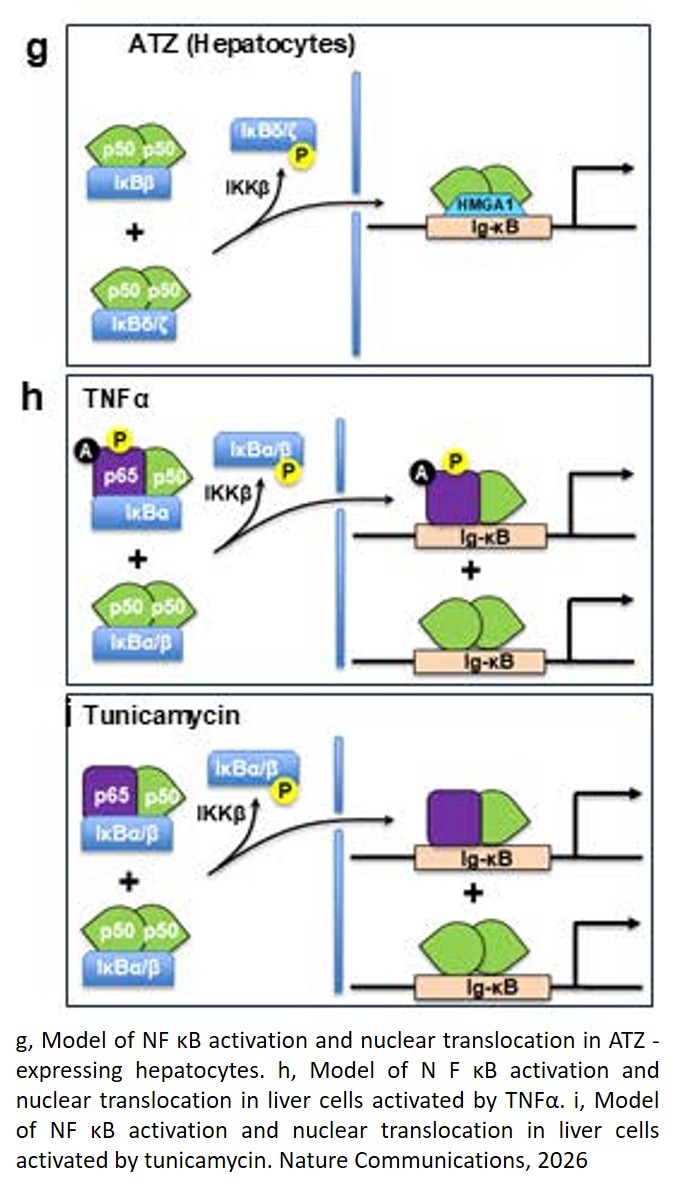
Studying human cell lines and mouse models of alpha1-antitrypsin deficiency, the authors showed that aggregated proteins in the endoplasmic reticulum of liver cells trigger the polymerized protein response through a molecule called Derlin-2, which then activates an important molecule called an NF-kappa-B p50 homodimer. These interactions set in motion a genetic program that protects the cell. The team are continuing this research to work out the details of that protection.
The senior author said the identification of this new process could help researchers design ways to identify which patients with alpha1-antitrypsin deficiency are at highest risk of developing severe liver disease and will likely require a liver transplant. Early identification — before the liver damage becomes apparent — could help guide treatment decisions and reveal potential routes to new therapies and prevention strategies.
“We think the polymerized protein response is a cellular adaptation that protects most patients from liver damage due to these aggregated proteins building up in their liver cells,” the author said. “It allows the cells to be healthy despite the presence of the proteins. As long as this signal is present, the cells are able to handle the protein load.”
Importantly, the study found that the polymerized protein response could apply to aggregated proteins in diseases beyond alpha1-antitrypsin deficiency. Their experiments showed that the response can be triggered in a rare age-dependent dementia, inherited diabetes insipidus and amyotrophic lateral sclerosis (ALS) because each of these is caused by a genetic variant that aberrantly polymerizes in the endoplasmic reticulum of the cells in which they are made.
“We are continuing to investigate the molecular details of the polymerized protein response and how it plays a role in a host of diseases caused by aggregation-prone proteins, in addition to alpha-1 antitrypsin deficiency,” the senior author said.