



Role of purine metabolism in atherosclerosis
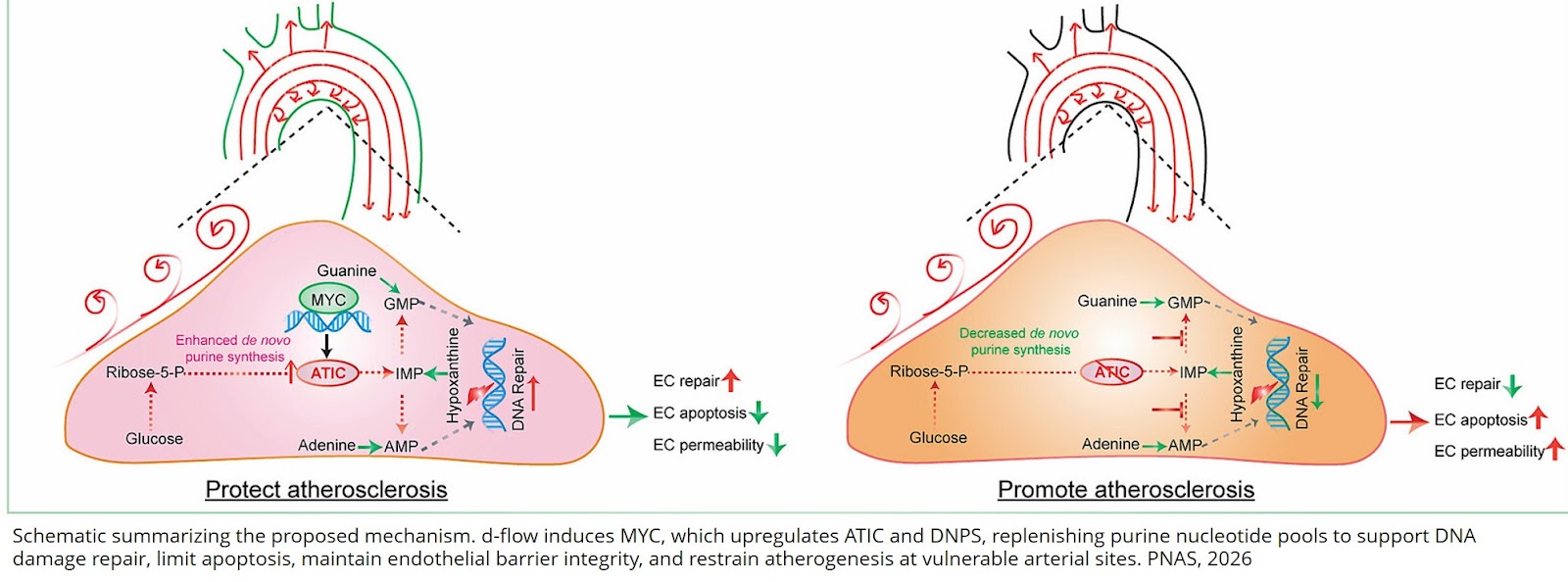
A study reveals a previously unrecognized way blood vessels can protect themselves from damage and slow the development of atherosclerosis. The findings, published in the Proceedings of the National Academy of Sciences, have implications for both vascular precision medicine and the safety of certain emerging cancer treatments.
“Atherosclerosis is a disease in which fatty deposits slowly build up inside arteries, making them narrower and harder over time. This reduces blood flow and can lead to heart attacks, strokes or poor circulation when vital organs don’t get enough oxygen,” said corresponding author. “Atherosclerosis is a major cause of death despite fat-lowering therapies, partly because non-fat drivers of vascular injury are poorly defined. In the current study, we took a closer look at endothelial cells that line the inside of blood vessels and their response to factors that promote atherosclerosis.”
Atherosclerotic lesions develop preferentially at arterial regions exposed to disturbed flow (d-flow), which causes DNA damage, genomic stress, endothelial injury and endothelial barrier dysfunction.
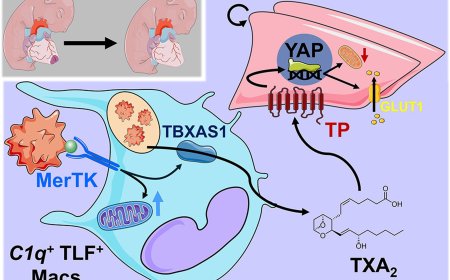
“We know that d-flow can reprogram endothelial cell metabolism,” said the first author. “We focused on understanding the effect of d-flow on the cells’ ability to repair DNA damage. Specifically, we investigated how d-flow affected the synthesis of purines, compounds required for building new DNA molecules needed to repair DNA.”
The authors worked with carotid arteries from a mouse model and with living models. They showed that d-flow stimulates the expression of genes involved in the synthesis of new purines in endothelial cells and ATIC genes and that this response aligns with endothelial cells engaged in repairing damaged DNA.
Deleting an enzyme involved in purine synthesis called Atic led to endothelial cell death, disruptions in endothelial barrier integrity and accelerated atherosclerosis,” the author said. “Supplementing purines reverted these effects.”
“Our findings reveal that while d-flow damages endothelial cells, they are not passive bystanders, they attempt to protect themselves by engaging DNA repair pathways that can preserve endothelial barrier function and slow down atherosclerosis progression,” the author said. “This work suggests that future therapies that strengthen endothelial DNA repair could complement cholesterol-lowering drugs and reduce the risk of atherosclerosis and subsequent heart disease.”
This study also raises concerns about cancer drugs that block the synthesis of new purines, which currently are under investigation. “Our study suggests that these drugs could carry the unintentional side effect of preventing endothelial cells from repairing damaged DNA,” the author said. “Our findings support careful evaluation of these drugs’ potential to compromise endothelial cell integrity.”
https://www.pnas.org/doi/10.1073/pnas.2526299123
https://sciencemission.com/Purine-metabolic-adaptation-protects-the-endothelium