

The mechanism behind quality control of insulin in the endoplasmic reticulum
Calcium (Ca2+) drives many cellular functions, though the way it controls quality of proteins in the endoplasmic reticulum (ER), a cellular organelle that synthesizes and transports proteins, is widely unknown. This control system of protein quality, known as proteostasis, was put under a microscope by researchers to find a more thorough understanding of the process, potentially revealing clues about how to prevent Type 2 diabetes, Alzheimer's and amyotrophic lateral sclerosis (ALS).
The study was published in Nature Cell Biology.
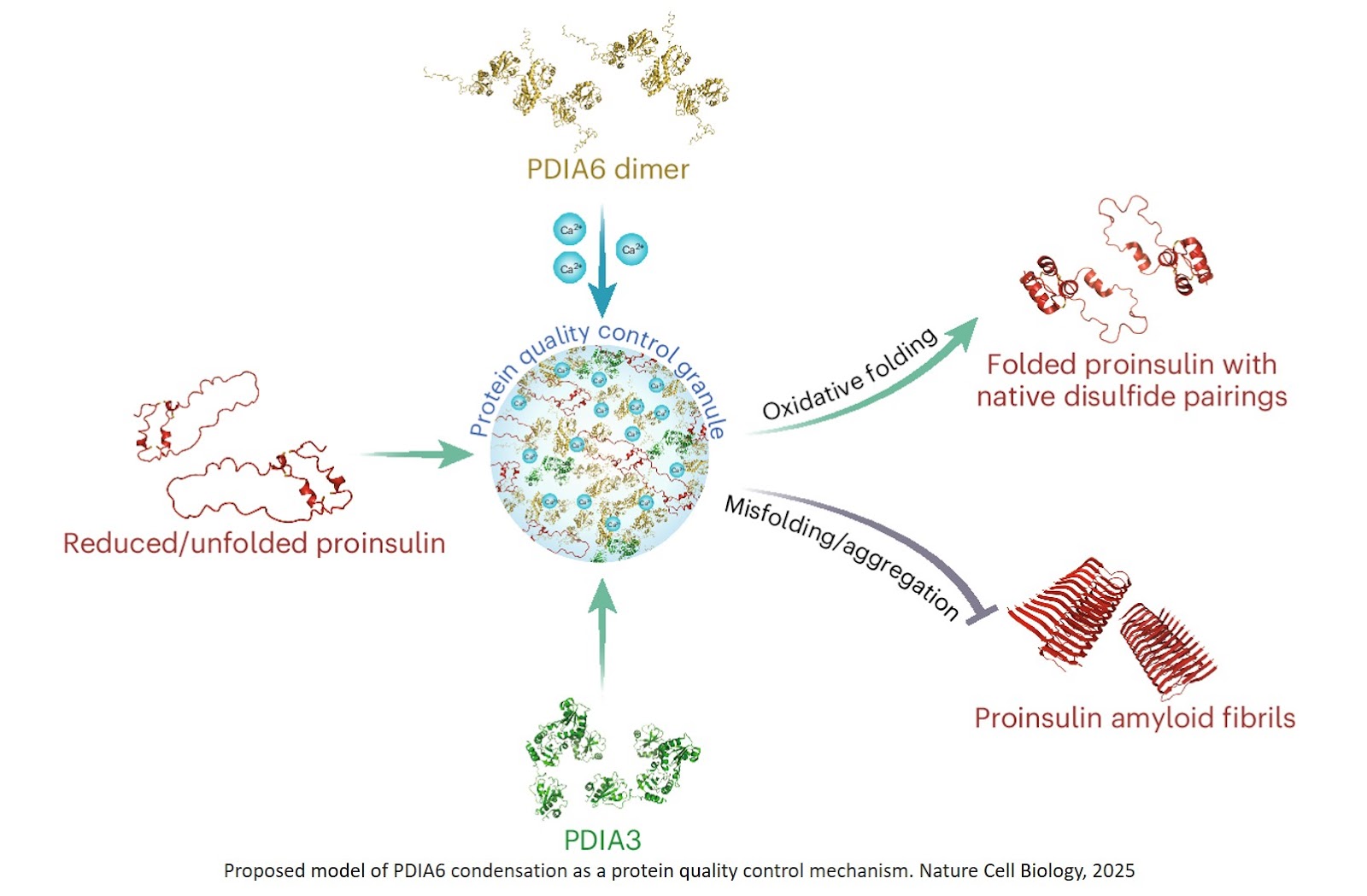
With the goal of elucidating Ca2+ driven proteostasis in the ER in mind, they found that Ca2+ can induce a phase separation in PDIA6, an ER-resident disulfide isomerase and molecular chaperone. Therefore, if this protein loses its function, misfolding can occur. The consequences for improperly folded proteins can be dire - such as diabetes. The authors also found transient but specific electrostatic interactions occur between the first and the third folded thioredoxin-like domains of PDIA6.
The researchers observed that PDIA6 condensates recruit proinsulin, thereby accelerating the oxidative proinsulin folding and suppressing the proinsulin aggregation inside quality control granules, essential for secretion of insulin.
"To keep everything running smoothly, we need these condensation-like droplets to ensure proinsulin is properly folded - as opposed to forming large, aggregate clumps that can disrupt the normal pathways and cause negative health outcomes," said the author.
https://www.nature.com/articles/s41556-025-01794-8
https://sciencemission.com/PDIA6-biomolecular-condensation