

Metabolic dysfunction from heat stress via skin-hypothalamus axis
Although the global temperatures have skyrocketed over the years, the impact of heat stress on metabolic health remains less understood.
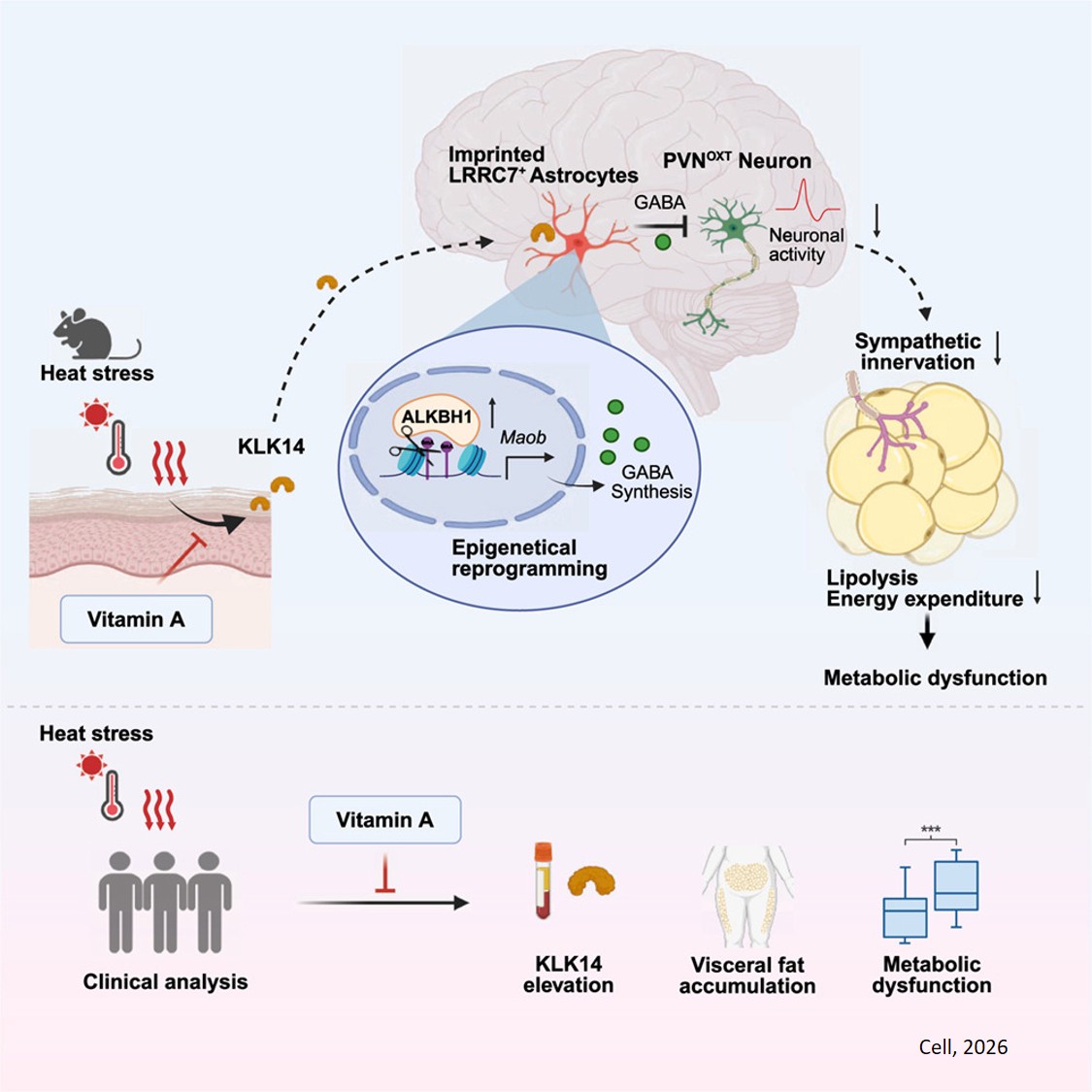
The authors show that heat stress activates a skin-hypothalamus axis via kallikrein-related peptidase 14 (KLK14) -dependent epigenetic reprogramming of LRRC7⁺ astrocytes, thereby exacerbating diet induced metabolic dysfunction.
Mechanistically, LRRC7⁺ astrocytes suppressed neighboring paraventricular nucleus (PVN)OXT neuron activity via alkB homolog 1, histone H2A dioxygenase (ALKBH1)-mediated epigenetic modification of γ-aminobutyric acid (GABA) synthesis, thus driving visceral fat deposition in a sympathetic nervous-system-dependent manner.
Increased KLK14 was also observed in humans subjected to heat stress and vitamin A reduced KLK14 levels and mitigated metabolic impairment in both mice and humans.