

Nasal swab test spots early Alzheimer’s signals
Alzheimer’s disease affects millions of people worldwide, yet the illness is hardest to catch at the very beginning, when new treatments may work best.
In a new study, the researchers show that a quick, outpatient nasal swab can pick up early biological changes linked to Alzheimer’s, even before thinking and memory problems appear.
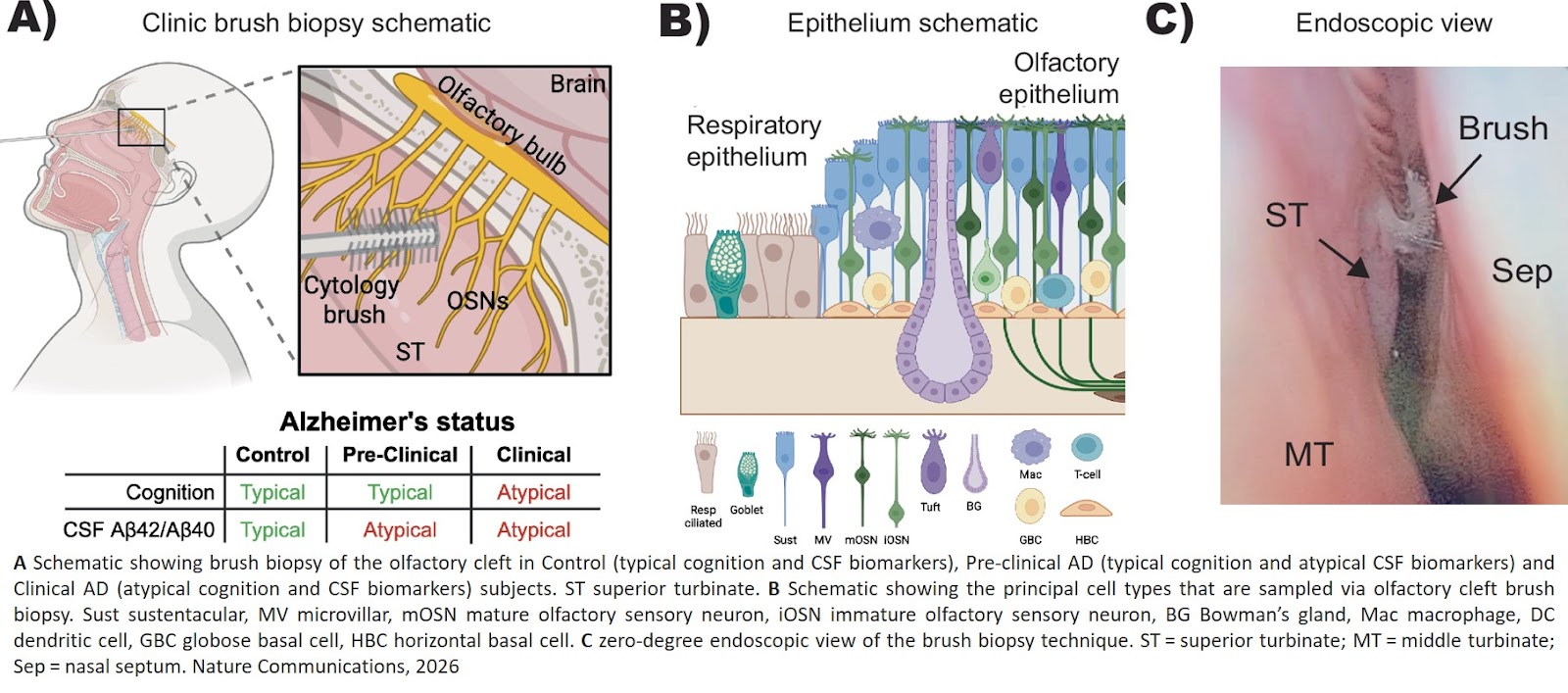
The study, published in Nature Communications, used a gentle swab placed high inside the nose to collect nerve and immune cells. When researchers analyzed these cells, they found clear patterns that separated people with early or diagnosed Alzheimer’s from those without the disease.
“We want to be able to confirm Alzheimer’s very early, before damage has a chance to build up in the brain,” said the corresponding author.
“If we can diagnose people early enough, we might be able to start therapies that prevent them from ever developing clinical Alzheimer’s,” the author said.
The procedure to collect nasal cells took just a few minutes. After applying a numbing spray, a clinician guides a tiny brush into the upper part of the nose where smell detecting nerve cells live. Researchers then study the collected cells to see which genes are active, a sign of what’s happening inside the brain.
The study compared samples from 22 participants, measuring the activity of thousands of genes across hundreds of thousands of individual cells, amounting to millions of data points. The nasal swab was able to pick up early shifts in nerve and immune cells. This includes people who showed lab-based signs of Alzheimer’s but had no symptoms yet.
A combined nose tissue gene score correctly separated early and clinical Alzheimer’s from healthy controls about 81% of the time.
Current blood tests for Alzheimer’s detect markers that appear later in the disease process. By contrast, this nasal swab captures living nerve and immune activity and may provide an earlier, more direct look at disease‑related changes, helping identify people at risk sooner.
“Much of what we know about Alzheimer’s comes from autopsy tissue,” said the study’s first author. “Now we can study living neural tissue, opening new possibilities for diagnosis and treatment.”
https://www.nature.com/articles/s41467-026-70099-7
https://sciencemission.com/Alzheimer%E2%80%99s-disease-pathobiology