

A protein involved in intercellular tau transmission identified!
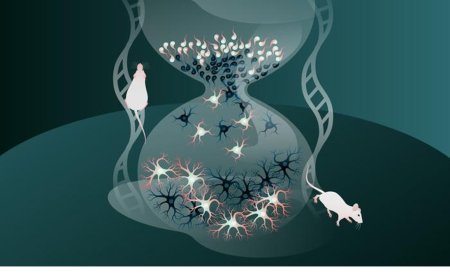
By studying a mouse model of Alzheimer’s disease with and without Arc protein, the research team found that Arc is needed for toxic Tau to spread.
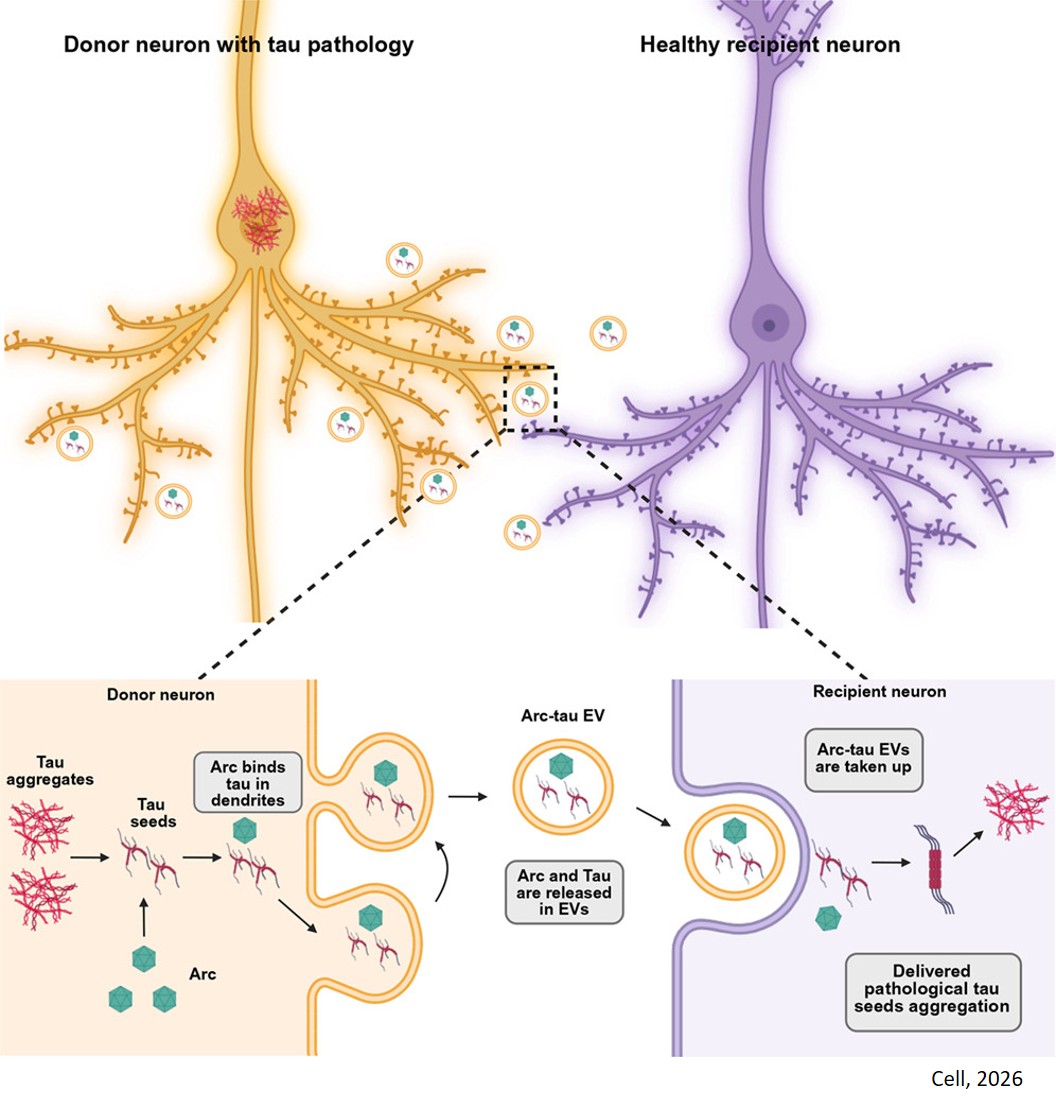
Arc normally serves as a vital messenger between brain cells: it wraps itself up in a microscopic bubble, called an extracellular vesicle or EV, that floats from one neuron to the next, carrying important information. But toxic Tau can stick to Arc to hitch a ride from a diseased neuron to a healthy one.
All brain cells, healthy and unhealthy, contain Tau. But in Alzheimer’s disease, Tau starts clumping together into massive, sticky tangles inside neurons, ultimately killing the cells. The first author on the paper compares Tau tangles to “glue monsters.”
“They glue together and block transportation within the neuron,” the author explains. “But they can break down into smaller glue monsters, called Tau seeds, which can then get transferred to a new neuron. And once this Tau seed comes into contact with healthy Tau, it is able to corrupt it. So, the pathology starts all over again in a healthy neuron.”
In a mouse model of Alzheimer’s disease, the researchers found EVs containing both Arc and “sticky” Tau within the brain. These tiny bubbles of Arc and Tau could infect healthy cells and start new Tau tangles.
But in Alzheimer’s model mice that lacked Arc, their brain EVs contained barely any Tau and could no longer spread the disease to new cells. “When we removed Arc, we saw that the transfer of Tau was severely, severely reduced,” the author says. “It was almost gone.”
While it may seem like blocking Arc could be a therapeutic solution for Alzheimer’s, the protein may also play a protective role in early stages of the disease. By getting rid of excess toxic Tau, Arc seems to help sick cells stay alive longer.
The researchers found that in mice that lack Arc and thus can’t eject toxic Tau from sick cells, those sick cells die faster.
“When Arc is absent, Tau becomes trapped inside neurons and accumulates to toxic levels. When Arc is present, Tau can be released in extracellular vesicles. While this helps reduce Tau buildup within the original neuron, the released Tau can be taken up by neighboring healthy neurons, promoting the spread of pathology,” the author says.
This suggests that stopping toxic Tau from entering healthy cells could be a more effective therapeutic strategy than preventing Tau release from sick cells.
The team found that, like in mice, human brain tissue also contains EVs that include both Arc and Tau, suggesting that Tau likely spreads in a similar way in people. However, the researchers caution that more work is needed before a therapy is possible.
“Most of the work we’ve been doing is in mice, not in humans,” the senior author says. “We have some clues that whatever is happening in these mice could also be happening in humans, but we don’t know that yet. And we’re far away from saying that we’re developing a treatment for anything. But it could open new avenues to get to that point.”
The team is especially excited by the possibility that future therapies might block toxic Tau-containing EVs “mid-flight,” after they’ve been ejected from sick cells but before they can infect healthy ones. Such therapies wouldn’t repair existing damage to the brain but might prevent the disease from progressing.
“If we could target these particular EVs, that would be a really useful therapy strategy,” the author says. “For someone with early-onset Alzheimer’s or dementia, if we could stop the spread, then we could prevent further damage and cognitive decline.”
https://www.cell.com/cell/fulltext/S0092-8674(26)00695-1
https://sciencemission.com/Arc-mediates-intercellular-tau-transmission