



How the body detects temperature changes
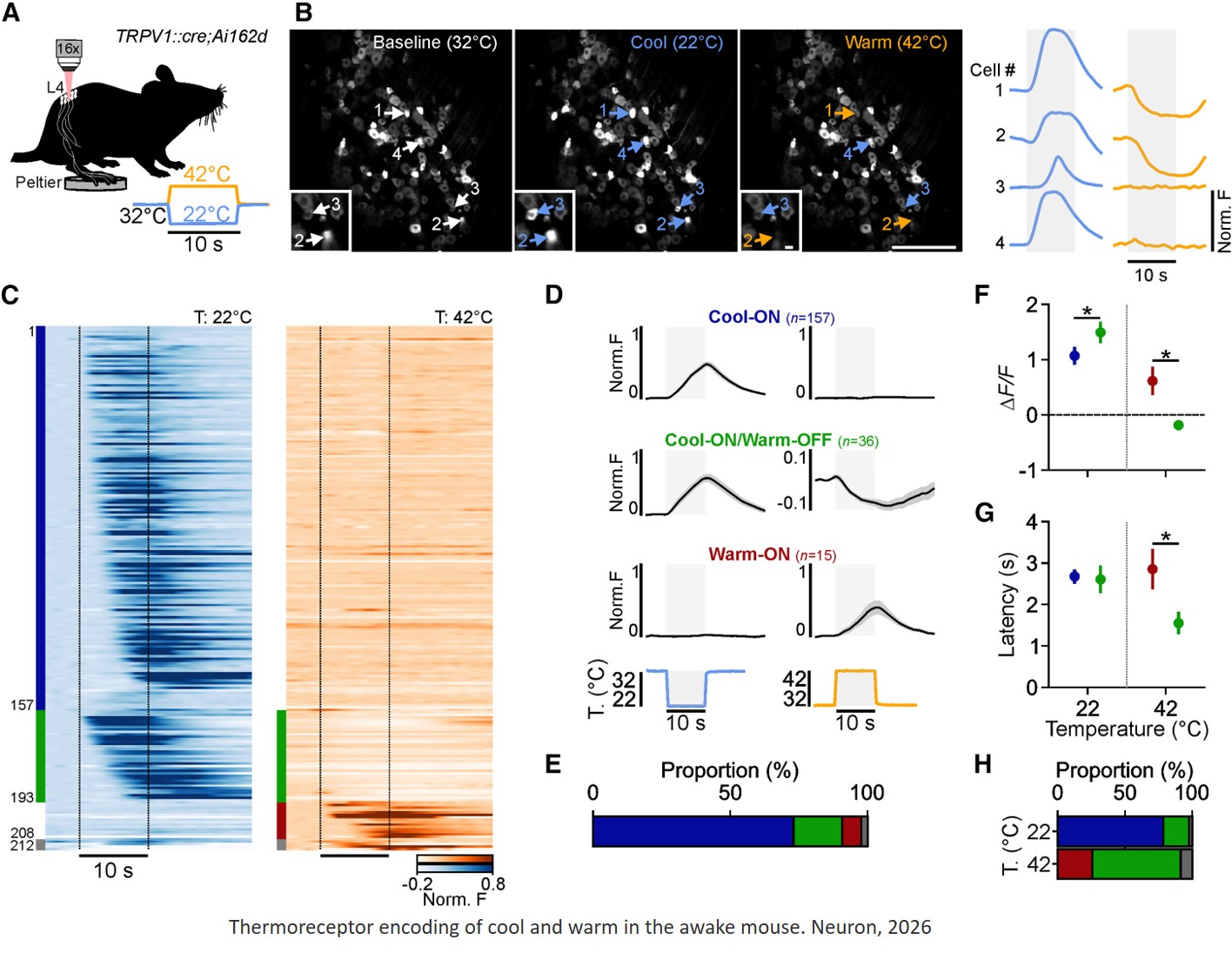
New research has challenged what scientists understand about how the body’s nervous system senses warm and cool temperatures.
The researchers found most of the skin’s temperature sensitive nerve cells can sense both cool and warmth, challenging a widely accepted view that skin relies on separate nerve cells to detect each temperature.
The senior author said these specialised nerve cells, called thermoreceptors, are critical to human survival.
“Thermoreceptors are the body’s first responders, detecting and relaying to the brain what is happening at the body’s surface,” the author said.
“Our study shows that rather than relying on 2 separate nerve cells to sense warmth and cool, the body’s thermoreceptors can signal both sensations to the brain – increasing activity in cooler conditions and decreasing when temperatures rise.
“These findings could help explain what happens when the body’s thermoreceptors become impaired in ageing and disease.”
Using advanced imaging in mice models, researchers tracked how thousands of thermoreceptor cells responded to cool and warm temperatures.
The study focused on every day, ordinary non-painful temperatures such as entering cold rooms, or warm bathwater.
The authors also found that both activation and suppression could arise from a single cool-selective channel, TRPM8, with diverse response profiles explained by differences in TRPM8 conductance.
Another author said this new understanding of the body’s thermoreceptors could inform treatments for people struggling with thermal dysfunction.
“Humans tightly regulate their core body temperature, making accurate temperature sensing critical to homeostasis – the body's ability to maintain a stable internal environment,” the author said.
“People living with spinal cord injury, multiple sclerosis, diabetes or peripheral neuropathy can lose aspects of thermal sensors, making it difficult to respond to environmental temperature changes.
“Ageing is also a significant concern – older adults are at risk in heat waves and climate change - and disrupted thermal sensors may contribute to why they struggle to regulate temperature.”
The author said researchers further wanted to understand if impaired thermoreceptors were an early indicator of degeneration in the body, similarly to how hearing loss has been linked to dementia.
“Our hope is our research will change the way the body’s thermoreceptors are understood, which is critical to developing effective therapies,’’ the author said.
“This is important because if treatments target the wrong nerve cells or pathways, they simply won’t work.”