





Antifungal treatments during pregnancy linked to changes in foetal hormone production
Many pregnant women develop fungal infections, which are often treated with widely used azole-based antifungal medicines.
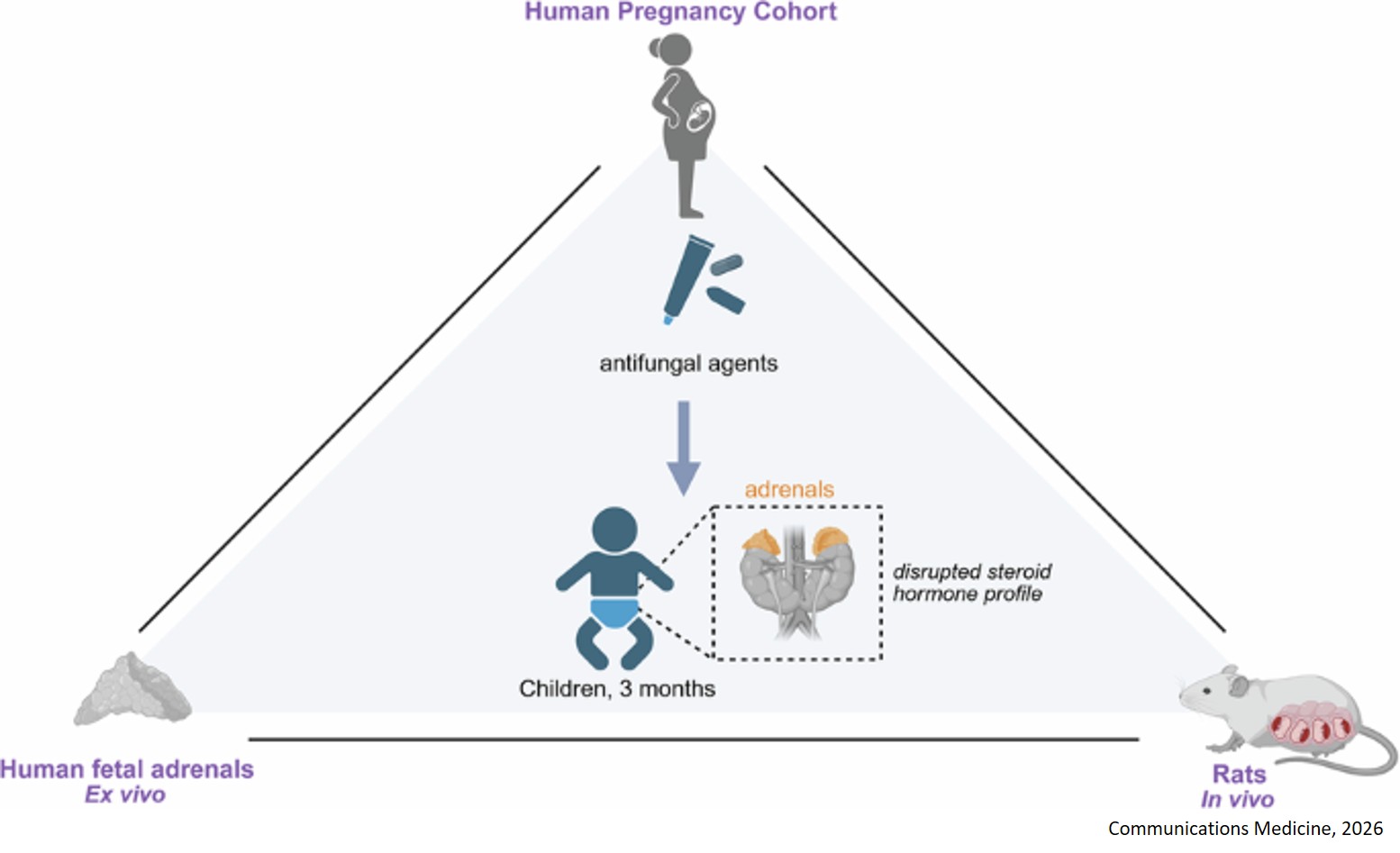
A new study suggests that the use of these medicines during pregnancy may be associated with changes in fetal hormone production, with effects persisting in children after birth.
However, the researchers do not yet know whether the differences they have identified will affect the children’s health or their ability to have children later in life.
The researchers analysed data from 589 Danish mother–child pairs. Their findings were supported by laboratory experiments using human fetal adrenal tissue and studies in pregnant rats, in which the researchers examined both blood and adrenal tissue from the rat fetuses.
The study found that children whose mothers used antifungal medicines during pregnancy had altered levels of adrenal hormones three months after birth.
The authors show that early-pregnancy antifungal exposure is associated with reduced circulating steroid hormone levels and indicators of diminished androgen action. In contrast, exposure during mid-to-late pregnancy is associated with elevated steroid hormone levels and longer anogenital distance (AGD) in both female fetuses and male infants.
Consistent with these observations, the antifungal agent clotrimazole reduced progesterone levels in human fetal adrenal cultures and in gestationally exposed rats, whereas miconazole increased AGD in rats.
“It is striking that the use of azole-based antifungals during pregnancy appears to affect adrenal hormone levels in children long after birth. Although the hormone levels remained within the normal range, the results suggest that fetal development may have been affected,” says the senior author.
Adrenal hormones help regulate many functions in the body, including glucose metabolism, blood pressure, immune function, as well as growth and reproductive development.
Another researcher elaborates, “This is particularly noteworthy because the treatments were primarily over-the-counter topical preparations, such as creams and vaginal tablets, which have traditionally been considered safe to use during pregnancy.”
The researchers therefore believe that the safety of widely used antifungals during pregnancy warrants further investigation.
Another author says, “The fact that the findings in children are supported by results from both human fetal adrenal tissue and experiments in rats strengthens our hypothesis that there is a link with the use of azole-based antifungal medicines”.
The study cannot directly establish that azole-based antifungal medicines cause the hormonal changes observed in children, nor can the researchers conclude from the study that commonly used antifungal medicines are harmful to children. However, the results highlight the need for further research into the safety of widely used antifungals during pregnancy.