


Brain development risks associated with certain medications during pregnancy
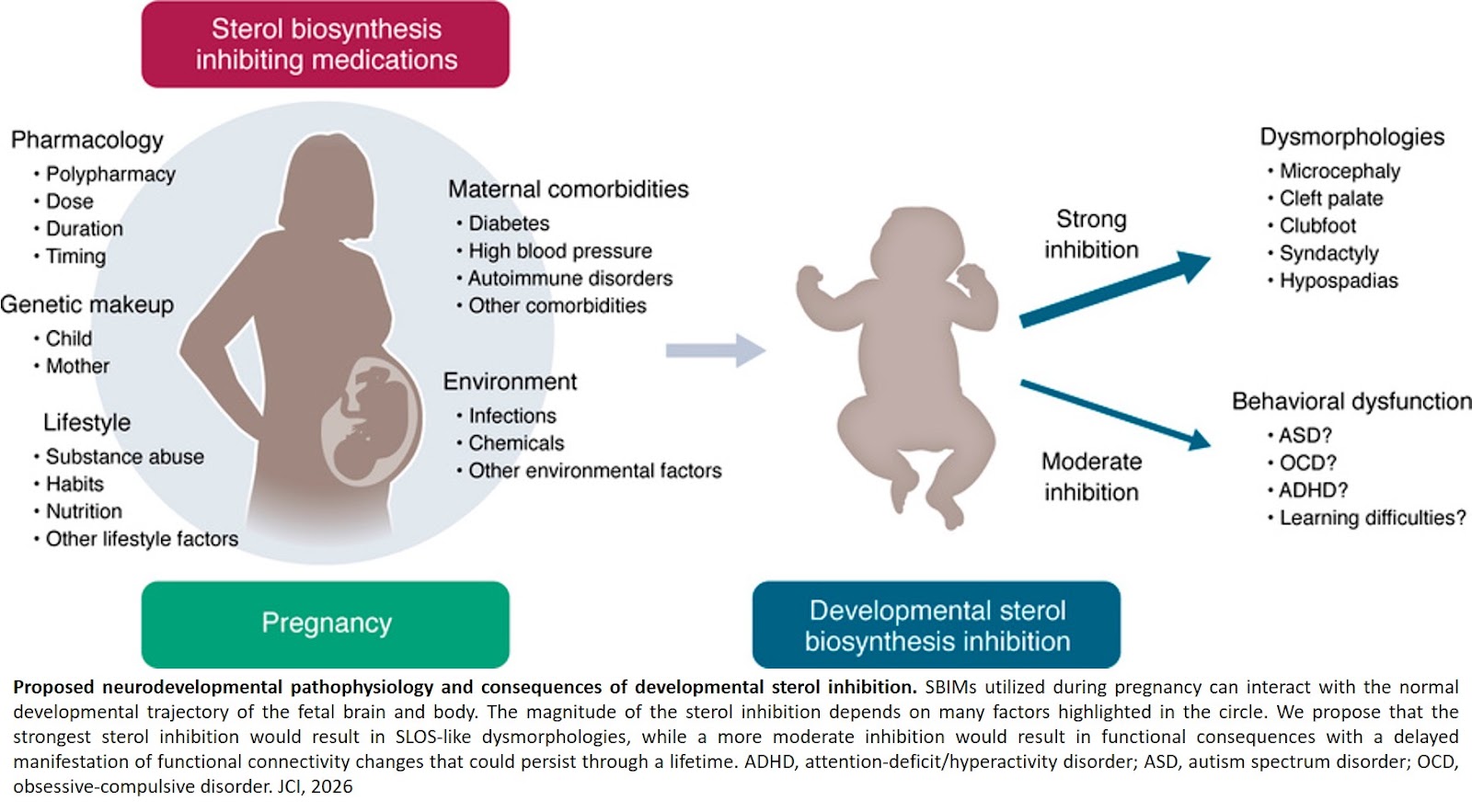
A review article by a research team underscores and describes how altering fundamental brain development processes can be detrimental for the developing baby.
The publication suggests that curtailing use of certain medications could reduce the risk for neurodevelopmental pathology in the developing fetal brain. The medications studied include some statins, antidepressants, anxiety medications and cardiovascular drugs.
Cholesterol biosynthesis is essential for the proper development of the brain. When it is interfered with, the article states, children may be born with or develop complex neurodevelopmental disorders, such as autism, fetal fentanyl syndrome and Smith-Lemli-Opitz syndrome.
The Journal of Clinical Investigation article puts in context previous publications by members of the same team and their national and international collaborators, including more than 125 other well-respected, peer-reviewed publications.
The corresponding author of the article said the impact of interference in the prenatal sterol biosynthesis pathway with sterol biosynthesis-inhibiting medications (SBIMs) is well-documented.
“In addition, our recently published study of 6.14 million health records from mothers and their children across the United States -- about one out of every three births between 2014 and 2023 -- show that among women who were prescribed these medications, there was a significantly increased incidence of autism spectrum disorder (ASD) in their children,” the author said.
“A particular concern is that utilization of these medications by pregnant women is on a steep rise, more than tripling over the decade from 2014 to 2024,” said the lead author of both the new review of scientific literature and that earlier publication.
The Molecular Psychiatry study found that the prescriptions of these medications during pregnancy increased from 4.6% of pregnancies in 2014 to 16.8% of pregnancies in 2023. Notably, the 15 studied medications were among the most commonly prescribed drugs in the U.S. with more than 400 million times a year.
The researchers also identified the mechanism underlying fetal fentanyl syndrome (FFS), also through inhibition of the same biological system: sterol biosynthesis in the developing brain.
Concern that SBIMs used during pregnancy could lead to adverse outcomes “is not new,” as the authors state in their paper.
“Medication package inserts (FDA-approved prescription information) developed by pharmaceutical companies clearly state the risks of medications if taken during pregnancy,” the article states. “Unfortunately, although the package inserts are easily accessible for physicians and patients, the relevant data are often buried in the large amount of information in them.”
According to their view, while this new approach provides more nuanced information, it can cause confusion and could be counterproductive for prescribing healthcare workers and patients.
The authors suggest the studies reviewed may be only the tip of the iceberg.
“Apart from the more apparent dysmorphologies and dysfunctions, we are left with the question of whether inhibiting fetal sterol biosynthesis can result in other developmentally rooted challenges, such as anxiety, OCD and ADHD, that do not appear until much later in life.
“More research is clearly needed, but these grave concerns should not be ignored,” the author
https://www.jci.org/articles/view/208000
https://sciencemission.com/Sterol-biosynthesis