

Blood-flow restriction training for type 2 diabetes
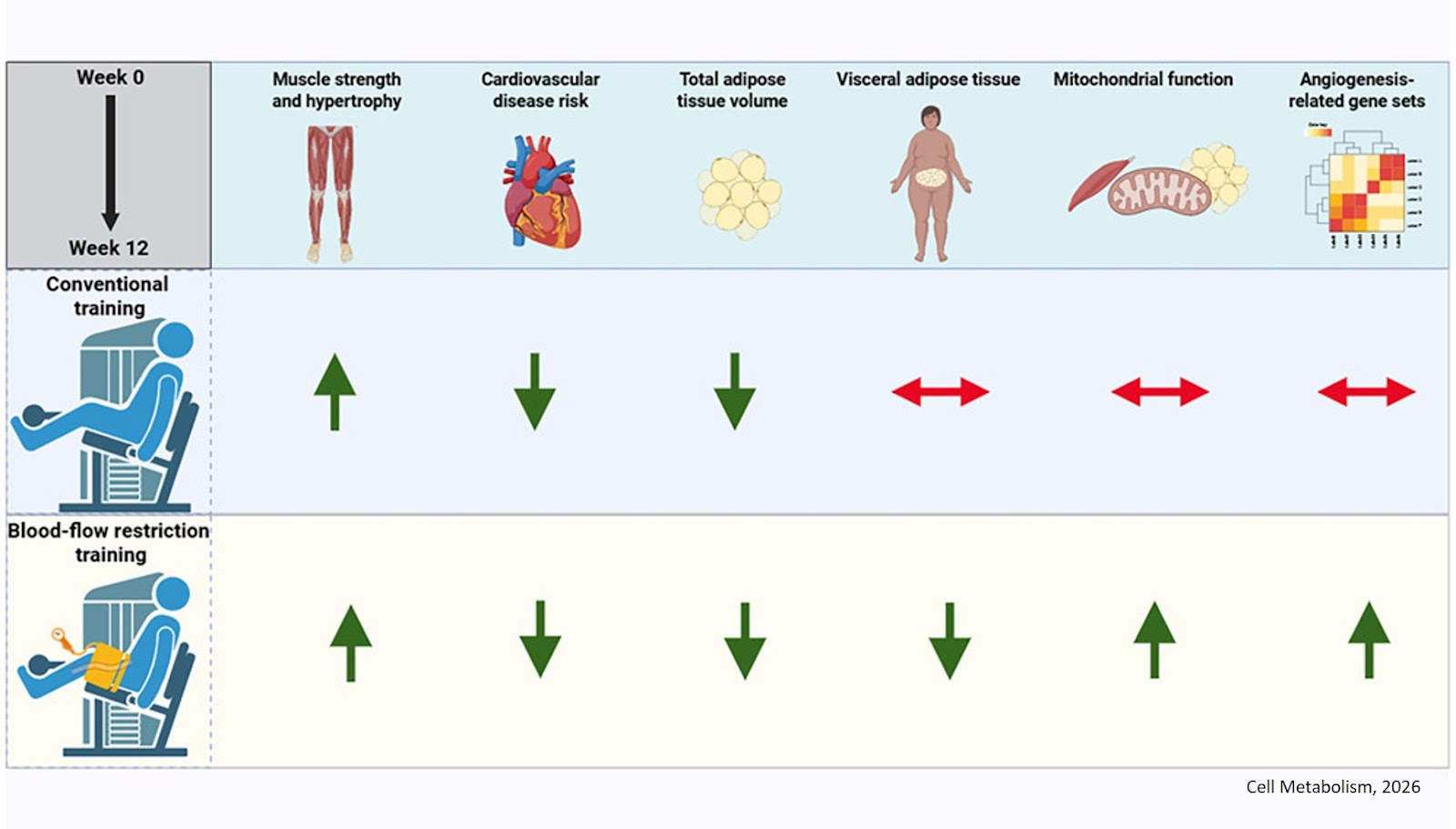
Physical training is an important part of type 2 diabetes therapy and supports both blood glucose control and muscle energy metabolism. A new study shows that blood flow restriction training (BFRT) offers particular advantages. Despite significantly lower weight loads, BFRT improves muscle strength just as effectively as classic strength training with high weight loads. In addition, BFRT reduces abdominal fat (visceral adipose tissue), improves mitochondrial function— for example cellular energy production—and increases blood flow. This reduces the risk of diabetes-related comorbidities. BFRT can therefore be an alternative to classic strength training for people with type 2 diabetes. The results of the study were recently published in the renowned journal Cell Metabolism.
Strength training strengthens muscles, improves blood glucose control, and is said to reduce the risk of cardiovascular disease. However, people with lower physical fitness, age-related muscle weakness, lower muscle mass, or obesity may find training with heavy weights difficult. In addition, many people underestimate how much weight they actually need to build muscle (about 70 percent of their individual maximum strength).
This is where BFRT comes in. This training method, which is already used in rehabilitation and competitive sports, physiotherapy, and a few gyms, involves placing inflatable cuffs on the thighs. This completely blocks venous blood flow and reduces arterial blood flow by up to 80 percent. Training is carried out with weights of only around 30 percent of the individual's maximum strength. Despite the low weights, an intense training stimulus is created because adaptation processes are activated that would otherwise only occur at significantly higher loads. However, little was known about how BFRT works in people with type 2 diabetes.
In the study, 20 people with type 2 diabetes, divided into two groups, completed training three times a week over a period of twelve weeks at the German Diabetes Center – either with BFRT or classic strength training. Both groups increased their muscle strength to a similar extent. In addition, their resting heart rate and blood pressure improved, and their fat tissue decreased; the participants lost weight. The decisive difference was in the distribution of body fat: classic strength training mainly reduced subcutaneous fat, while BFRT reduced visceral fat tissue surrounding the internal organs in the abdominal cavity.
“Visceral fat releases not only fatty acids but also pro-inflammatory messenger substances into the blood,” explains the senior author. “This promotes insulin resistance, for example a deterioration in insulin action, and increases the risk of cardiovascular disease. If this fatty tissue is specifically reduced, particularly beneficial effects on prevention and therapy can be expected. The fact that this occurs with BFRT, a low-impact form of exercise, is a particular advantage for people with type 2 diabetes.”
BFRT also affects the mitochondria, the powerhouses of the cells. Training increased their number and efficiency in the muscles. “Mitochondria determine how well muscle and fat cells can metabolize glucose and fats. The more efficient they are, the better the metabolism,” explains the author. In addition, the analysis showed that BFRT promotes processes that support the formation of new small blood vessels in the muscle (angiogenesis). Better blood circulation increases the supply of oxygen and nutrients to the muscles, thereby facilitating both glucose uptake and energy production in the cells.
Another author emphasizes the practical benefits of the study: “Many participants reported that they felt stronger and more resilient in their everyday lives. More than half signed up for a gym membership after the study ended in order to continue with regular strength training, if their fitness level allowed.”
https://www.cell.com/cell-metabolism/fulltext/S1550-4131(25)00547-9
https://sciencemission.com/Blood-flow-restriction-resistance-training