




Brain rhythms of depression
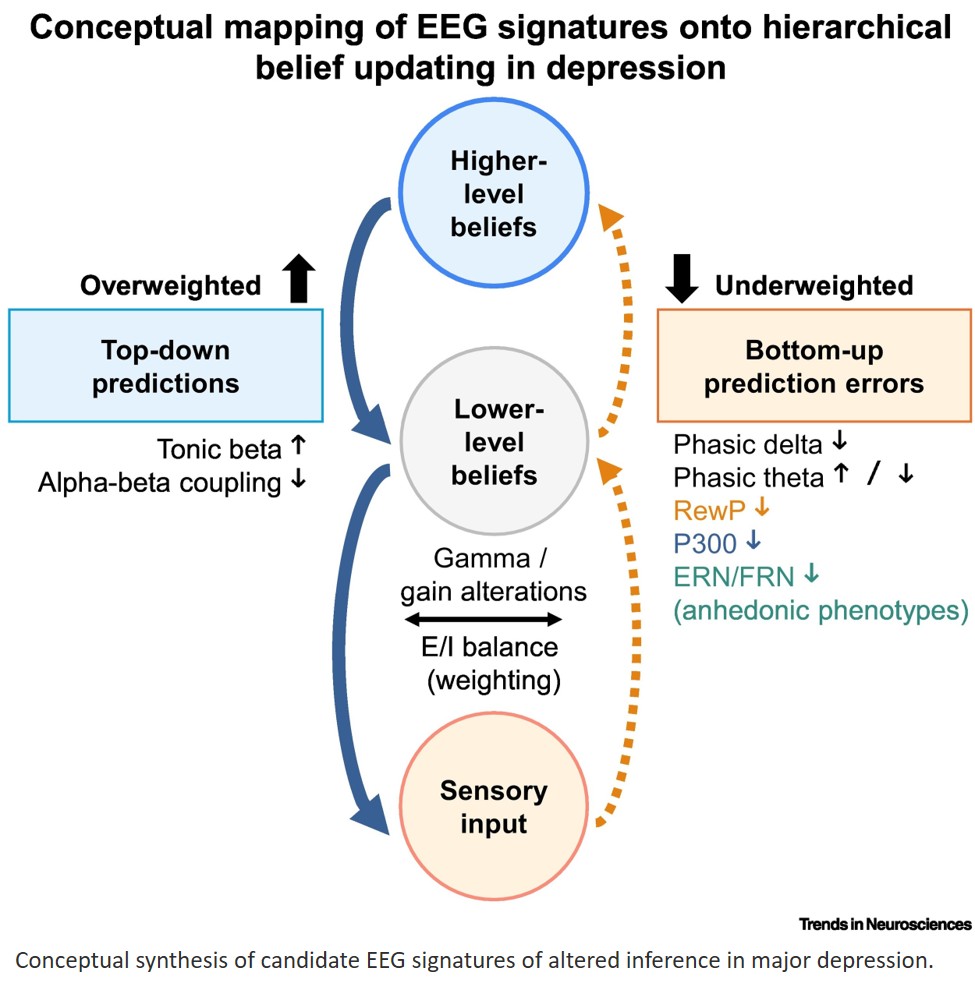
Findings from electroencephalography studies converge on the notion that depression involves disrupted updating of beliefs, wherein positive and corrective information carries too little weight to revise rigid expectations about the self and the world.
Across a range of neural signals, the brains of individuals with depression register outcomes and errors and engage in monitoring processes, but these signals exert less influence on how beliefs are subsequently revised.
Higher-frequency and non-rhythmic components of neural activity point to a brain state biased toward stability over flexibility, potentially shaped by an altered excitation-inhibition balance in the cortex.
Framing depression in terms of how the brain processes and weighs new information offers a mechanistic bridge between neural measures, symptoms such as rumination, and emerging targets for stratification and treatment.
https://www.cell.com/trends/neurosciences/fulltext/S0166-2236(26)00122-0
https://sciencemission.com/predictive-processing-perspective