

Extracellular vesicles in autoimmune diseases
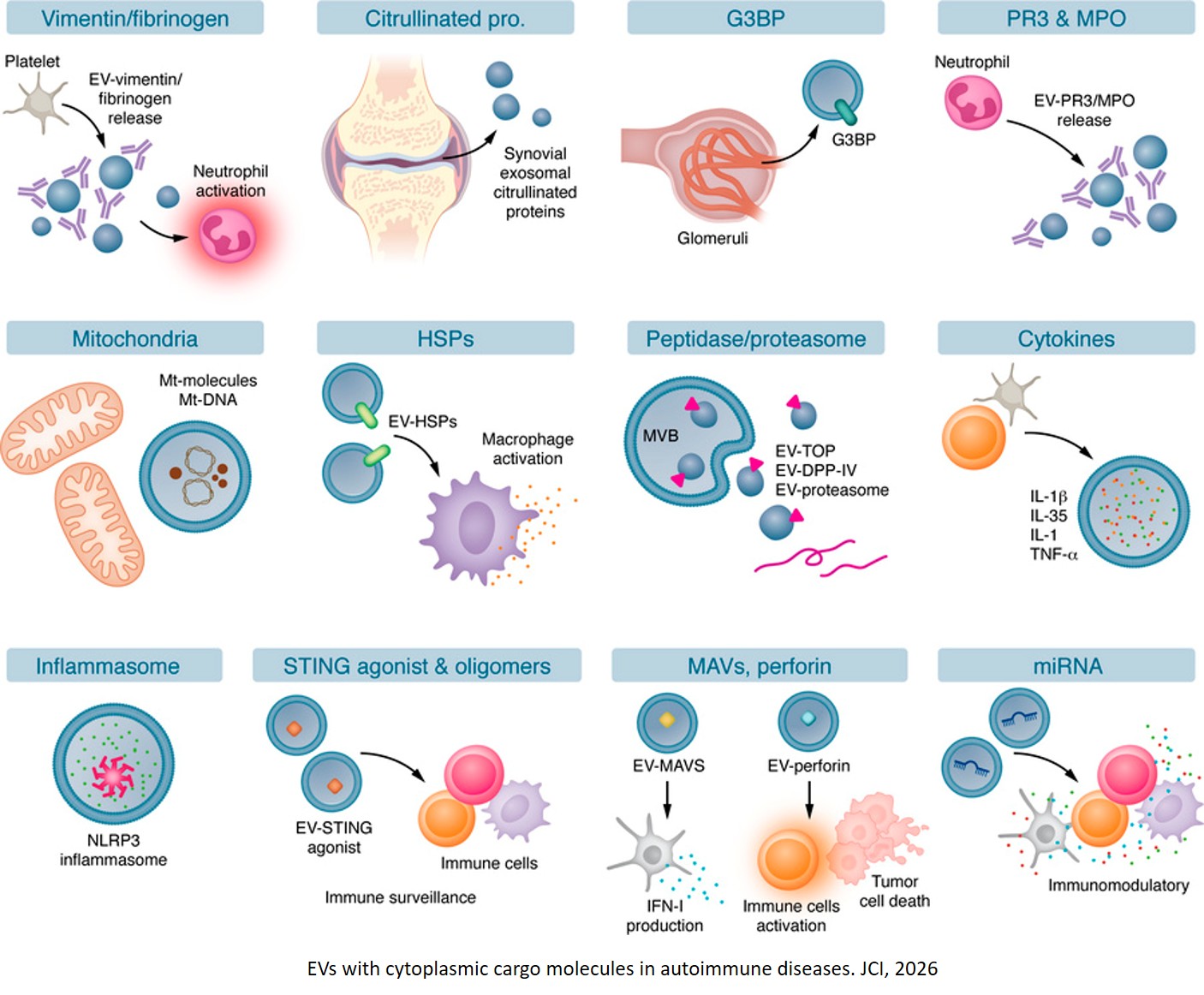
Different subcellular compartments like the nucleus, cytoplasm, and plasma membrane release extracellular vesicles (EVs) with cargo that play diverse roles in physiology and pathology, including in immune dysregulation and autoimmune pathogenesis.
EVs can transport immunogenic molecules from the nucleus or cytoplasm, as well as membrane-bound MHCs from antigen-presenting cells can activate adaptive immunity by presenting self-antigens to T cells.
EVs also drive inflammatory responses by shuttling a variety of proinflammatory molecules that sustain autoimmune responses. Also contribute to autoimmune surveillance by activating cytosolic surveillance sensors, modulating immune checkpoints, regulating NK/T cell cytotoxicity, and altering macrophage and DC phagocytosis.
The authors in this Review explore the emerging roles of EVs and their diverse cargo in driving autoimmune diseases.