
Electron acceptor diversity across eukaryotes
Life emerged when atmospheric oxygen was scarce, so early metabolic networks relied on anaerobic electron acceptors. These pathways remain widespread across eukaryotes, especially in hypoxic niches.
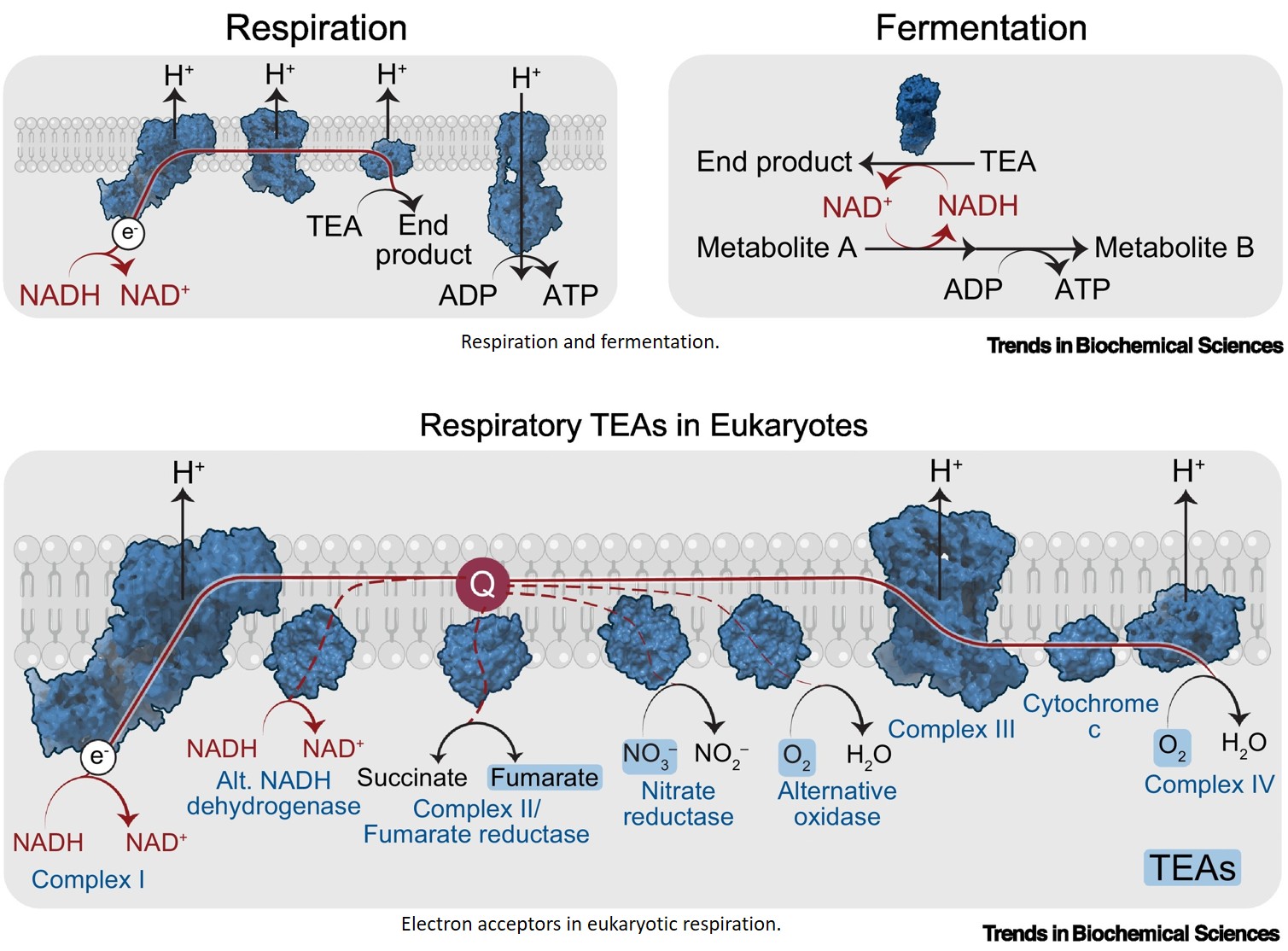
Electron flow proceeds through respiration (membrane-bound transport coupled to proton translocation) or fermentation (soluble enzymes transferring electrons to metabolites). The two differ in machinery, not in the identity of the electron acceptor.
Eukaryotes use diverse organic and inorganic electron acceptors, including pyruvate, fumarate, amino acid derivatives, nitrate, and protons.
Beyond their bioenergetic roles, the resulting products act as signals that control cell fate and physiology.
Anaerobic electron acceptor pathways once thought to be specific to microorganisms and invertebrates, including fumarate respiration and amino acid fermentation, are also significant features of mammalian metabolism.
https://www.cell.com/trends/biochemical-sciences/fulltext/S0968-0004(26)00217-3