

Generational chromosome repair!
DNA repair mechanisms are essential for maintaining the integrity of our genome. When they malfunction, they can cause disease or contribute to the development of cancer. Nature, however, offers remarkable examples of organisms that have evolved exceptional repair capabilities. Bdelloid rotifers are one such example.
These microscopic animals can survive extreme conditions, including complete desiccation and doses of ionising radiation exceeding 500 grays, more than 100 times the dose that is lethal to humans. At such levels, their chromosomes are shattered into dozens or even hundreds of pieces. How, then, can their genome be repaired and passed on to the next generation?
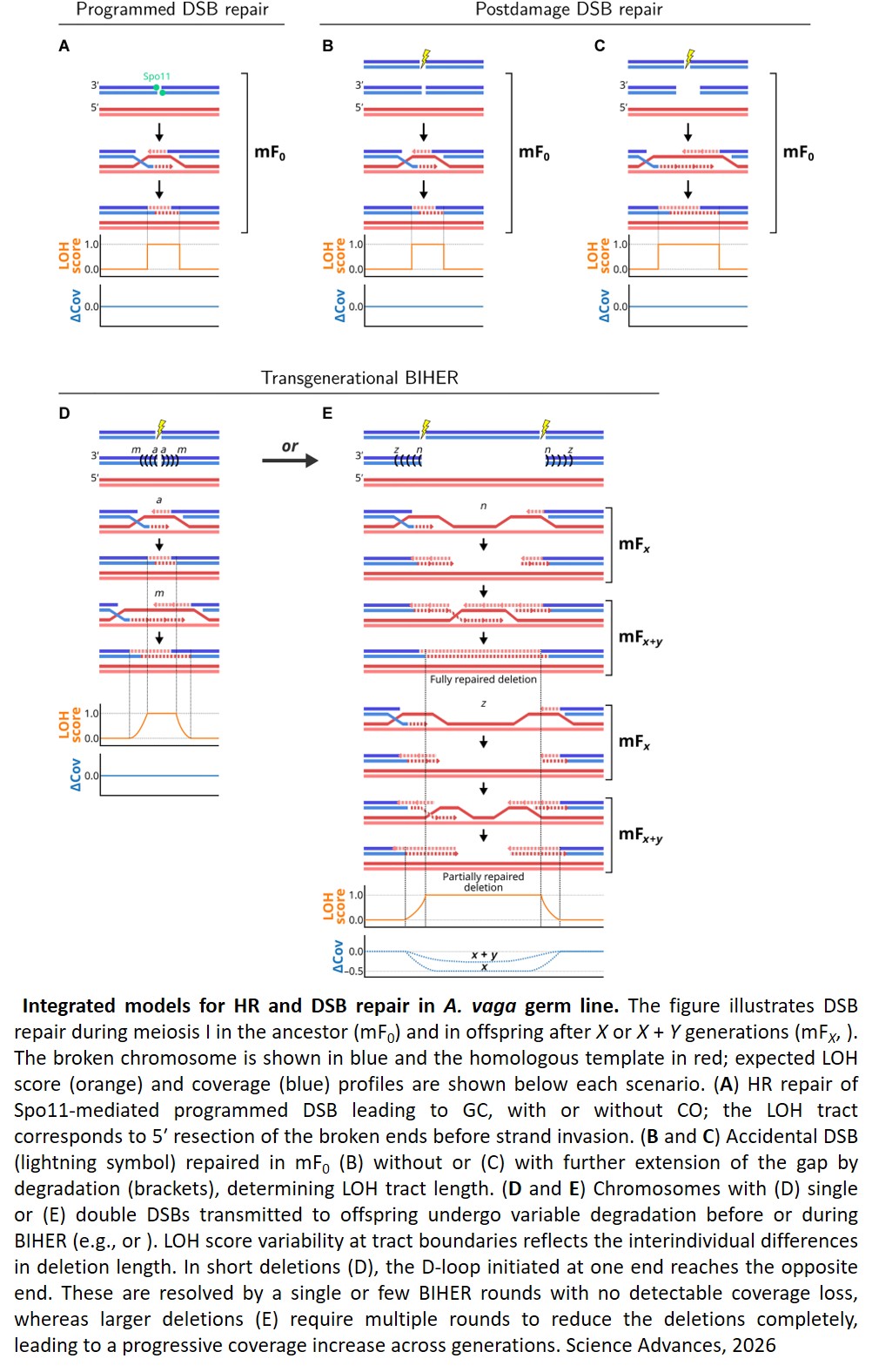
The study published in the journal Science Advances reveals a previously unknown repair strategy. The researchers show that, in the rotifer Adineta vaga, fragmented chromosomes are not necessarily repaired all at once. Some fragments can be retained and passed down through successive generations, then gradually reconstructed using intact fragments from the homologous chromosome as templates to copy the missing regions. The authors propose calling this new mechanism “BIHER”, short for “break-induced homologous extension repair”.
This strategy, which enables a fragmented genome to be gradually reconstructed over several generations, represents a major advance in our understanding of the extraordinary resilience of bdelloid rotifers. Beyond these organisms, the discovery shows that DNA repair can rely on mechanisms that are far more flexible and unconventional than previously thought. In the longer term, it could help improve our understanding of the consequences of genome repair defects involved in certain human diseases, including cancer.
For more than ten years, by combining their expertise in evolutionary and molecular biology, the researchers have gradually solved several of the major mysteries surrounding the bdelloid rotifer model species Adineta vaga. These include its asexual reproduction in the absence of males and its remarkable ability to survive both complete desiccation and exceptionally high doses of ionising radiation.
https://www.science.org/doi/10.1126/sciadv.aee0891
https://sciencemission.com/Transgenerational-chromosome-repair