





Gut-heart connection in heart failure!
The prevalence of chronic heart failure, affecting 6.7 million U.S. adults, is expected to increase. Despite rapid advance in therapeutics, chronic heart failure continues to have a high rate of morbidity and mortality. In recent years, the gut microbiome has emerged as a promising new frontier for understanding health and disease.
A team of researchers wondered if the gut microbiome could be an important key to understanding chronic heart failure and its disease progression. In a recent manuscript published in Nature Cardiovascular Research, the investigators surveyed longitudinal gut microbiome and multi-omic changes in individuals with chronic heart failure by measuring stool samples to profile individual gut microbiome composition.
Notably, they found that the gut microbial composition was significantly different in people with heart failure compared with healthy individuals, with fewer beneficial bacteria and an increase in microbes associated with inflammation.
At baseline, each participant underwent multi-omic profiling, including whole-genome sequencing of microbial DNA extracted from stool, untargeted metabolomics, targeted lipidomics from host plasma, targeted metabolomics of select gut microbial metabolites and a 76-cytokine Luminex immune panel from host serum, as well as extensive laboratory profiling.
The investigators discovered that individuals with heart failure had fewer bacteria and bacterial pathways involved in producing short-chain fatty acids (SCFAs), molecules that help regulate inflammation and support the health of the gut. They also had more bacteria and metabolic pathways associated with inflammation and potentially harmful effects on the gut.
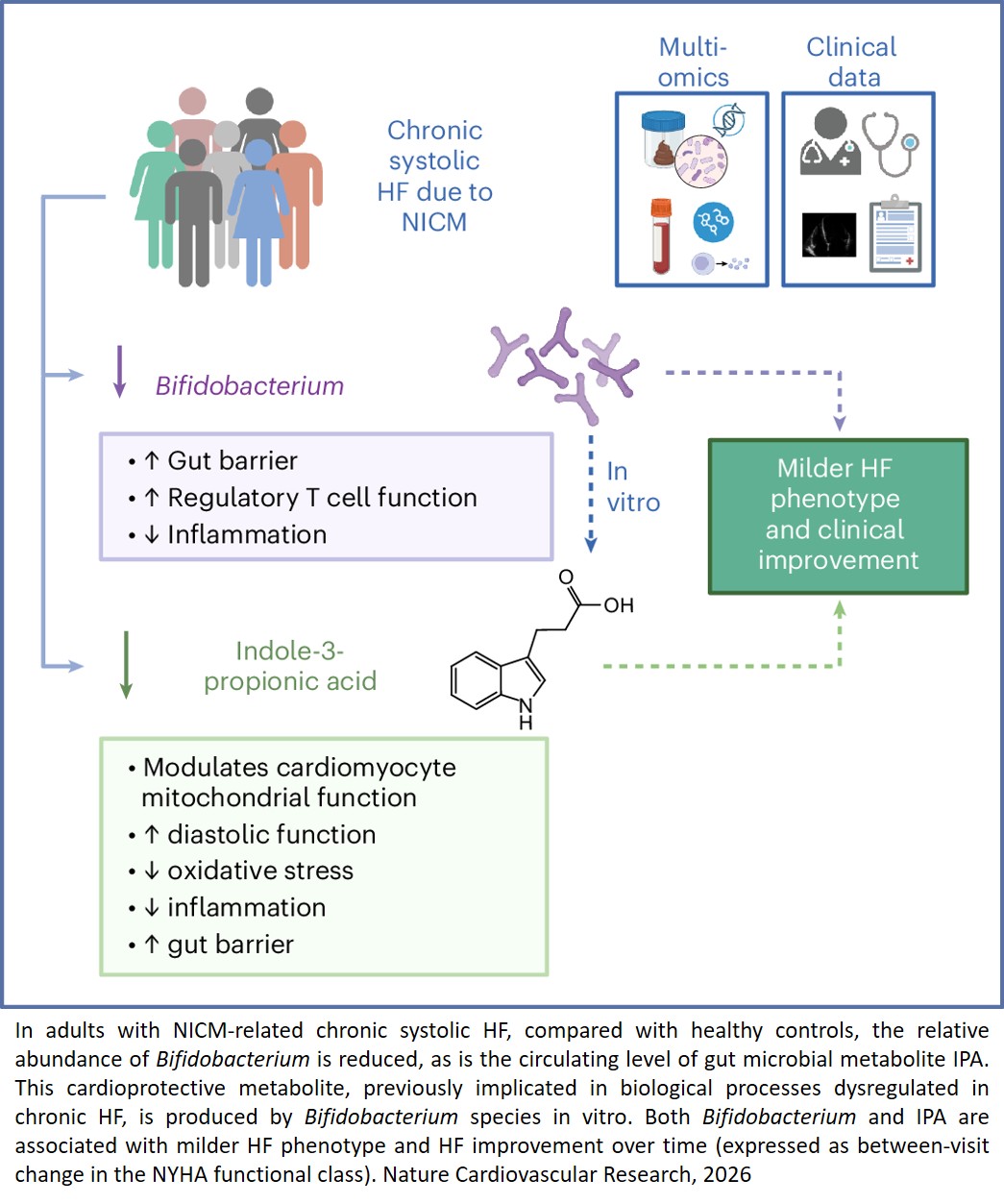
In addition, people with chronic heart failure (CHF) had substantial differences in the types of gut bacteria compared to healthy individuals. For instance, patients with CHF had lower levels of Bifidobacterium, a genus of beneficial gut bacteria known for its anti-inflammatory properties. Higher levels of Bifidobacterium were associated with clinical improvement, suggesting that the presence of these bacteria may be connected to a healthier disease trajectory.
The researchers then looked more closely at how the gut microbiome might influence the heart. Their analysis identified indole-3-propionic acid (IPA), a molecule produced by certain gut bacteria, as a potential link between the microbiome and heart health. They found that Bifidobacterium species can produce IPA in laboratory experiments, and people with higher levels of IPA in their blood tended to have less severe heart failure.
These findings suggest that the gut microbiome can be a helpful key in understanding chronic heart failure. The variations in gut bacteria may be connected to inflammation, disease severity, and how the disease changes over time. Excitingly, gut bacteria may help researchers develop new biomarkers to lead to more therapeutic treatments for individuals experiencing chronic heart failure.