

Defining the Genotype-CRIM Status Relationship in a Large Cohort of 215 Patients with Infantile-onset Pompe Disease
Annual Clinical Genetics Meeting, March 2026
Parisa Amirifar, PhD, Division of Medical Genetics, Department of Pediatrics, Duke University Health System, Durham, NC, Department of Pediatrics, Catherine W. Rehder, PhD, FACMG, Jessica Doxey, MS, Erin Huggins, MS, Deeksha S. Bali, PhD, FACMG, Greg E. Crawford, Ph.D., Priya S. Kishnani, MD, FACMG
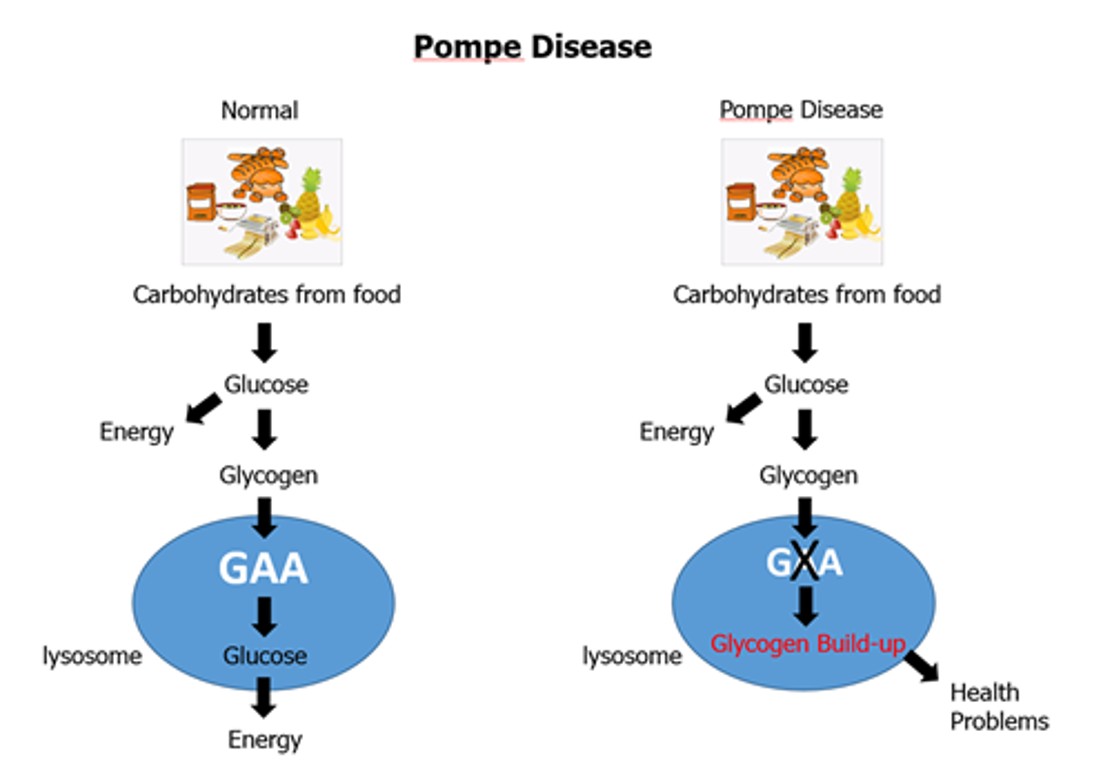
Introduction: Infantile-onset Pompe disease (IOPD) is an autosomal recessive lysosomal disorder caused by pathogenic variants in GAA. Enzyme replacement therapy (ERT) has improved survival in IOPD, though clinical responses vary. Cross-reactive immunologic material (CRIM)-negative patients, who lack endogenous GAA protein, often develop high sustained antibody titers that reduce ERT efficacy. In contrast, CRIM-positive patients exhibit a variable immune response, with approximately 32% developing high antibody titers. In this study, we evaluated the correlation of genotype to CRIM status in a large cohort of patients with IOPD.
Methods: We conducted a retrospective study of 215 patients with IOPD from around the world who were enrolled in a research study at Duke University Medical Center. All participants had a confirmed IOPD diagnosis, biallelic GAA variants, and known CRIM status (confirmed by western blot and/or GAA variants). Variant combinations, presence of splice variants, and the location of variants within specific GAA protein domains were analyzed.
Results: Among 215 patients, 131 were CRIM-positive and 84 were CRIM-negative. More than 80% of CRIM-negative (n=70) individuals carried two null (frameshift or nonsense) variants, either in a homozygous or presumed compound heterozygous state, consistent with a complete loss of GAA protein production. Other variant combinations identified in CRIM-negative patients included null/splice-site (n=6), null/missense (n=1), initiator methionine homozygous (n=2), and splice-site/splice-site homozygous (n=5) variants. In contrast, the majority of CRIM-positive patients harbored missense variants, occurring either in homozygosity (n=20) or in presumed compound heterozygous combinations with null (n=55), additional missense (n=22), or in-frame deletion (n=14) variants. Splice-site variants were found in 11 CRIM-negative and 27 CRIM-positive patients, with distinct patterns: donor-site loss was more common in CRIM-negative cases (n=8), while acceptor-site loss predominated in CRIM-positive cases (n=21). Furthermore, variants were distributed across all GAA functional domains, with the catalytic GH31 domain most frequently affected in CRIM-positive patients and the distal β-sheet domain enriched in CRIM-negative patients. The most common variants seen in this cohort were c.2560C>T (n=58/430), c.2481+110_2646+39del (n=17/430), and c.525del (n=13/430). These observations emphasize that some GAA variants appear in both CRIM-positive and CRIM-negative patients; however, the combination of alleles is a key determinant of CRIM status. The second variant often differentiates CRIM status by modifying expected protein production, highlighting the importance of interpreting variant pairs rather than individual variants in isolation. In addition, we identified four novel variants: two missense variants in CRIM-positive patients and one frameshift and one missense variant in a CRIM-negative patient.
Conclusion: Our findings highlight a strong relationship between GAA genotype and CRIM status in IOPD. Most CRIM-negative patients carried null alleles either in homozygosity or in compound heterozygous combination with another null variant, whereas CRIM-positive patients most commonly had null–missense combinations. We also identified four novel variants in our cohort, including a unique missense variant in a CRIM-negative patient that, although classified as missense, is located at the last base of exon 17 and is predicted to disrupt normal splicing, resulting in a premature termination codon and a loss-of-function effect. A clear difference in splice-site types and their locations was also observed between the two groups. These findings, along with domain-specific variant patterns, further support the molecular basis of CRIM status and emphasize that the combination and location of GAA variants play a pivotal role in determining CRIM outcome. Importantly, in cases involving novel variants or splice-affecting changes, confirmation of CRIM status by Western blot remains essential, as genotype alone may be misleading.