

Mitochondrial pyruvate carrier transport and inhibition mechanism
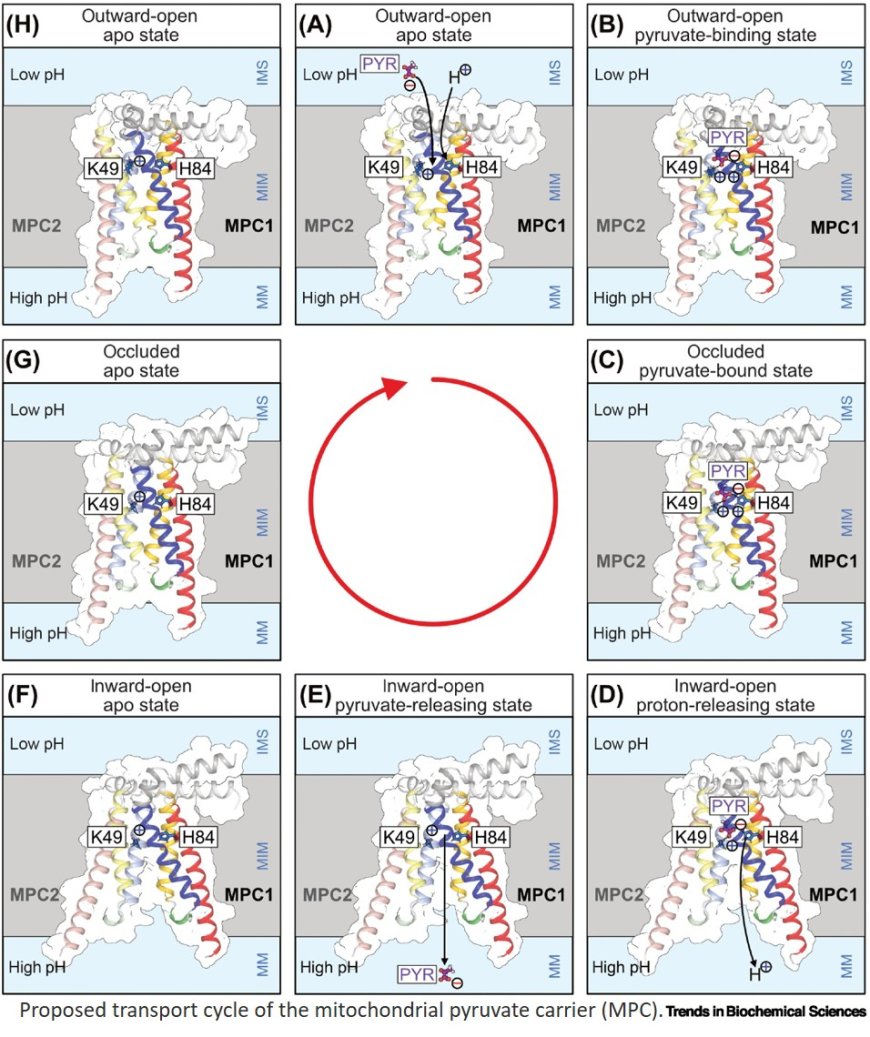
The mitochondrial pyruvate carrier (MPC) is a member of the transporter–opsin–GProtein-coupled receptor (TOG) superfamily, a large and diverse group of membrane proteins that may share a common evolutionary ancestor.
MPC, an inner mitochondrial membrane protein heterodimer, is critical for cellular energy production in eukaryotes, while it also plays important roles in other major biochemical pathways.
Recent structures of two alternative human MPC heterodimers in different conformational states, with or without inhibitors bound, enable a mechanistic model to be put forward, consolidating decades-worth of biochemical studies.
Structural elucidation of the inhibitory mechanism will enable structure-based drug design for treatment of diseases such as specific malignancies, type 2 diabetes, and metabolic-associated steatohepatitis, for which MPC has been proposed as a drug target.
https://www.cell.com/trends/biochemical-sciences/fulltext/S0968-0004(25)00266-X
https://sciencemission.com/mitochondrial-pyruvate-carrier-15855