



Megakaryocytes balance tissue residency and platelet production
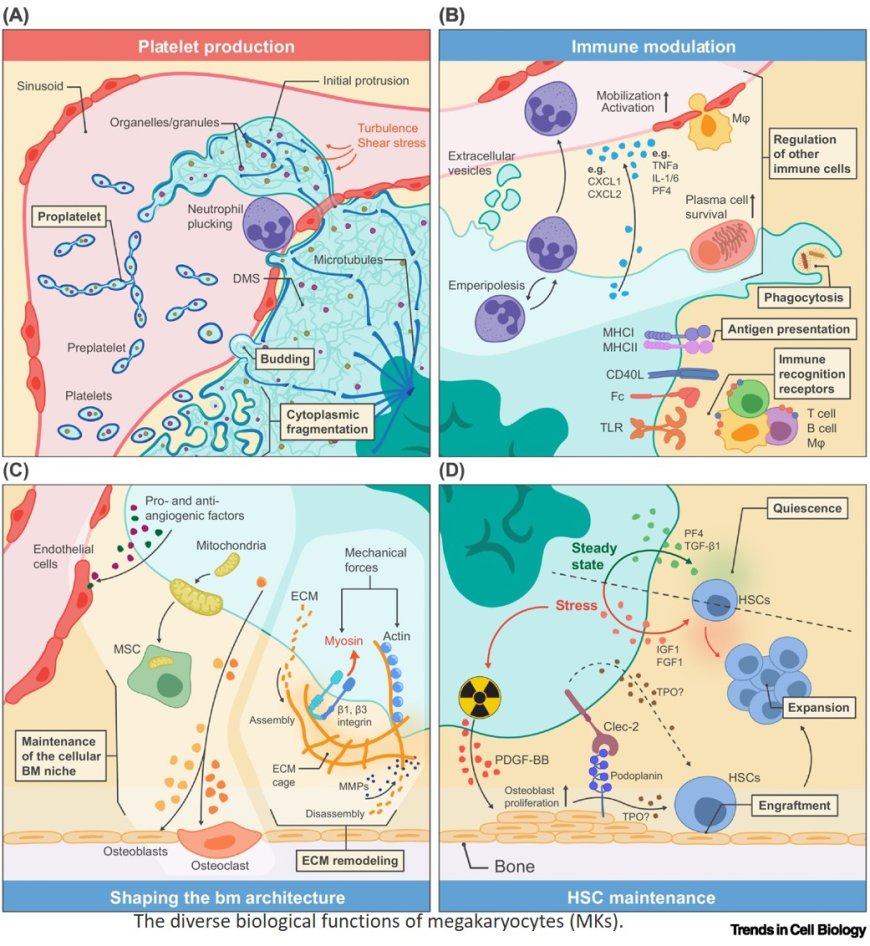
Megakaryocytes (MKs) form platelets through a unique program of coordinated cytoskeletal remodeling, cytoplasmic partitioning, and membrane abscission, yielding uniform circulating platelets. At the same time, they fulfill bone-marrow (BM)-resident functions by controlling the hematopoietic stem cell niche, shaping marrow architecture, and orchestrating immune responses.
Homeostatic MK numbers are controlled by two feedback loops: a systemic, platelet-centered circuit and a local, MK-centered circuit in the BM. Inflammatory signals interfere with these homeostatic circuits, thereby increasing MK numbers and platelet output during times of stress.
While this adaptation anticipates an increased demand for MKs and platelets in the acute response to injury and/or infection, chronic deviation of the homeostatic setpoints can exhaust megakaryopoiesis and impair platelet generation.
https://www.cell.com/trends/cell-biology/fulltext/S0962-8924(25)00250-8