



Structure of Mg2+ transport protein, CNNM4 unraveled!
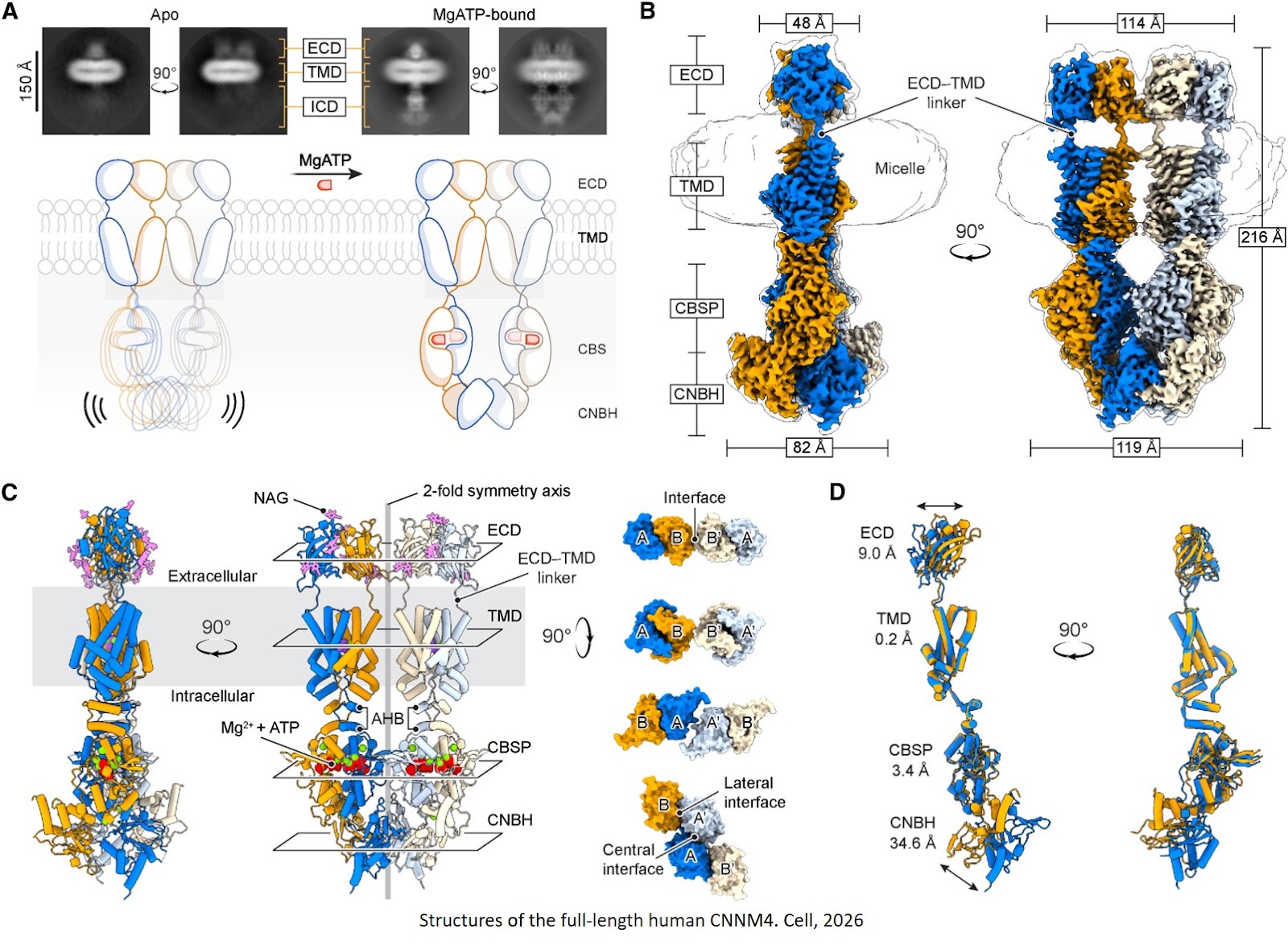
Research published in Cell reveals that human CNNM4 functions as an asymmetric tetramer organized as a dimer of dimers, overturning the long-held assumption that mammalian CNNM transporters operate as simple symmetric pairs like their bacterial counterparts.
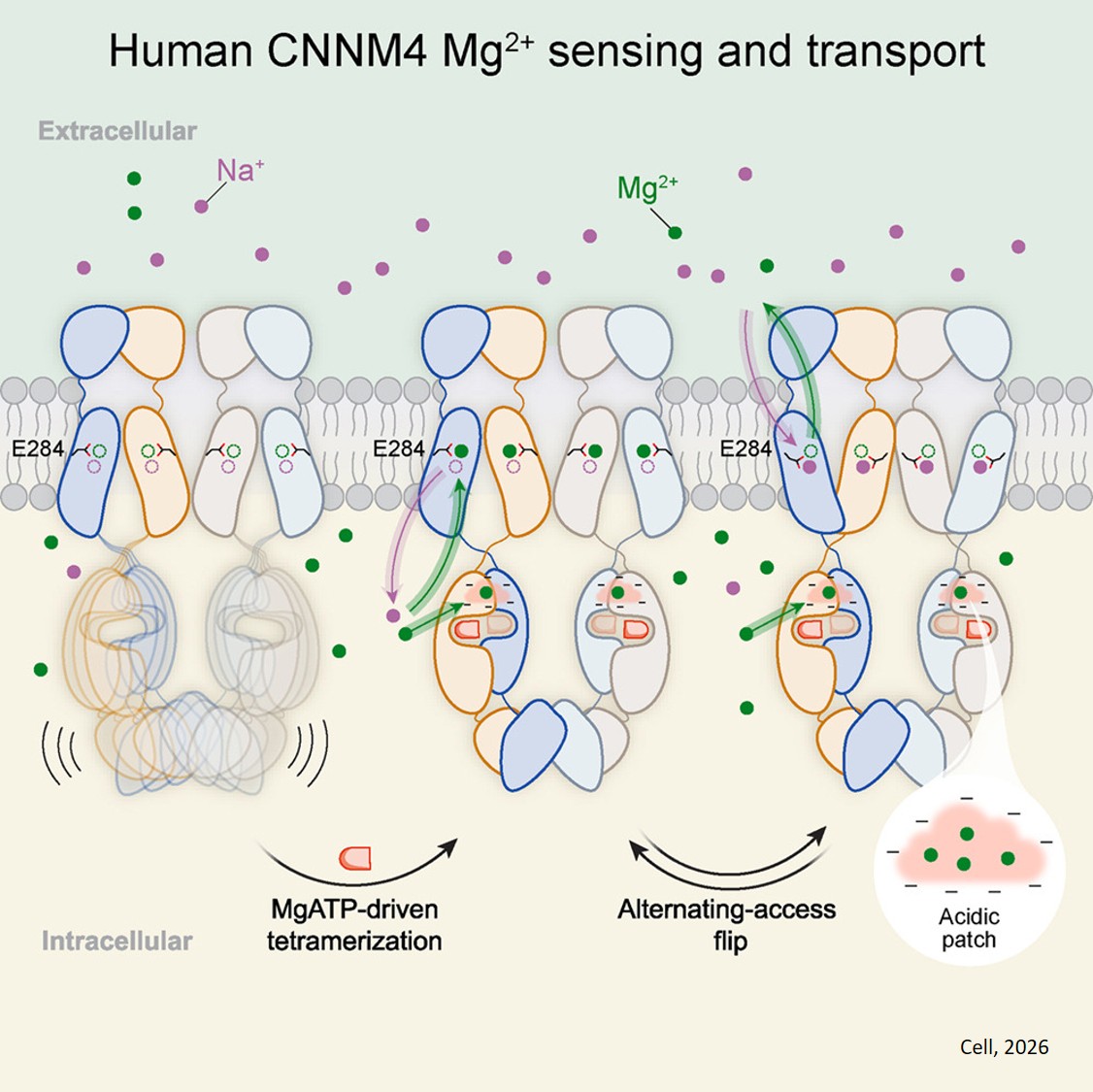
Using cryo-electron microscopy (cryo-EM), researchers captured the full-length human membrane protein in both outward-facing and occluded conformations to map how it exports magnesium ions from cells.
Full-length human CNNM4 forms a four-part complex held together by domain swapping across its subunits. The individual subunits adopt distinct asymmetric shapes that work together as a single coordinated machine rather than two independent transporters.
The researchers also show that CNNM4 operates as an antiporter that moves Mg2+ out of the cell in exchange for sodium ions ( Na+). Inside the transmembrane domain, a critical glutamate residue (E284) coordinates both ions. When extracellular Na+ binds, E284 flips its position, which lowers affinity for Mg2+ and triggers its release outside the cell.
They also demonstrate that a negatively charged "acidic patch" on the intracellular domain (ICD) binds up to eight additional Mg2+ ions. This region acts as an internal sensor that detects cytoplasmic magnesium levels and couples them directly to transport activity.
Binding of Mg2+ ATP at the base of the protein stabilizes and orders the flexible intracellular domains. This binding drives tetramerization, allowing the transporter to sense the cell's overall metabolic energy state before activating.
Many inherited mutations in CNNM proteins cause conditions such as Jalili syndrome (a disorder affecting vision and tooth enamel), familial hypomagnesemia, and neurological disorders.