

Microglial cells from patients with genetic and sporadic frontotemporal dementia differ from each other
In frontotemporal dementia, degeneration of neurons in the frontal and temporal lobes of the brain leads to impairments in behavior, speech, and movement. However, it has become evident that also other brain cells can be involved in disease processes that lead to neuronal degeneration. For example, the importance of microglial cells, which regulate inflammatory responses in the brain, has recently been emphasised in the disease processes of frontotemporal dementia. The present study, the researchers compared the features, function, and gene expression of microglial cells produced by stem cell technology from genetic patients carrying the C9orf72 hexanucleotide repeat expansion (C9-HRE), those with sporadic frontotemporal dementia, and healthy controls.
The study showed both similarities and differences in microglia from different patients. In all frontotemporal dementia patient-derived microglia, fewer intracellular lysosomal vesicles were observed compared to microglia from healthy controls. These findings suggest that changes in the function of lysosomes, cellular organelles important for instance for protein metabolism, may be a common factor in the disease process regardless of the patient's genetic background.
In addition, in C9-HRE microglia, autophagy and phagocytic activity, both associated with lysosomal function, were increased compared to microglia derived from sporadic frontotemporal dementia patients and controls.
“Increased microglial phagocytic activity may lead to e.g., increased loss of synapses, which could lead to impaired communication between neurons. This is now being investigated in our ongoing studies,” says the senior author.
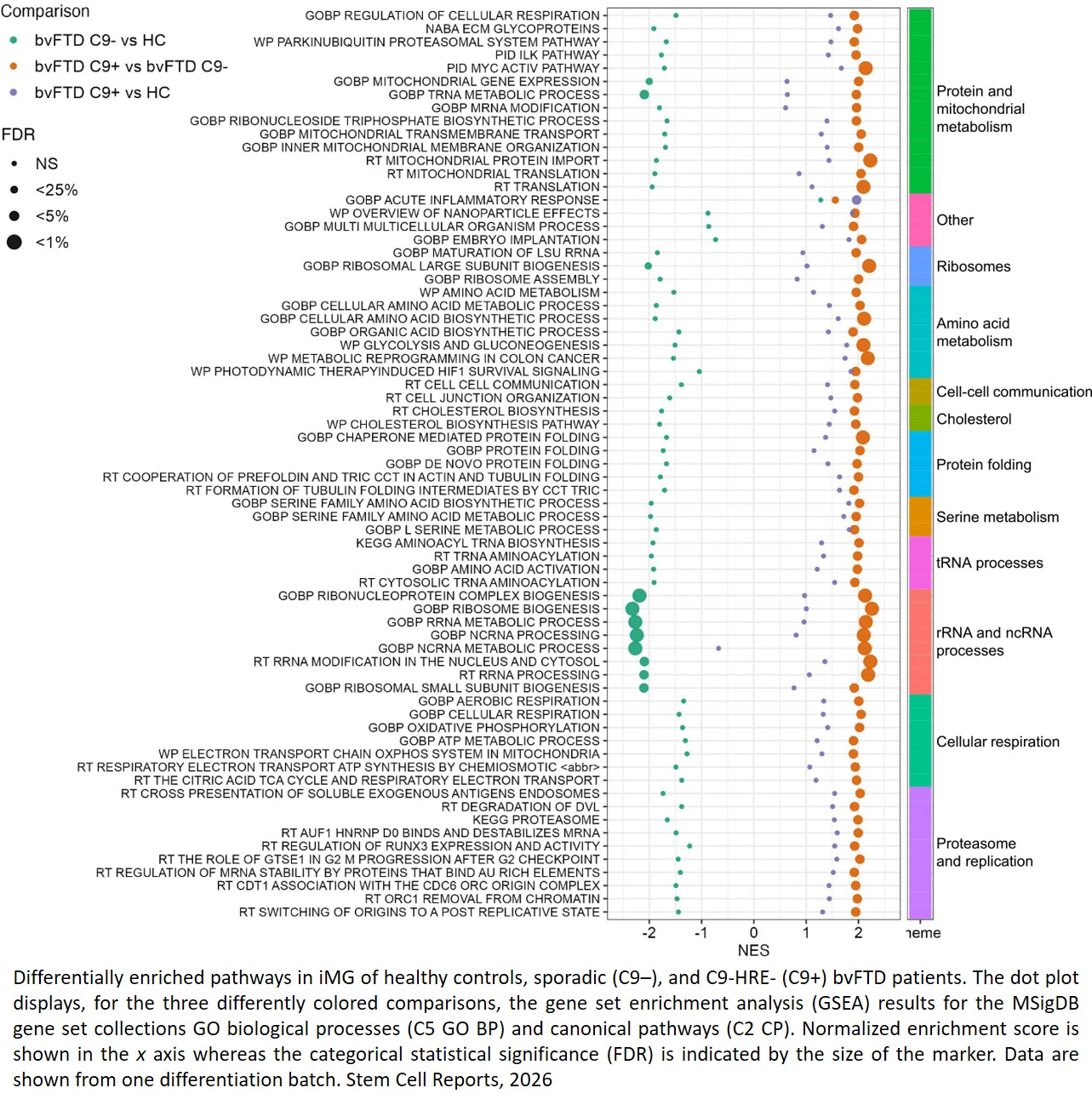
There were fairly modest changes in the gene expression of C9-HRE microglia compared to controls. In contrast, the gene expression profile of microglia from sporadic frontotemporal dementia patients significantly differed from both C9-HRE microglia and controls. The gene expression in many biological pathways related to basic cellular functions, such as RNA, protein, and energy metabolism, was significantly decreased in these microglial cells. Expression of genes related to the regulation of the acute inflammatory response, which is important for the function of microglia, was altered in all frontotemporal dementia patient-derived microglial cells.
This study compared induced pluripotent stem cell-based microglia from C9-HRE-carrying and sporadic frontotemporal dementia patients for the first time. “The differences observed between the cells suggest that the function of microglia may change differently in different frontotemporal dementia patients. Therefore, further studies on the role of microglia in the disease processes in different frontotemporal dementia patients are warranted,” the author says.
https://www.cell.com/stem-cell-reports/fulltext/S2213-6711(26)00237-7
https://sciencemission.com/patient-iPSC-microglia