

Role of NADPH enzymes in pancreatic cancer
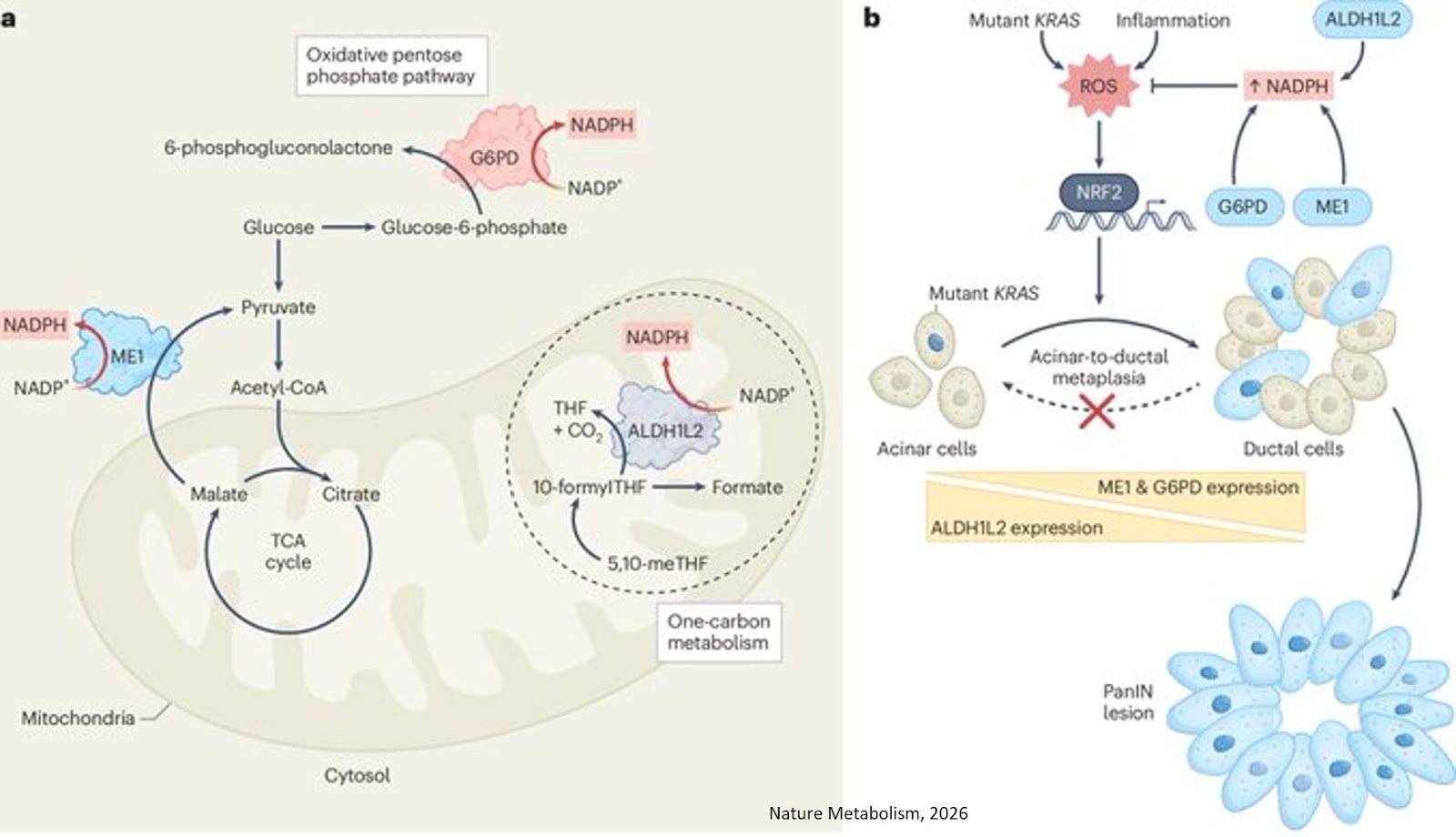
Pancreas repair following injury involves reversible acinar-to-ductal metaplasia (ADM) and oncogenic KRAS mutations can progress ADM to pancreatic intraepithelial neoplasia (PanIN) and pancreatic ductal adenocarcinoma (PDAC) but, the metabolic alterations in these precancerous lesions are not established.
In 2 studies published in Nature Metabolism, researchers demonstrate decline in NADPH producing enzymes that reduce oxidative stress and protect the pancreatic cells.
In one study, the authors show aldehyde dehydrogenase 1 family member L2 (ALDH1L2), an NADPH-producing mitochondrial enzyme expression level decreases progressively during ADM and is completely absent in pancreatic ductal cells. ALDH1L2 loss elevates ROS and promotes ADM in a model of pancreatitis and accelerates tumor progression in models of pancreatic cancer.
In the 2nd study, the authors show NRF2-target genes are significantly induced in ADM. Among these, genes encoding NADPH-producing enzymes glucose-6-phosphate dehydrogenase (G6PD) and malic enzyme 1 (ME1), which participate in the regulation of oxidative stress.
In mouse models of pancreatic tumorigenesis, G6PD deficiency or Me1 loss increases reactive oxygen species and lipid peroxidation, which is accompanied by accelerated formation of ADM and PanIN lesions. The authors also show that Me1 loss, but not G6PD deficiency, promotes faster PDAC progression.
https://www.nature.com/articles/s42255-026-01456-5
https://www.nature.com/articles/s42255-026-01496-x
https://sciencemission.com/NADPH-producing-enzymes
https://sciencemission.com/ALDH1L2-regulates-reactive-oxygen-species