

Noradrenergic innervation and β-cell dedifferentiation in diabetes
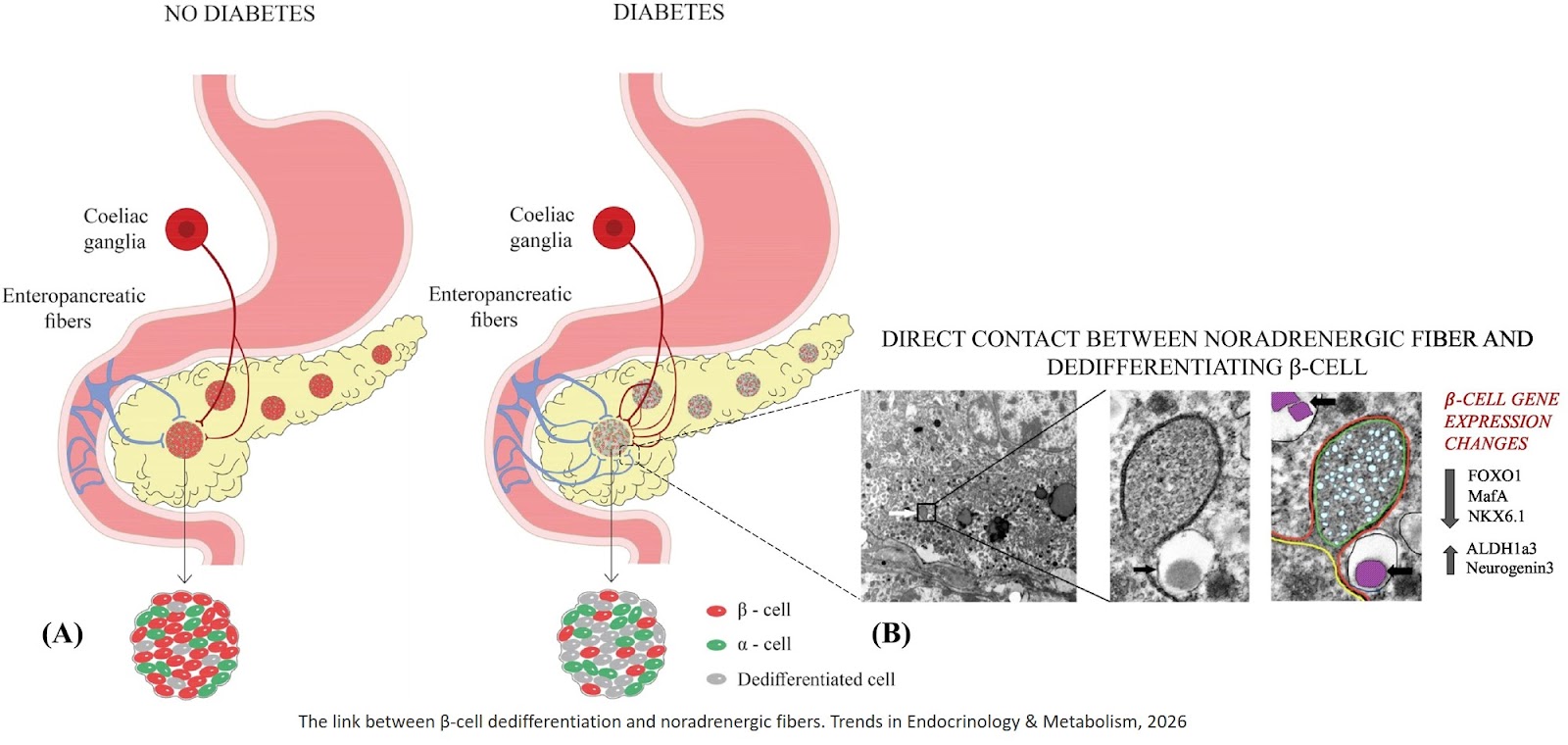
Dedifferentiation, a survival mechanism whereby mature β-cells revert to a nonfunctional state under metabolic stress, represents a fundamental driver of β-cell failure in type 2 diabetes.
Dedifferentiation is reversible, primarily through dietary intervention or bariatric surgery, and redifferentiation may promote type 2 diabetes remission.
Noradrenergic fiber density is increased in diabetic pancreases and correlates with β-cell dedifferentiation, suggesting that altered signaling may trigger the process.
A link between diet, redifferentiation, reduction of noradrenergic fibers, and type 2 diabetes remission has been hypothesized.
The review proposes that targeting pancreatic noradrenergic innervation could be a novel therapeutic strategy to reverse β-cell dedifferentiation, restore insulin function, and achieve type 2 diabetes remission.
https://www.cell.com/trends/endocrinology-metabolism/fulltext/S1043-2760(26)00097-4
https://sciencemission.com/noradrenergic-innervation--in-diabetes