

Proteotoxic stress causes karyoptosis mediated cell death and neurodegeneration
Markers of a new mechanism for cell death, called karyoptosis, have been found in brains of patients with Alzheimer’s disease and frontotemporal dementia (FTD).
In many neurodegenerative diseases such as amyotrophic lateral sclerosis (ALS), Alzheimer’s and FTD, toxic levels of proteins accumulate inside neurons, which subsequently die. While there are other known forms of cell death, such as apoptosis, they do not account for all neuronal loss in neurodegenerative disease. New research reveals that karyoptosis may provide a key link between toxic protein accumulation and neuron death.
Karyoptosis is the set of chemical reactions triggered by toxic protein accumulation, which ultimately cause cell death. When a cell dies by karyoptosis, the nucleus – the part of the cell that contains the genetic information – shrivels before disintegrating.
The study, published in Nature Communications, used computational algorithms to identify key types of cell death in 3000 cells from brains of 28 patients with either FTD or terminal stage Alzheimer’s disease. 35 per cent of cells from the frontal cortex of patients with Alzheimer’s showed signs of karyoptosis, compared to only 15 per cent in healthy aged controls.
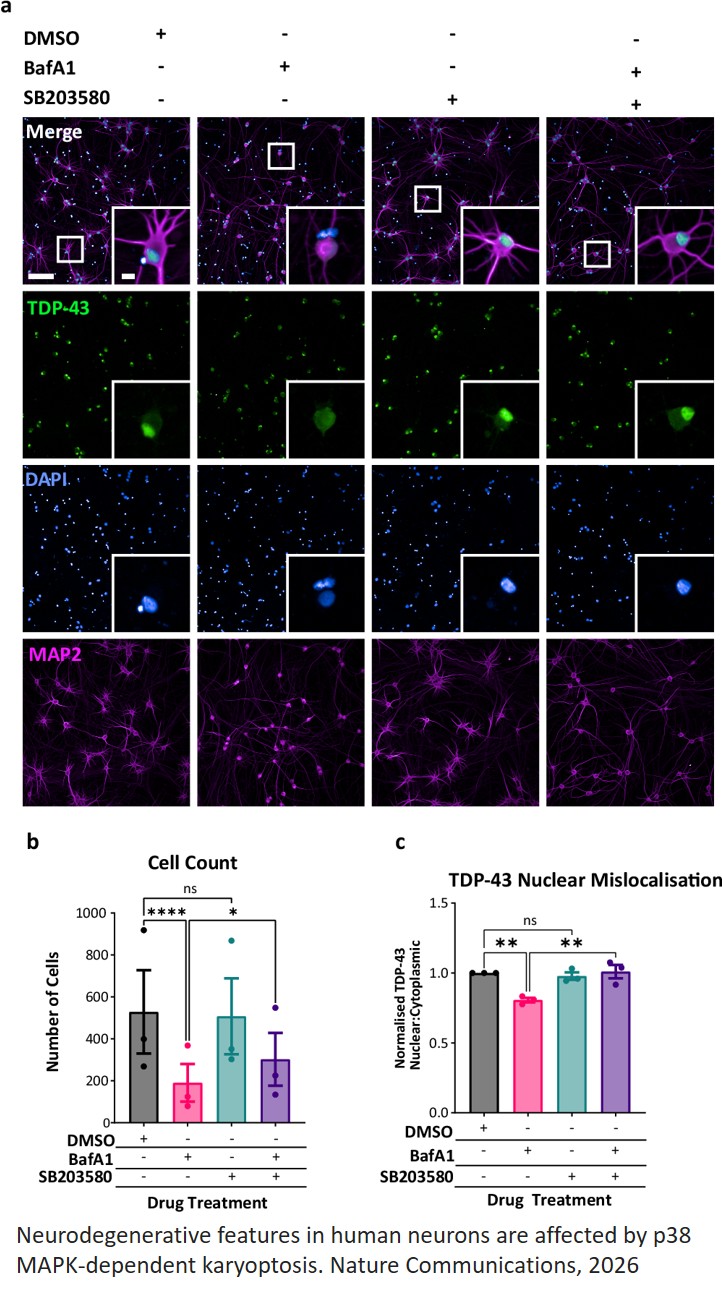
The study identified a key mechanism controlling karyoptosis, that could be triggered by causing proteins in neurons to clump together, a common feature of neurodegenerative disease. In this pathway, the toxic levels of protein accumulation cause the outside of the nucleus to become unstable, leading it to shrivelling and disintegrating. By targeting proteins that act as ‘switches’ in this pathway, called kinases, researchers were able to reduce levels of karyoptosis markers in rat neurons in a dish. Specifically, they showed that the interaction between one particular kinase called p38 MAP kinase and another protein LaminB1 is a key target for blocking or slowing nuclear disintegration.
This pathway has potential to provide new therapeutic targets for slowing or preventing cell death by karyoptosis in dementia. Future work will focus on selectively targeting this protein-kinase interaction to produce viable treatment targets in humans.
“By specifically targeting the interaction between p38 MAP kinase and LaminB1 we may slow down the process of cell death, buying time for more pinpointed therapies against specific neurodegenerative diseases,” said the author.
“The death and loss of cells in the brain drives many symptoms experienced by people living with dementia. Our study uncovers a new series of chemical events which can coordinate cell death in brain cells. We have started to lay out the road map of how karyoptosis works, and I’m excited to see future breakthroughs this may drive in the dementia research community and beyond.” the first author on the paper.
“For decades, we’ve known that toxic proteins build up in Alzheimer's disease and frontotemporal dementia, but exactly how they lead to the loss of brain cells has remained unclear.
“The identification of karyoptosis is a crucial step towards finding targets for treatments that could stop or slow cell loss. It could help widen the window for therapies that tackle the underlying causes of disease, bringing us closer to a cure for dementia. This is why Alzheimer’s Research UK funds and supports research,” said the Senior Research Manager.