

Regulating tryptophan catabolism to control neurodegeneration
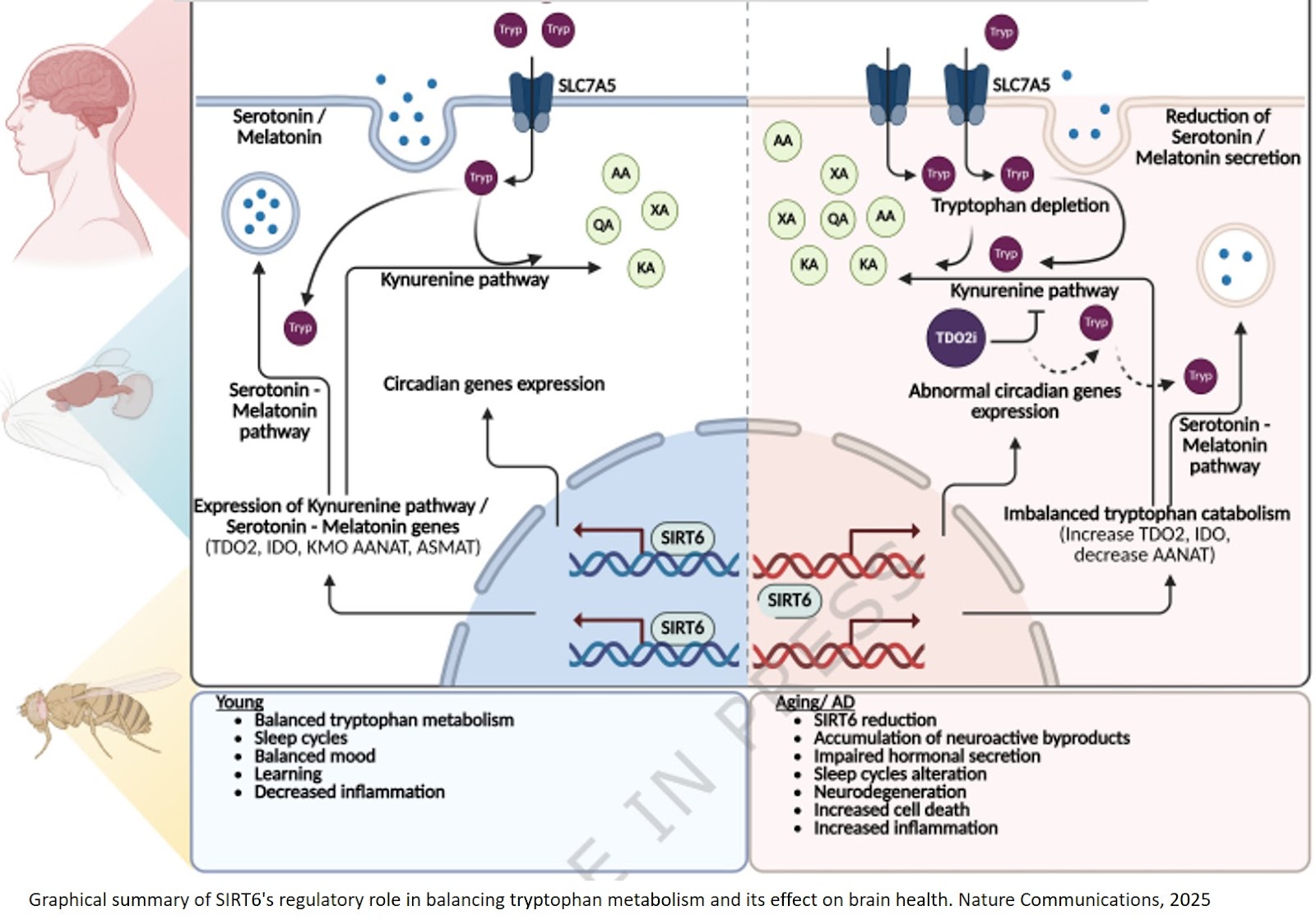
Tryptophan is more than a sleep molecule; its byproducts build proteins, fuel energy (NAD+), and synthesize key neurotransmitters like serotonin and melatonin. Yet, in aging and neurological disease, this balance is lost.
Dysregulation of tryptophan catabolism is observed in aging brains and is more pronounced in neurodegenerative and psychiatric disorders, leading to detrimental effects on mood, learning, and sleep behavior. Despite these well-established severe effects, the molecular mechanisms behind the change in tryptophan usage was unknown.
Their findings were just published in Nature Communications.
The team shows that this damage is not permanent. By inhibiting the enzyme TDO2 in their SIRT6 knockout fly model, they were able to significantly reverse both neuromotor decline and vacuolar formation, indicating a powerful therapeutic window.
"Our research positions SIRT6 as a critical, upstream drug target for combating neurodegenerative pathology," says the author.
https://www.nature.com/articles/s41467-025-67021-y
https://sciencemission.com/SIRT6-regulates-tryptophan-catabolism