

A lipid regulator of Sonic hedgehog signaling influences heart and lung development
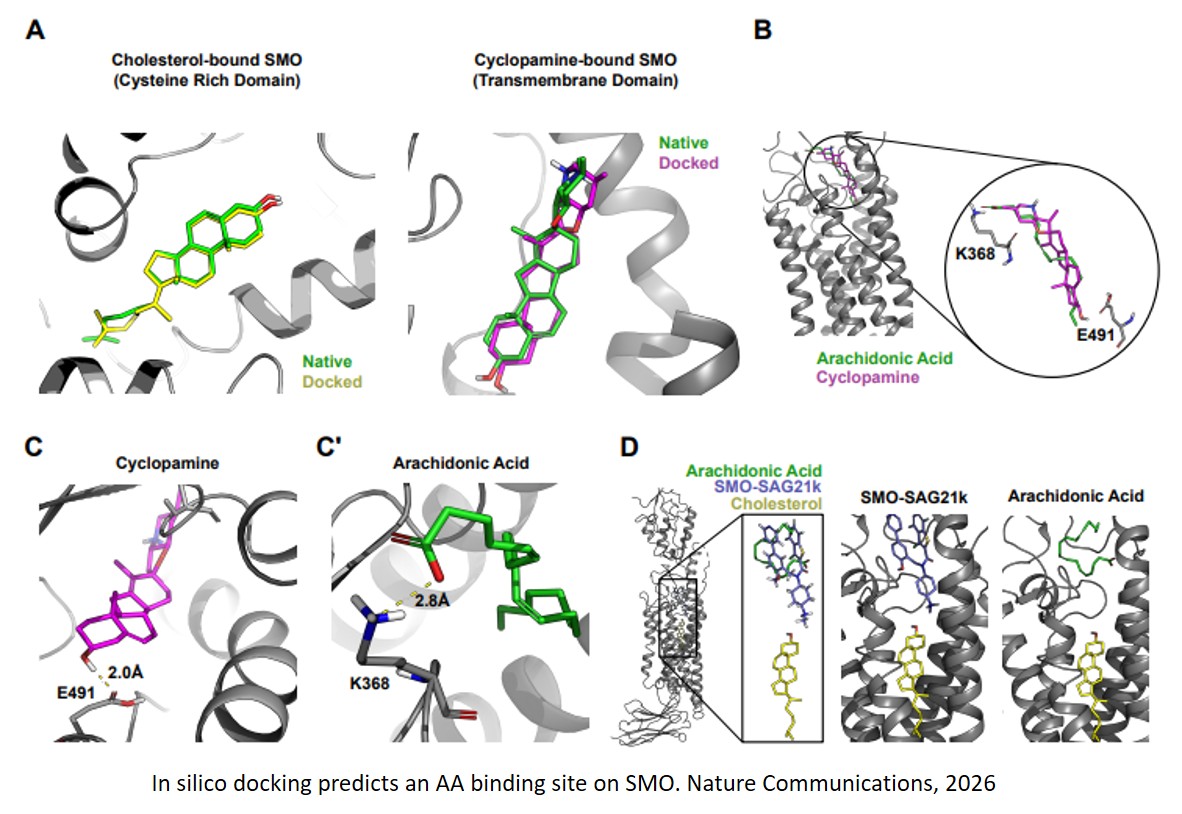
The scientists uncovered a regulatory mechanism for signaling of Sonic Hedgehog (SHH), a pathway essential for embryonic development. Researchers found that the lipid (or fatty acid) arachidonic acid boosts the activity of Smoothened (a protein that relays SHH signals inside cells) through a newly discovered binding site that alters the receptor’s behavior to enhance its signaling activity. Disrupting this interaction impaired heart and lung development, revealing how precise control of SHH signaling guides tissue formation. The findings, published in Nature Communications, provide insight into how this pathway may be modulated in diseases such as cancer.
The SHH pathway plays a critical role during development by providing instructions that help cells determine their identity and organize into tissues. When SHH signaling is disrupted, it can contribute to developmental disorders, including congenital heart defects and abnormalities affecting the brain, as well as cancers such as medulloblastoma. At the center of this pathway is Smoothened, a protein that relays SHH signals from the cell surface to the machinery inside the cell that controls gene activity and cellular responses.
“Smoothened serves as a central relay point in the SHH pathway, transmitting signals that guide how cells respond during development,” said the corresponding author. “Because abnormal Smoothened activity is also associated with certain cancers, understanding how this protein is regulated gives us a better framework for thinking about how we might selectively regulate this pathway in disease settings.”
The study builds on previous work from the lab, which identified the lipid enzyme cPLA2α as a regulator of SHH signaling. Because cPLA2α produces arachidonic acid, a fatty acid that enhances Smoothened activity, researchers sought to determine how exactly this molecule influences the pathway.
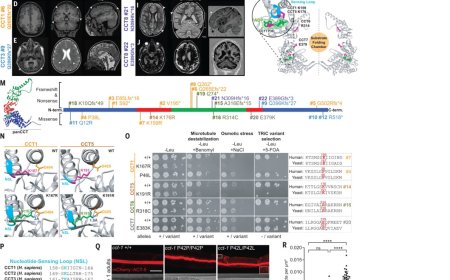
They discovered that arachidonic acid binds to a specific regulatory site on the Smoothened protein, where it boosts the response to SHH signaling. “Arachidonic acid doesn’t turn Smoothened on or off,” said the author. “Instead, it binds to the protein and helps activated Smoothened amplify its normal response during tissue development. That extra level of control appears to be especially important in tissues, including the heart and lungs.”
The researchers also showed that disrupting this regulatory mechanism reduced Smoothened activation and impaired cardiopulmonary development. Surprisingly, these changes did not affect nervous system development, despite the important role SHH signaling plays in establishing neural cell identities in the developing nervous system. This suggests that the effect of Smoothened mediated by arachidonic acid binding is a tissue-specific mechanism that helps tune the SHH signaling levels needed. This is the first evidence of the functional impact of this kind of regulation during development.
“Congenital heart defects represent one of the most common and severe developmental disorders, and our findings suggest that this mechanism of Smoothened signal control plays a particularly important role in heart and lung development,” said the author. “Understanding this process could help guide strategies to modulate this pathway in specific contexts while minimizing effects on other tissues.”
The findings open new avenues for understanding how SHH signaling is regulated across different developmental settings. “Our findings were surprising because disrupting this regulatory mechanism affected heart and lung development but did not impact the nervous system, where SHH pathway defects are often observed,” said the author. “Moving forward, we want to understand why certain tissues rely on this form of Smoothened regulation and whether different signals or molecules help control Smoothened activity in different contexts.”
https://www.nature.com/articles/s41467-026-75918-5
https://sciencemission.com/Receptor-allostery-promotes