

Src kinase on the cell surface in cancer
For five decades, scientists have known about a notorious cancer-causing enzyme called SRC. But they always assumed it only appeared on the inside of cells, where it sent signals that fueled tumor growth and stayed hidden from the immune system.
But now researchers have discovered that the SRC enzyme also appears like a flag on the surface of bladder, colorectal, breast, pancreatic and probably many other tumor cells.
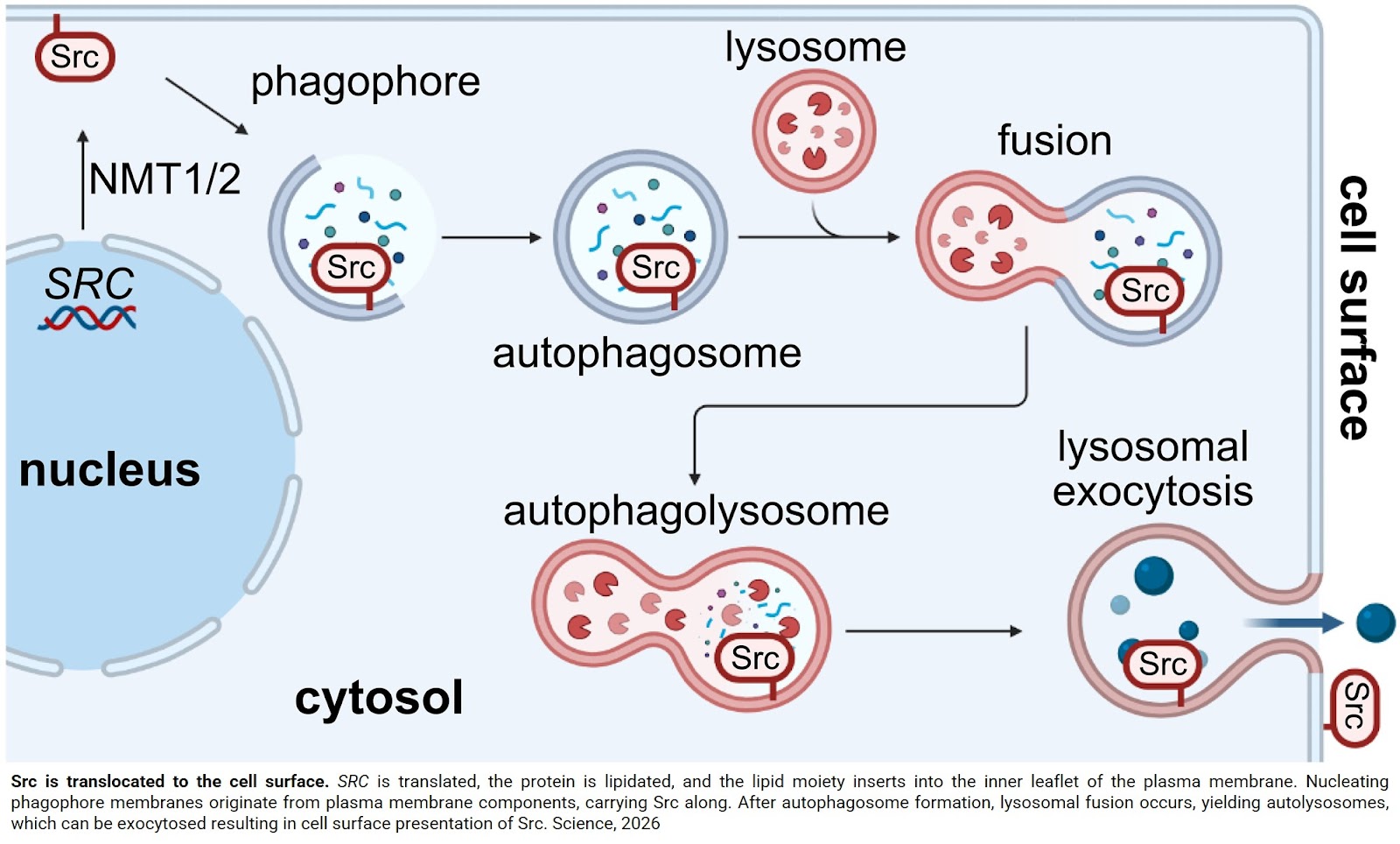
As cancer cells furiously divide, they produce a lot of garbage. In healthy cells, the trash gets broken down. But in tumors, the recycling system gets overwhelmed, and the cells expel some of their trash. This pushes the SRC onto the surface of the cell, where it is visible to potential therapies, like antibodies.
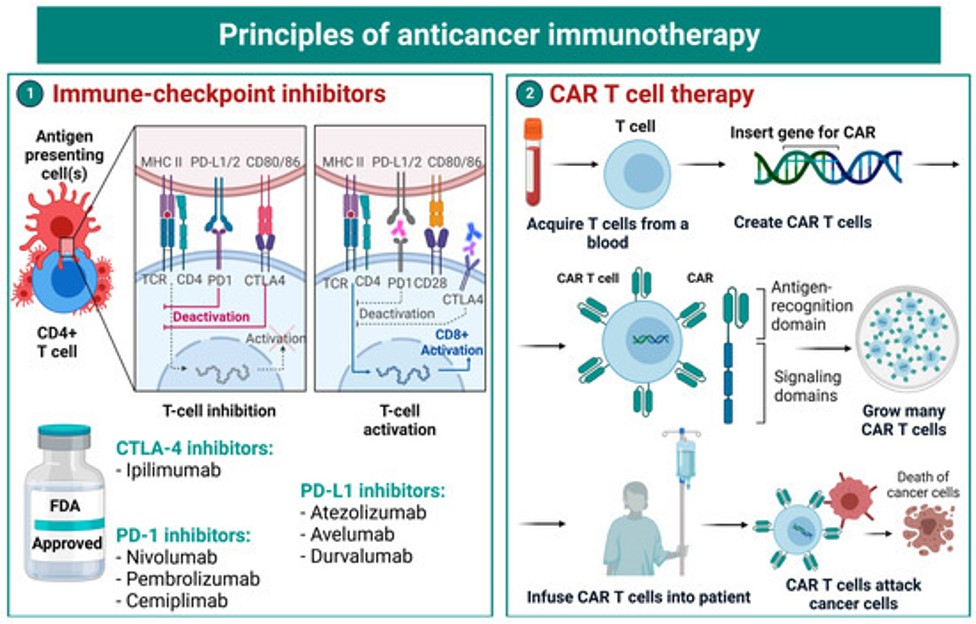
Researchers targeted SRC with antibodies that carried radioactive payloads or summoned immune cells. This killed the cancer cells, shrinking tumors in mice. The new target could apply to up to half of all tumors.
“No one thought to look for it on the outside, said the senior author of the paper, which appeared in Science . “Our discovery enables us to test proven immunotherapies on this new tumor target.”
In the 1970s, UCSF’s J. Michael Bishop, MD, and Harold Varmus, MD, identified SRC— the gene containing the instructions for building the SRC enzyme — as the very first oncogene, or cancer-causing gene. It launched the modern field of cancer genetics and won the researchers a Nobel Prize in 1989.
Ever since, scientists have tried to block the SRC enzyme with drugs that slip inside cells. But the therapies have not worked well because they disable SRC in both cancerous and healthy cells, which need the enzyme to function.
To understand how SRC reached the cell surface, the scientists tracked the protein in cancer cells grown in petri dishes. They found that SRC was getting caught up in the cell’s overactive disposal system.
Cells normally trap waste in small sacs that they break down and reuse. But in fast-growing cancer cells, the system can become overloaded. Instead of being digested, the sacs containing waste fuse with the cell membrane and dump their contents outside the cell.
“We saw that SRC was getting swept out onto the outer membrane, where it sat exposed like a red flag,” said the first author of the paper.
The researchers found that SRC was present on the surface of bladder tumor cells taken from patients at UCSF, but it was not present on healthy bladder tissue or on immune cells. This suggests it is specific enough to steer cancer-killing antibodies to the right target.
The team then aimed experimental radioactive antibodies at SRC in mice that had been implanted with human tumor cells; and they found that these antibodies accumulated in the cells. They also engineered antibodies to help immune cells recognize and kill human cancer cells in mice.
“We went all the way from the discovery to developing two preclinical therapies that target SRC — and they worked,” the senior author said. “It’s truly exciting.”
https://www.science.org/doi/10.1126/science.aec1778