


Treating depression during pregnancy may benefit babies' brain development
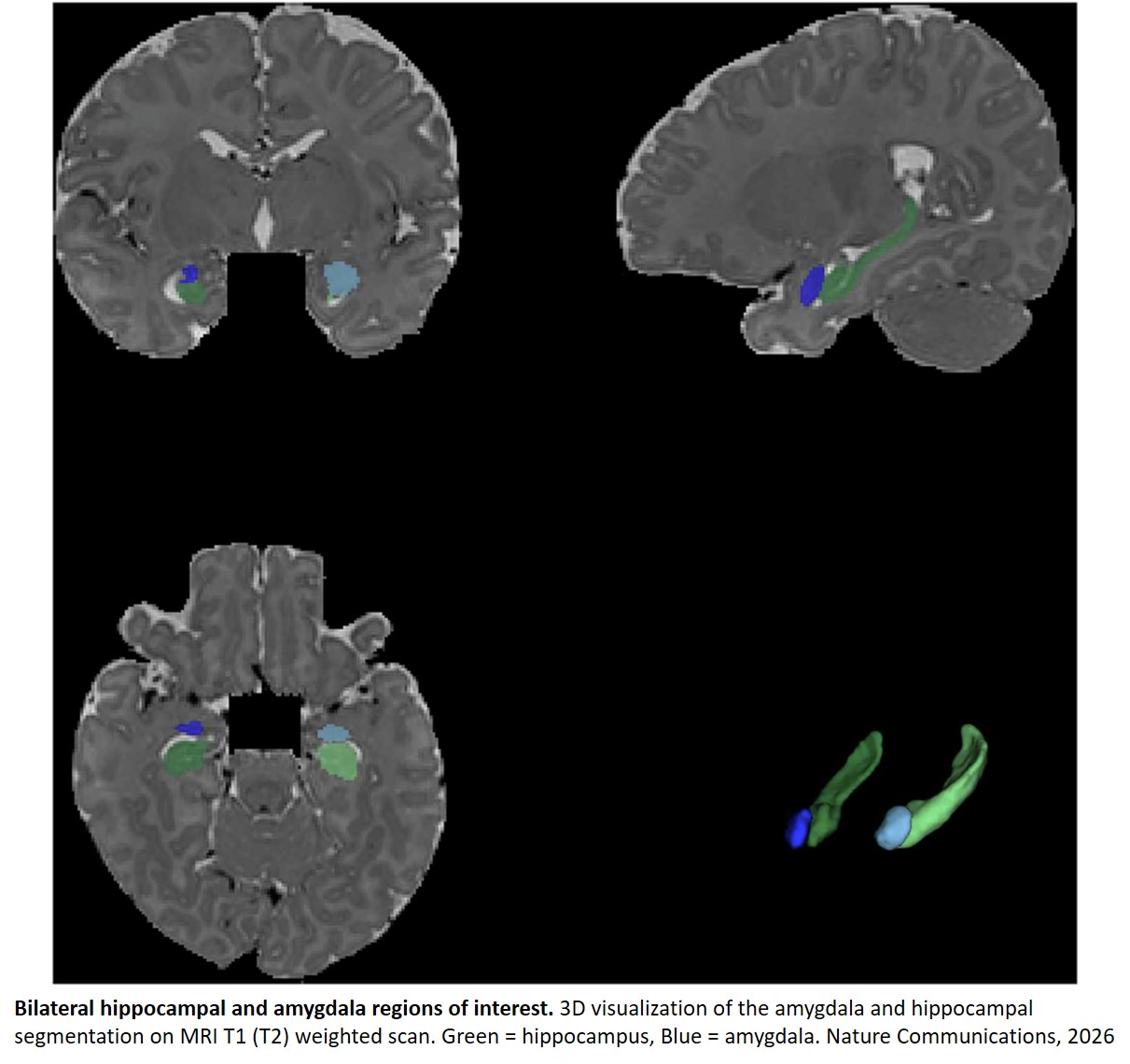
Treating depression during pregnancy influences infant brain development and early emotional function, according to new research published in Nature Communications.
In the first randomized controlled trial to demonstrate that a prenatal depression intervention can affect infant brain structure, researchers found that babies whose mothers received psychotherapy for depression during pregnancy showed differences in the development of a brain region involved in emotion and memory. Those brain differences were associated with lower negative emotionality in infancy.
The findings provide some of the strongest evidence to date that maternal mental health during pregnancy can have intergenerational effects on child development.
"Research has long shown that depression during pregnancy is associated with differences in children's emotional and behavioral outcomes, but most of that evidence has been correlational," said the lead author. "By using a randomized clinical trial, we were able to test whether treating depression during pregnancy can actually influence early brain development in infants."
Prenatal depression is one of the most common complications of pregnancy, affecting an estimated 20% to 40% of pregnant individuals. Previous studies have linked maternal depression during pregnancy with an increased risk of emotional, behavioral and mental health challenges in children, but researchers have lacked experimental evidence to determine whether improving maternal mental health could alter those outcomes.
To answer that question, investigators conducted the Care Project, a randomized clinical trial involving pregnant individuals experiencing elevated depressive symptoms.
Participants were randomly assigned to receive either a form of interpersonal psychotherapy consisting of eight weekly 50-minute sessions focused on relationships and social support, or enhanced usual care, which included standard obstetric care, a psychoeducation session about depression during pregnancy and information about community mental health resources.
Infants whose mothers received psychotherapy during pregnancy developed differently in the hippocampus, a brain region involved in memory and emotions. Babies whose mothers received treatment showed a 5% difference in their hippocampus compared with those whose mothers received usual care. Notably, this brain region predicted better emotion regulation when babies were 6-months of age. The findings add to growing evidence that depression during pregnancy may affect how the baby’s developing brain matures, with implications for children's emotional health later in life.
"Our findings suggest that treating mother’s depression during pregnancy may help shape a healthier developmental trajectory for the infant brain," said the corresponding author. "This study highlights pregnancy as a critical window for intervention and reinforces that supporting maternal mental health is also an investment in child health."
The findings underscore the importance of integrating mental health services into prenatal care. Because prenatal depression is both common and treatable, improving access to evidence-based mental health interventions during pregnancy could benefit the mothers’ mental wellbeing as well as the next generation.
https://www.nature.com/articles/s41467-026-78276-4
https://sciencemission.com/Infant-hippocampal-and-amygdala-volume