


High-resolution brain mapping using X-ray ptychography

“The brain is one of the most complex biological systems in the world,” says one of the senior authors. How neurons are wired together is what his group are trying to unravel – a field known as connectomics.
The author explains: “Take the liver: we know of about 40 cell types. We know how they are arranged. We know their functions. This is not true for the brain. And so, one could ask, what is the difference between the brain and the liver? If we look at a cell body in the brain and the liver, it’s not easy to distinguish the two. They both have a nucleus, an endoplasmic reticulum – they both have the same intercellular machinery, the same molecules, the same types of proteins. This is not the difference. What is really different is how the brain cells are organised and connected.”
Let’s talk numbers: in one cubic millimetre of brain tissue there are about 100 000 neurons, connected through about 700 million synapses and 4 kilometres of ‘cabling’.
How these neurons are connected to each other through synapses determines how the brain works. It is linked to diseases such as Alzheimer’s. Yet the complexity of this wiring in three dimensions is extraordinarily difficult to study. “If you take a neural network with 17 neurons, there are more ways to connect them than atoms in the universe, says another author. “So you can’t just try to model it. We need to measure it.”
Currently, the go-to technique for this type of imaging is volume electron microscopy. As electrons penetrate only shallowly, cubic millimetres of brain tissues must be sliced into tens of thousands of ultra-thin sections. These are then imaged individually and computationally reconstructed to map the 3D connectivity of the neurons through the slices – a process that is very error prone and inevitably results in loss of information.
A solution lies with X-rays. These can penetrate millimetres – or even centimetres – and thus could in principle image chunks of brain tissue without sectioning.
At the coherent small-angle X-ray scattering beamline of the SLS, known for short as cSAXS, high-brilliance X-rays have enabled computer chips to be imaged to a resolution of just 4 nanometres – a world record. “But for biological tissues, the problem is contrast,” explains another author. “Computer chips are made of copper wires that naturally have a high contrast to their embedding material. When we have the building blocks of life – proteins, lipids and so on, against a matrix dominated by water, the X-ray interaction is very weak and it’s harder to achieve high resolution.”
To overcome these challenges of contrast, scientists stain the brain tissue using heavy metals. However, these absorb the X-rays, leading to another problem: the sample deforms. Embedding materials can stabilise the sample – but these also possess the same problems that they deform in the presence of X-rays, bubbling and destroying the fine ultrastructure of the brain tissue.
To overcome this problem, the authors came up with a new approach. The main development is an epoxy resin that is still able to infiltrate the biological tissue while offering exceptional radiation tolerance – a material usually used in aerospace and nuclear industries and in particle accelerators.
They complement this with a specially designed stage that allows them to image the samples whilst cooled to –178 degrees Celsius with liquid nitrogen. Finally, a reconstruction algorithm compensates for small amounts of deformation that still do occur.
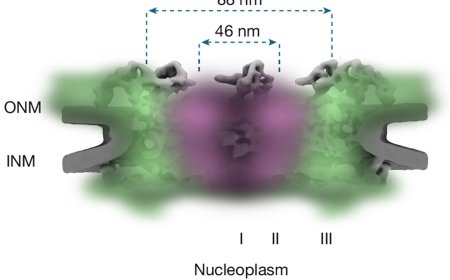
With this approach, the researchers could study pieces of mouse brain tissue up to 10 microns thick, achieving a resolution of 38 nm in three dimensions. “We believe this marks a record resolution using X-ray imaging on an extended biological tissue,” says the author.
At this resolution, they could reliably identify synapses and other features of the neurons and their connections, such as axons and dendrites. “This is not breakthrough information on the brain: it matches the best results with state-of-the-art volume electron microscopy – the current gold standard,” adds the author. “What’s exciting is that this marks the start of what’s to come.”
Although a 10-micron thick piece of brain tissue may still sound tiny, this is already orders of magnitude thicker than the slivers studied with electron microscopy. Currently a limiting factor on sample size is the acquisition time: taking enough data to reconstruct a high-resolution image can take days. This bottleneck is related to the X-rays.
The researchers are using a technique known as ptychography – a type of imaging that doesn’t use lenses but relies on coherent X-rays. “Coherence is exactly where we are set to gain with the SLS upgrade,” says the author.
The SLS has just completed a comprehensive upgrade to become a 4th-generation synchrotron – the most advanced type of synchrotron in the world. The technological improvements mean that, at the cSAXS beamline, ptychography experiments will benefit from up to one hundred times higher flux of coherent X-rays.
“With one hundred times more X-ray photons hitting our sample every second, we will be able to – in principle – either image the sample one hundred times faster or image volumes one hundred times larger,” explains the author. “In practice, we will need to learn how to do this in an efficient way. But the potential is there.”
The publication coincides with an important milestone at the beamline: in July 2025, the first X-rays were seen at cSAXS following the upgrade. Now that technical barriers to using X-ray ptychography for biological imaging have been overcome, the way lies open to studying much larger samples of brain tissue in 3D at high resolution.