

ZR fusion protein sways normal brain cell development toward cancer growth
A team of researchers reveal in the journal Nature a novel mechanism that drives the development of pediatric supratentorial ependymoma (EPN), the third most common pediatric brain tumor. The findings suggest potential new approaches to treat these aggressive and chemo-resistant tumors.
“Pediatric brain tumors are often thought to originate early during brain development but what drives the transformation of normal developing brain cells into cancer cells is incompletely understood,” said the first author. “We discovered a mechanism that taps into normal brain development to drive tumor growth.”
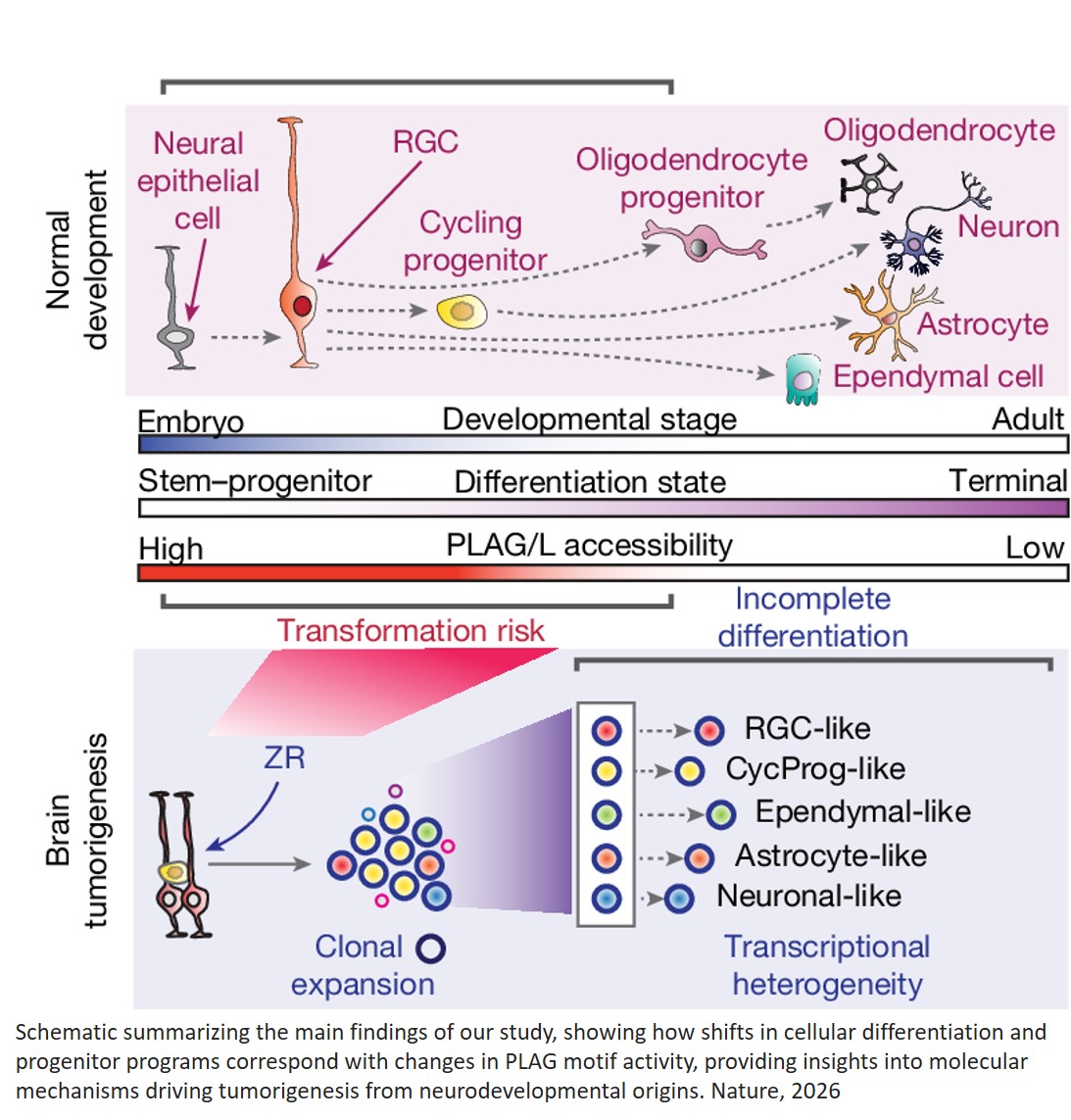
The team studied one of the most common types of pediatric ependymoma, known as ZFTA-RELA (ZR) fusion-positive ependymoma. ZR ependymomas occur almost exclusively in the brain cortex of young children and not in other brain areas. ZR tumors are caused by a fusion between two genes – ZFTA and RELA – that forms an abnormal protein that can switch on cancer-promoting genes.
However, a longstanding mystery has been why this fusion protein only causes tumors during early childhood and only in certain cell types. “We reasoned that the answer might lie in the developmental plan of the brain,” the author said. “During fetal and early postnatal life, stem-like cells divide rapidly and eventually give rise to many mature cell types, including neurons and glial cells.”
As these cells divide, they expose regions of DNA, opening access to genes and offering an opportunity to alter their expression. But once stem cells develop into mature cell types, the DNA closes back into a tight structure.
“We investigated whether the role of the ZR fusion protein was to open the DNA during embryonic growth, but found that ZR does not do this,” said a co-corresponding author. “Instead, ZR takes advantage of the open DNA that already exists in rapidly dividing cells to interact with the genetic material and alter its expression in ways that drive the generation of tumors.”
Further experiments showed that, once activated by ZR, a dominant cancer ‘founder’ clone creates a heterogeneous tumor that partially mimics normal brain development but becomes locked in an immature state.
“Understanding these developmental vulnerabilities opens the door to new therapeutic approaches aimed at pushing tumor cells toward full differentiation or targeting the early progenitor population that fuels tumor growth,” said the other co-corresponding author .
https://www.nature.com/articles/s41586-026-10270-8
https://sciencemission.com/ependymoma