


Functionally distinct astrocyte subtypes identified!
A new study in Nature answers a long-standing question about astrocytes, star-shaped cells that are the most abundant support cells in the brain and spinal cord. Scientists have long wondered whether astrocytes come in specialized types that do different jobs. Using a new genetic tool, the team showed that they do: distinct astrocyte subtypes help build connections between nerve cells, shape brain circuits involved in learning and memory and aid recovery after stroke.
“We’ve known for a long time that astrocytes do many vital jobs. They help nerve cells communicate, keep brain circuits running, nourish nerve cells and maintain the blood-brain barrier that protects the brain, and they respond to injury and disease. But it was not known whether specific jobs are carried out by specific types of astrocytes, as is the case for neurons,” said the corresponding author.
Researchers have long known that different types of neurons, the brain’s nerve cells, play specific roles. For instance, some neurons send signals that excite, or activate, other cells, while others send signals that quiet them. “Previous studies from our lab and others have shown that astrocytes are molecularly diverse. Some carry specific molecules on their surface or switch on a particular set of genes,” said a co-first author. “We had also shown in lab dishes that astrocytes with different molecular profiles behave differently, but that does not necessarily mean they do different jobs in a living brain. In this study, we asked whether different astrocyte subtypes have different properties and roles in the working brains of mice.”
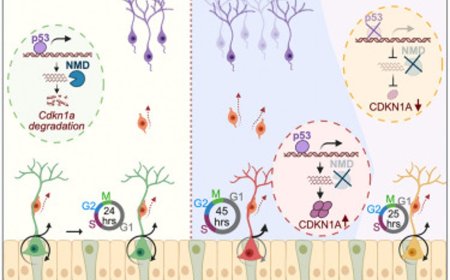
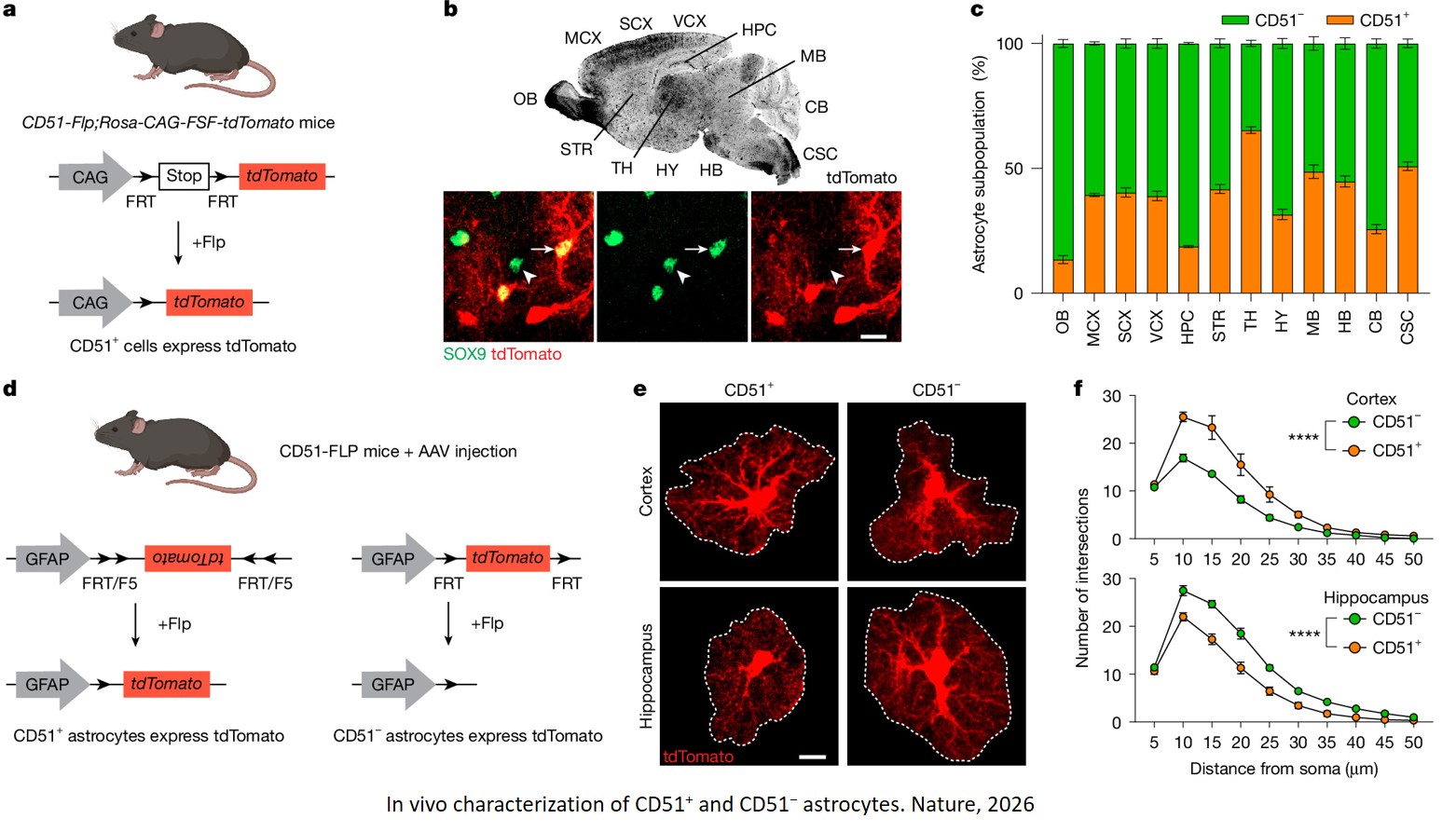
The team focused on a protein called CD51, which sits on the surface of some astrocytes but not others. Earlier studies had shown that CD51 divides astrocytes into groups with distinct molecular features.
“We set out to test whether astrocytes that carry CD51 (CD51+) and those that don’t (CD51-) work differently in living brain circuits, but no animal models or lab tools existed that would let us do that,” said another co-first author. “So we first developed a new mouse line and a set of lab tools that let us label and control CD51+ and CD51- astrocytes separately in a living brain. With these tools, we could compare the two groups side by side in the cerebral cortex – the brain’s outer layer, which handles thinking, sensing and voluntary movement – and in the hippocampus, which is key to forming memories. We studied developing, adult and injured brains.”
The team found that CD51+ and CD51- astrocytes are distinct subtypes. In both the cortex and the hippocampus, each has its own shape, activity and way of developing.
“We discovered that CD51+ astrocytes have a specialized job: they help form synapses – the junctions where neurons pass messages to each other – in the developing and injured cortex. CD51- astrocytes don’t do this,” the author said. “CD51+ astrocytes do this job using a protein called glypican 6.”
“In the hippocampus, CD51+ astrocytes help memory circuits work and adapt, but CD51- astrocytes do not,” the author said. “Here, the CD51 protein itself drives the rewiring of these circuits.”
The findings also matter for brain injury. In mice that had a stroke, CD51+ astrocytes, but not CD51- astrocytes, helped the brain recover function by remodeling the connections between neurons.
“Altogether, our findings change how we think about astrocytes,” the senior author said. “For a long time, astrocytes were considered largely uniform. We’ve shown that they include specialized subtypes with distinct jobs in the developing, adult and injured brain, much like what we see for neurons. Going forward, studies of astrocytes in health and disease will need to consider which subtypes are involved.”