








Opposing behavioral effects of dynorphin and enkephalin
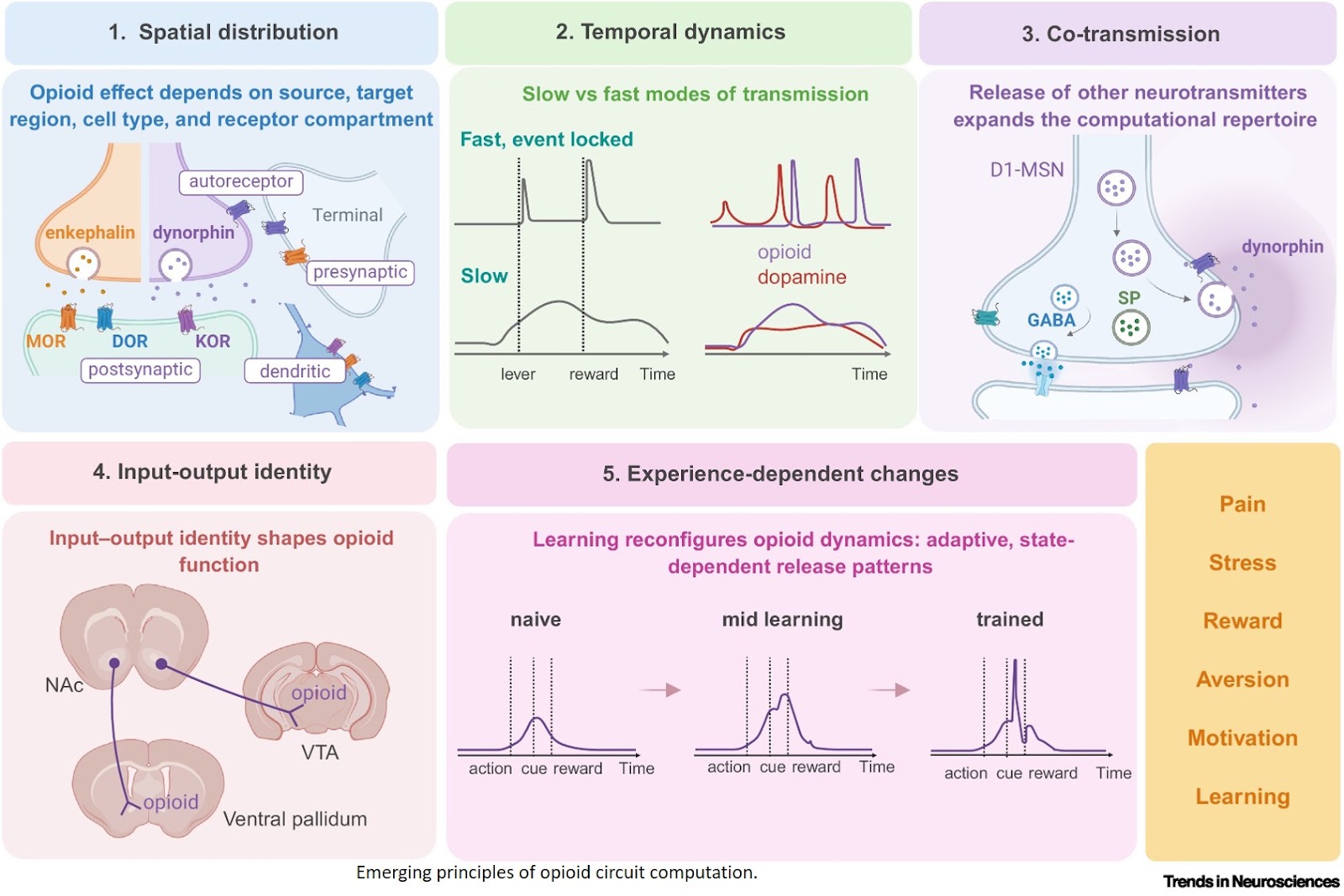
Dynorphin and enkephalin, historically framed as an opposing binary valence system, are now recognized to yield heterogeneous, context-dependent outcomes shaped by brain region, cell type, and behavioral state.
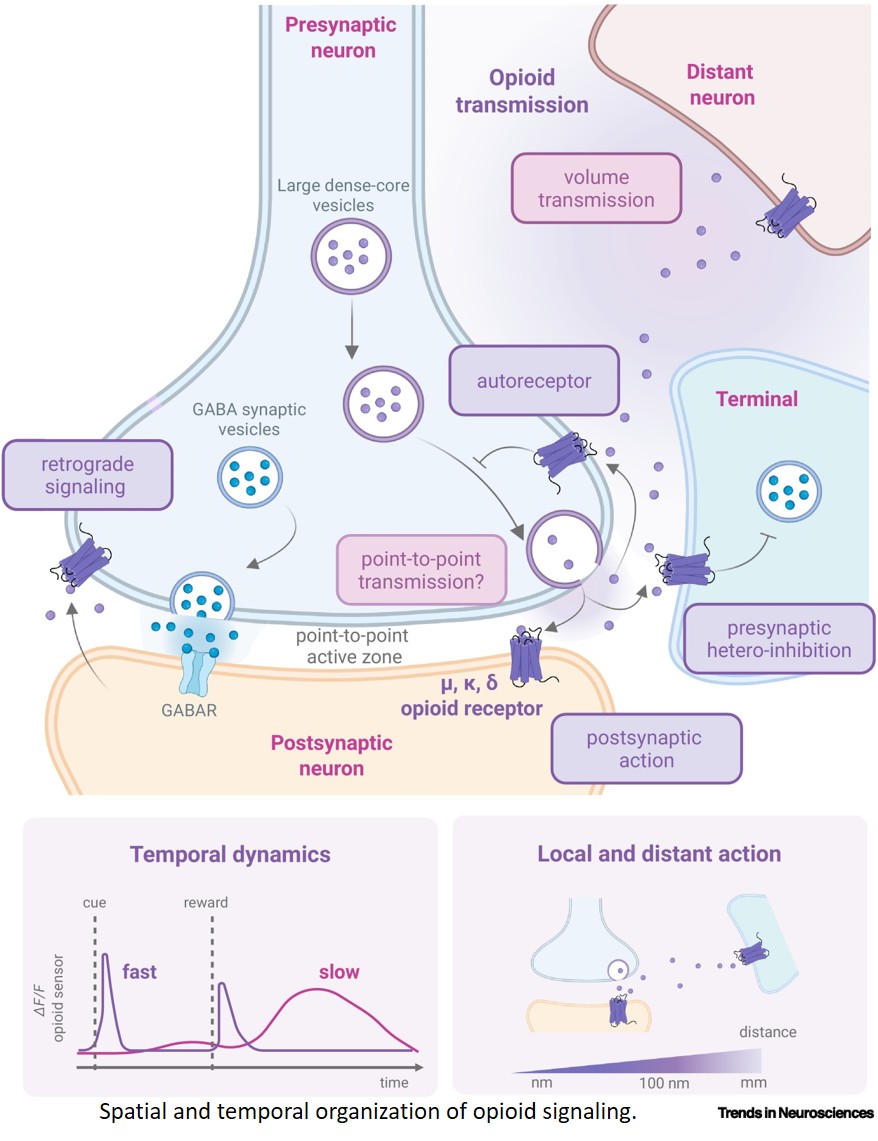
New tools show that endogenous opioid release is often fast and time-locked to behaviorally relevant epochs, challenging the view that opioids act only as slow modulators of neural activity.
Opioid receptors are positioned both pre- and postsynaptically across multiple cell types, and peptides can act locally or distantly via volume transmission.
In the NAc–VP–VTA circuit, the same opioid peptide released from different projection-defined sources can produce opposite behavioral effects, revealing a circuit specificity invisible to conventional pharmacology.
https://www.cell.com/trends/neurosciences/fulltext/S0166-2236(26)00215-8