

How cancer cells survive immune attack
Researchers have discovered that the MAP3K7 (transforming growth factor beta-activated kinase 1 [TAK1]) gene helps cancer cells survive attack from the immune system, revealing a mechanism that may limit the effectiveness of immunotherapy treatments.
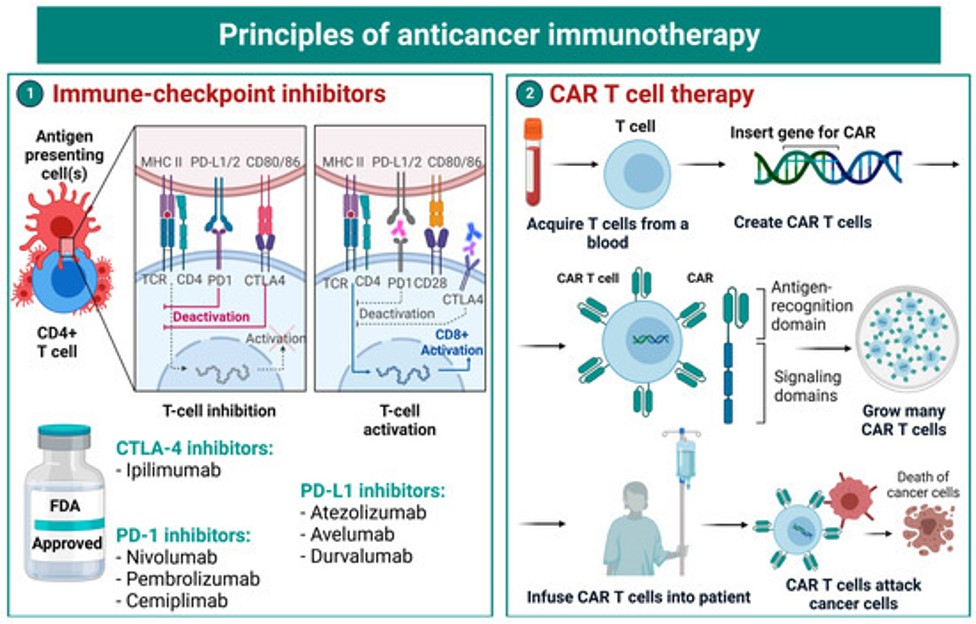
Cancer immunotherapies can work very well, but underperform in some cases due to tumors’ inbuilt survival processes that help them resist attack by the immune system.
Researchers discovered that the TAK1 gene acts like a safety switch that protects cancer cells from the powerful signals generated by CD8⁺ T cells.
TAK1 was identified by conducting a large genetic screen to search for genes that help cancer cells survive attacks by CD8⁺ T cells, key killer cells of our immune system.
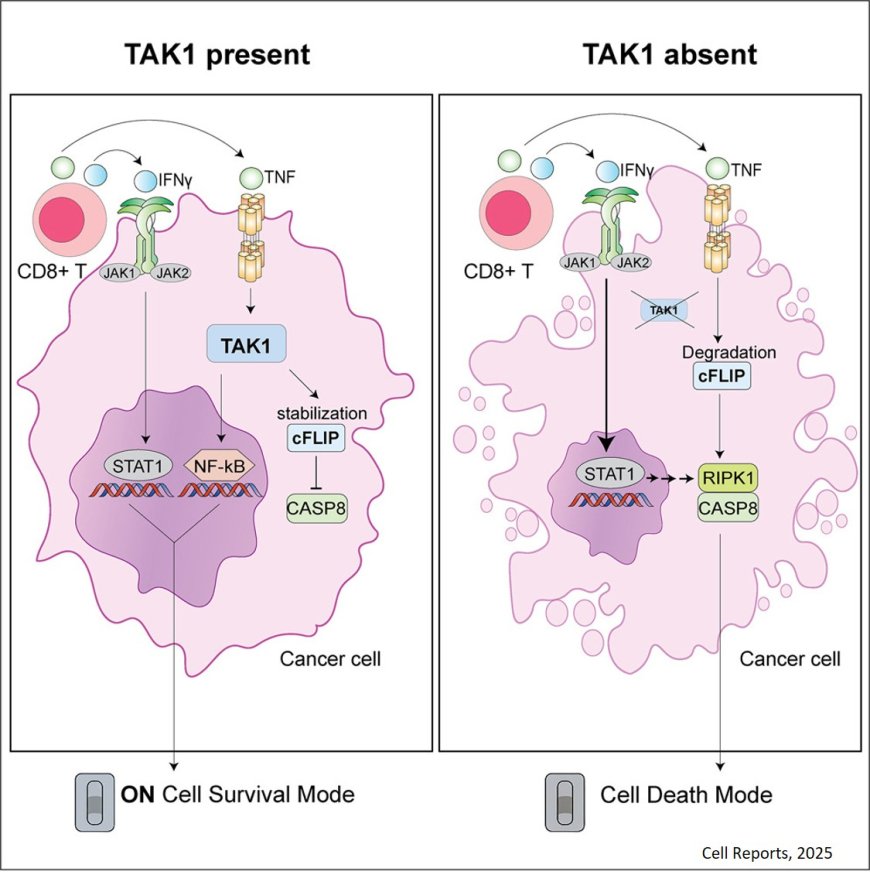
The authors show that TAK1 integrates tumor necrosis factor (TNF) and interferon gamma (IFNγ) signals to drive a cytoprotective response that blocks cytokine-induced death and prevents bystander killing by perforin-deficient T cells.
The first author says: “It is known that TAK1 promotes cancer cell survival and blocks cell death, however we didn’t know that cancer cells use this tactic to avoid killing by the immune system.”
The researchers tested the importance of the TAK1 gene to cancer cell survival by silencing it using CRISPR/Cas9 technology. In pre-clinical models with typical immune function, they found that tumors lacking TAK1 grow poorly, demonstrating that the immune system is able to control cancer cells better.
Mechanistically, inhibition of TAK1 redirects TNF/IFNγ signaling toward apoptosis via RIPK1 and caspase-8 while simultaneously amplifying IFNγ outputs to further prime cells for cytokine-driven death. TAK1 loss triggers proteasomal degradation of cFLIP, promoting complex II formation and undermining protective pathways.
The author says: “When TAK1 was blocked, immune signals generated by CD8+ T cells triggered the cancer cell’s self-destruct pathways.
“Without TAK1, the cancer cells lose a key protein, cFLIP, that normally prevents cell death, and they become far more sensitive to immune attack.”
Turning off TAK1 makes cancer cells much easier for the immune system to eliminate, offering hope for more powerful treatment options in the future.
Another author says: “Blocking TAK1 could make current immunotherapies more effective by stripping tumors of this protection.
“TAK1 is like a shock absorber that lets cancer cells survive the immune system’s hardest hits. Remove it, and the tumor collapses under the force of immune attack.”
Looking forward, the team will undertake further research into blocking TAK1 using innovative liquid nanoparticle technology and testing the efficacy of existing immunotherapies on cancer cells.
https://www.cell.com/cell-reports/fulltext/S2211-1247(25)01437-8