


Controlling compulsive eating
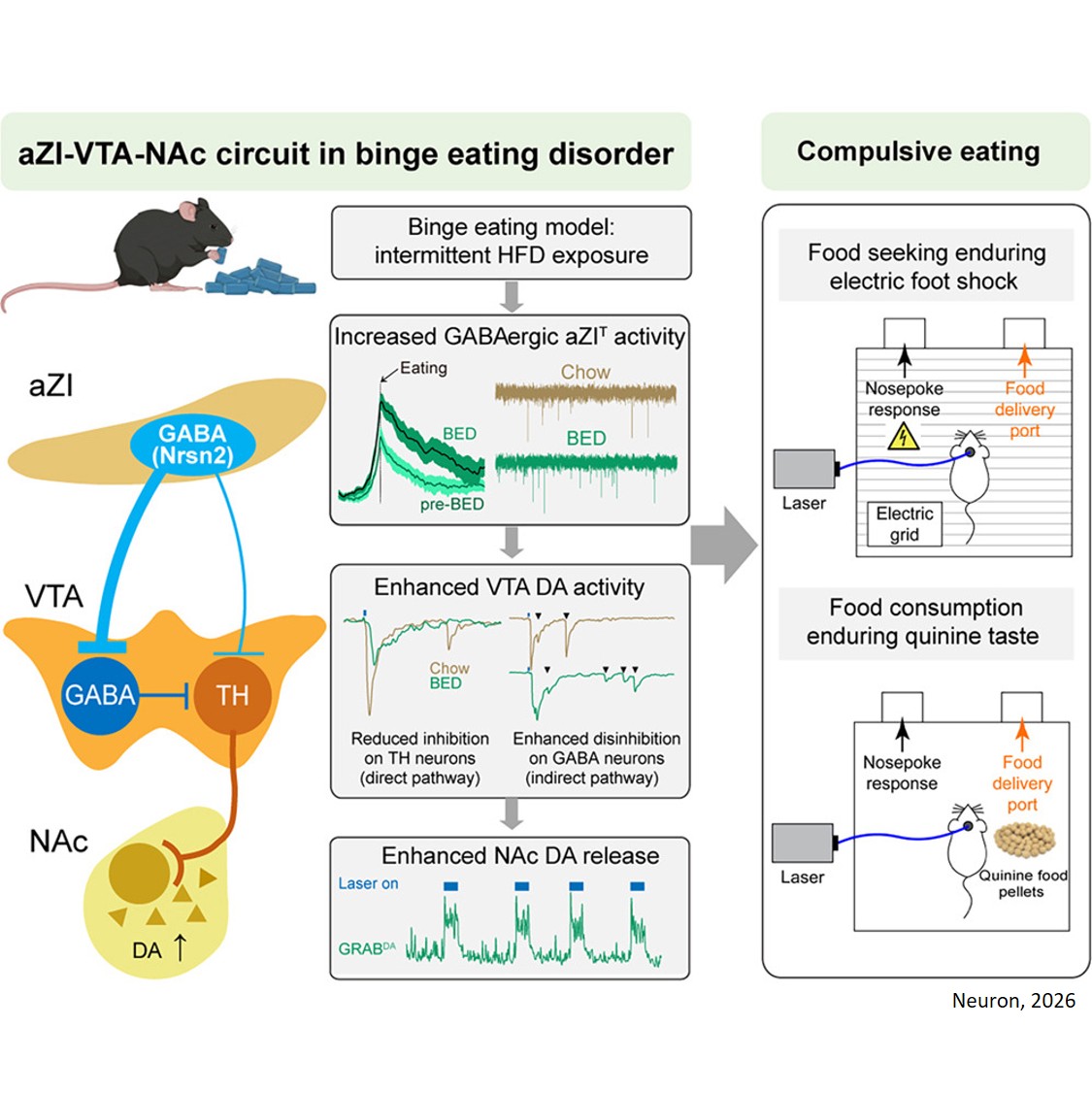
The study identifies a specific neural pathway mapping exactly how the brain drives uncontrollable, aversion-resistant overeating.
The researchers pinpointed a specific population of GABAergic (inhibitory) neurons located in the anterior zona incerta (aZI). These neurons are unique because they are labeled by a specific tyrosine hydroxylase (TH) marker.
When mice were exposed to an intermittent high-fat diet (HFD) to simulate human binge-eating behavior, the excitability of these aZIT neurons sharply increased. This shift in cellular wiring is fundamentally required for binge eating disorder (BED) to develop.
These hyperactive aZIT neurons project their axons straight to the ventral tegmental area (VTA), the brain's central hub for motivation, reward, and addiction processing.
Binge-eating behaviors severely degrade the normal inhibitory control that aZIT neurons exert over VTA dopamine neurons.
Nrsn2 marks the aZIT neuronal population required for BED development. Knocking out Nrsn2 selectively abolished compulsive binge eating.