


Optogenetic models of drug addiction
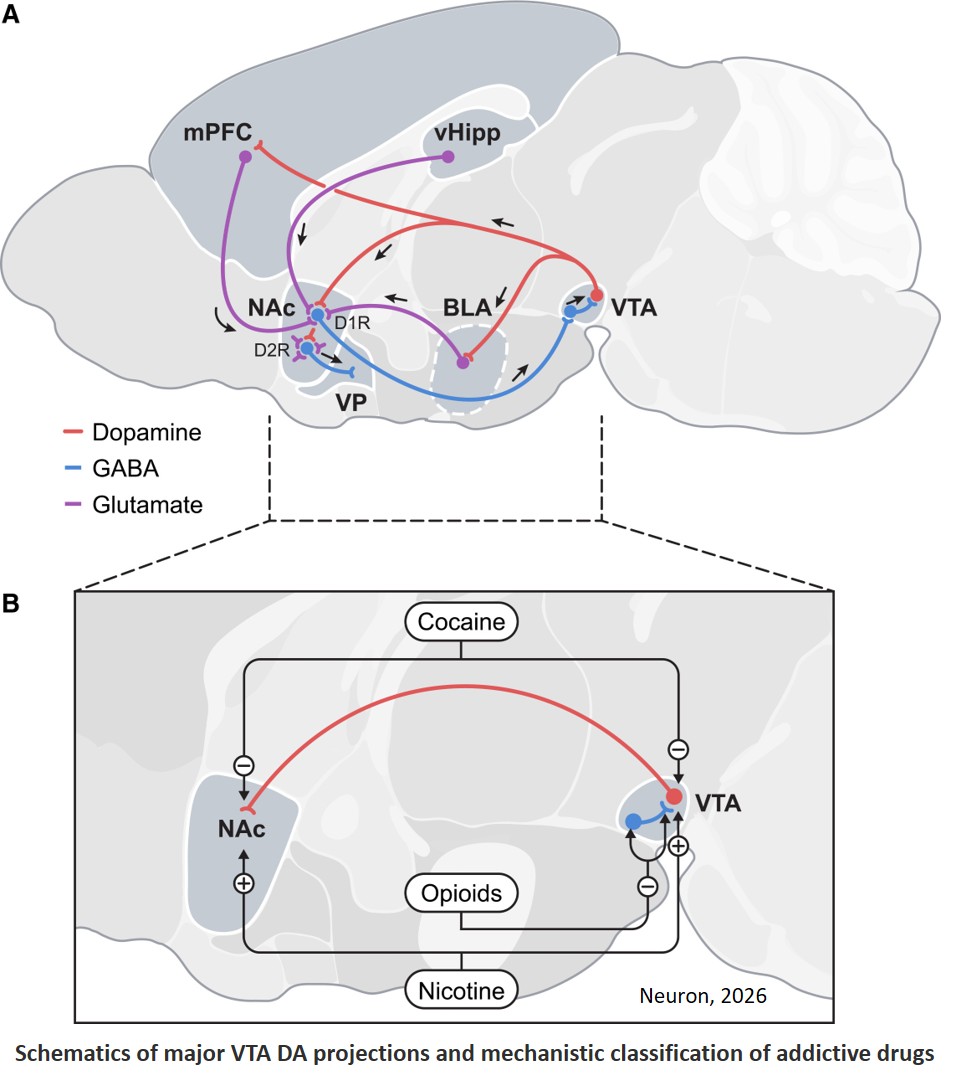
Despite negative consequences, compulsive drug use causes changes in brain circuits resulting in drug addiction.
Animal models have been extensively used to study the neural mechanisms of drug addiction.
The researchers in this review evaluated optogenetic mimicry mouse models that elevate mesolimbic dopamine. These models allow animals to self-induce dopamine transients either directly, via optogenetic activation of ventral tegmental area dopamine neurons, or indirectly, via optogenetic inhibition of midbrain GABA interneurons. These models induce lasting behavioral and synaptic adaptations.