


Multiple roles of eosinophils
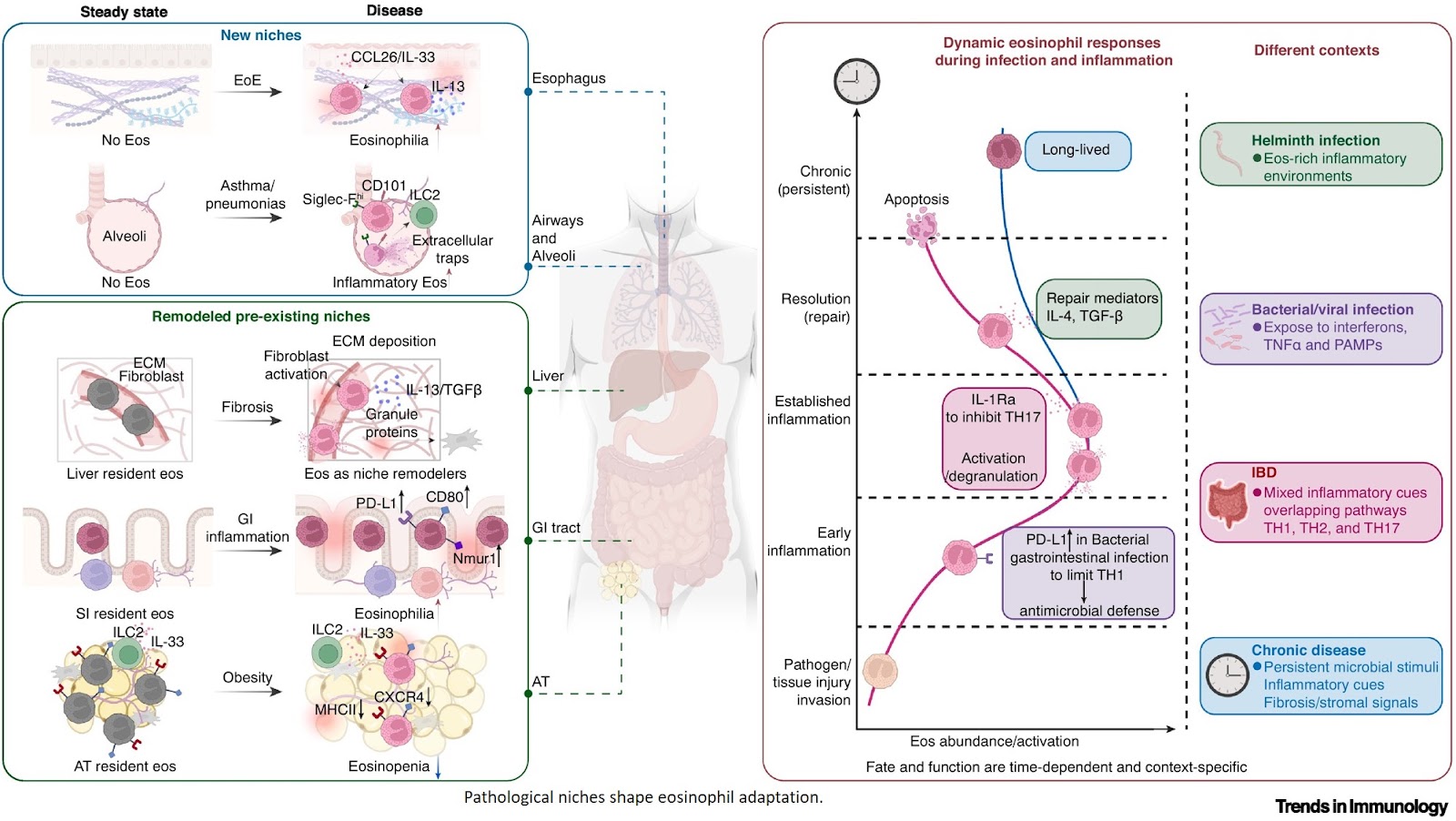
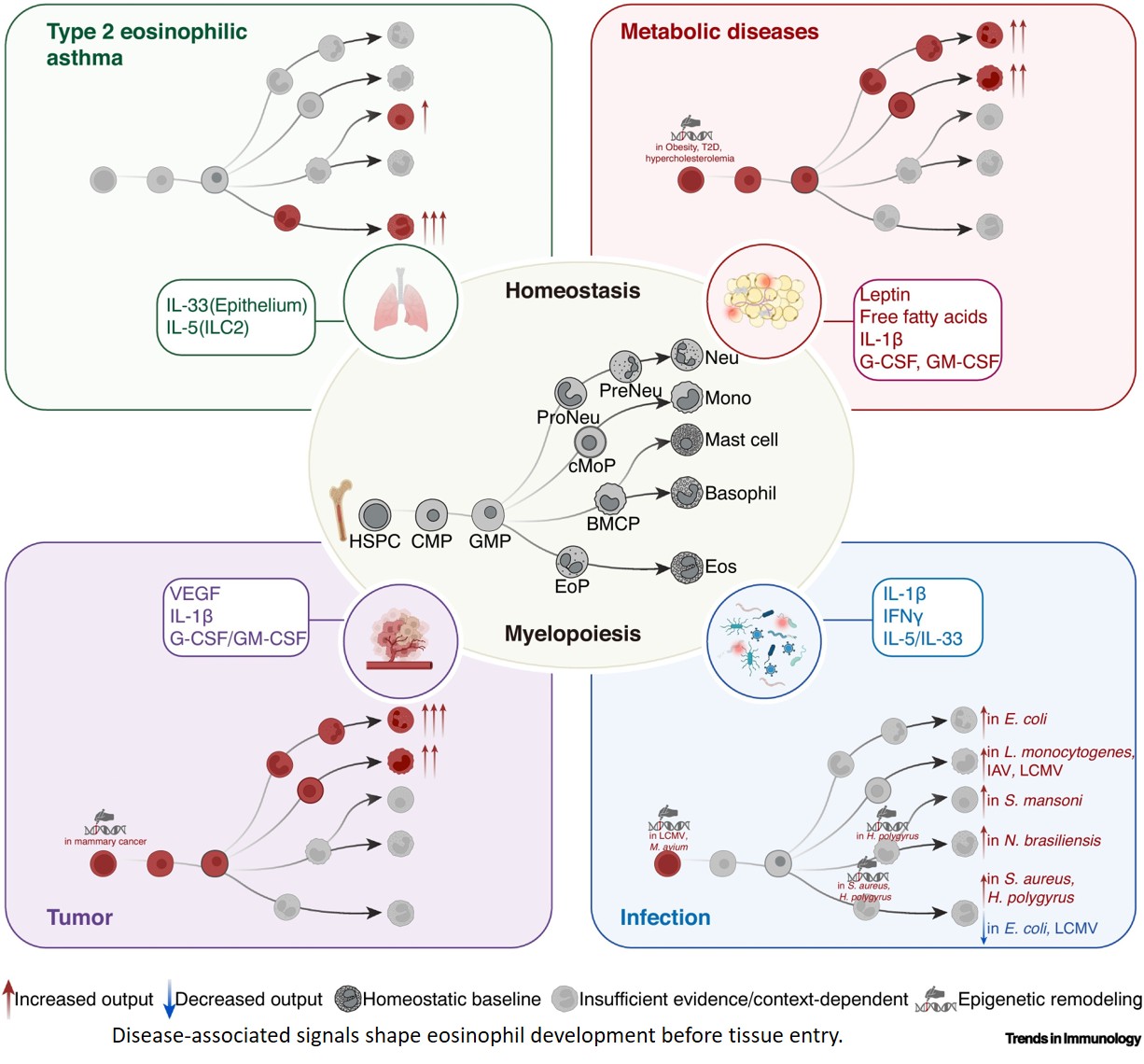
Disease-associated eosinophil states emerge through perturbation of four interconnected determinants: development, local tissue environment, tissue residency time, and inflammatory context.
Disease can influence eosinophils before tissue entry by altering eosinophilopoiesis and progenitor programming, with the strength of eosinophil-specific evidence varying across pathological settings.
Pathological tissue environments establish new eosinophil niches or remodel pre-existing niches, shaping eosinophil phenotype and function across chronic inflammatory diseases.
Eosinophil functions evolve with tissue residency and inflammatory context, contributing to protective, reparative, or pathogenic responses during infection, chronic inflammation, and cancer.
Therapeutic interventions can influence eosinophils at multiple stages, supporting state-informed strategies that suppress pathogenic functions while preserving beneficial tissue associated eosinophil programs.
https://www.cell.com/trends/immunology/fulltext/S1471-4906(26)00296-6