





Molecular pathways in exercising brain
Cognitive function and risk of age-related neurodegenerative diseases can be reduced by regular exercise but the underlying mechanisms are not well established.
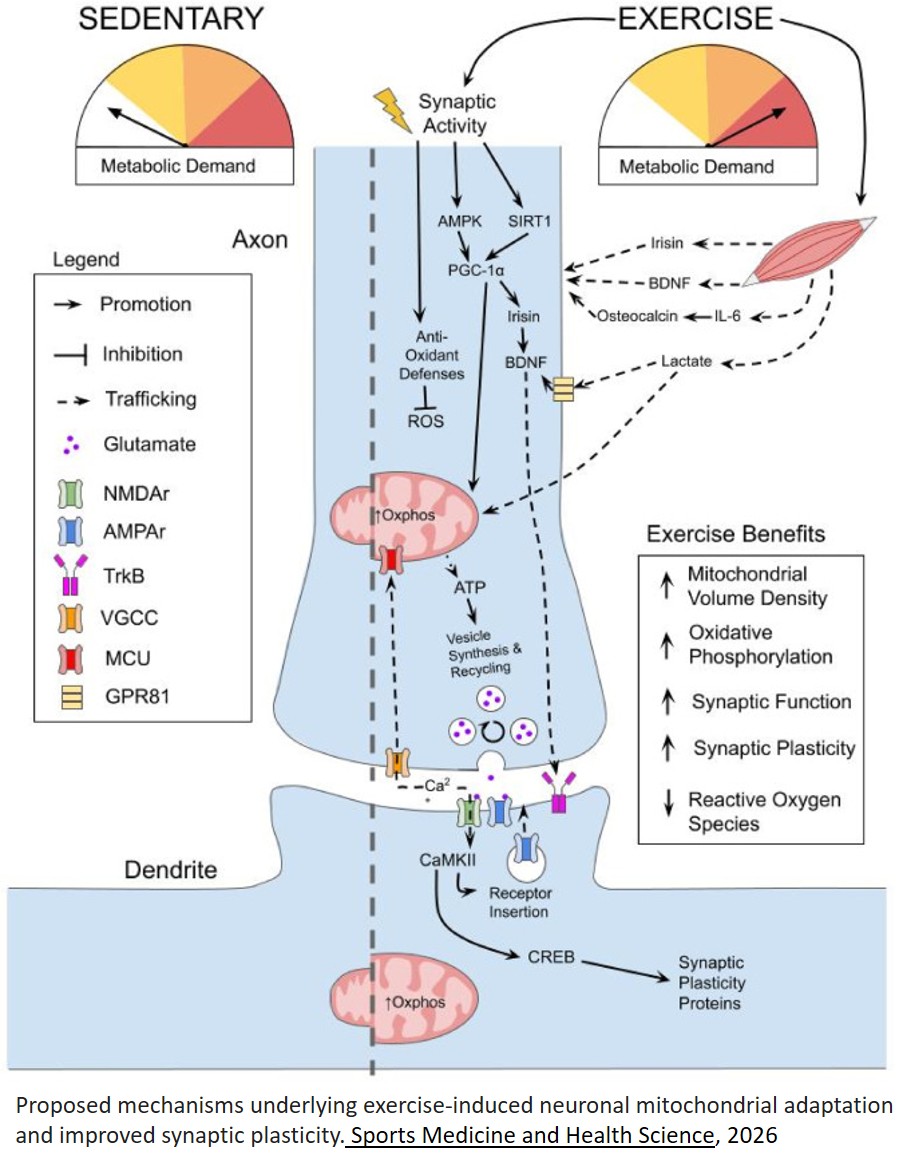
Improvement in mitochondrial structure and function in neurons and enhanced synaptic plasticity are attributed to regular exercise.
The researchers in this review that exercise-elicited neuronal activity and the associated cellular cues (e.g., AMP/ATP ratios, calcium influx) activate signaling-transcription regulators, such as AMPK, PGC-1α, SIRT1, to promote mitochondrial remodeling and redox balance, and hence improved synaptic function.
Exercise also induces exerkines in peripheral organs/tissues, which may mediate some of the positive benefits of exercise through endocrine mechanisms.
https://www.sciencedirect.com/science/article/pii/S2666337626000776